

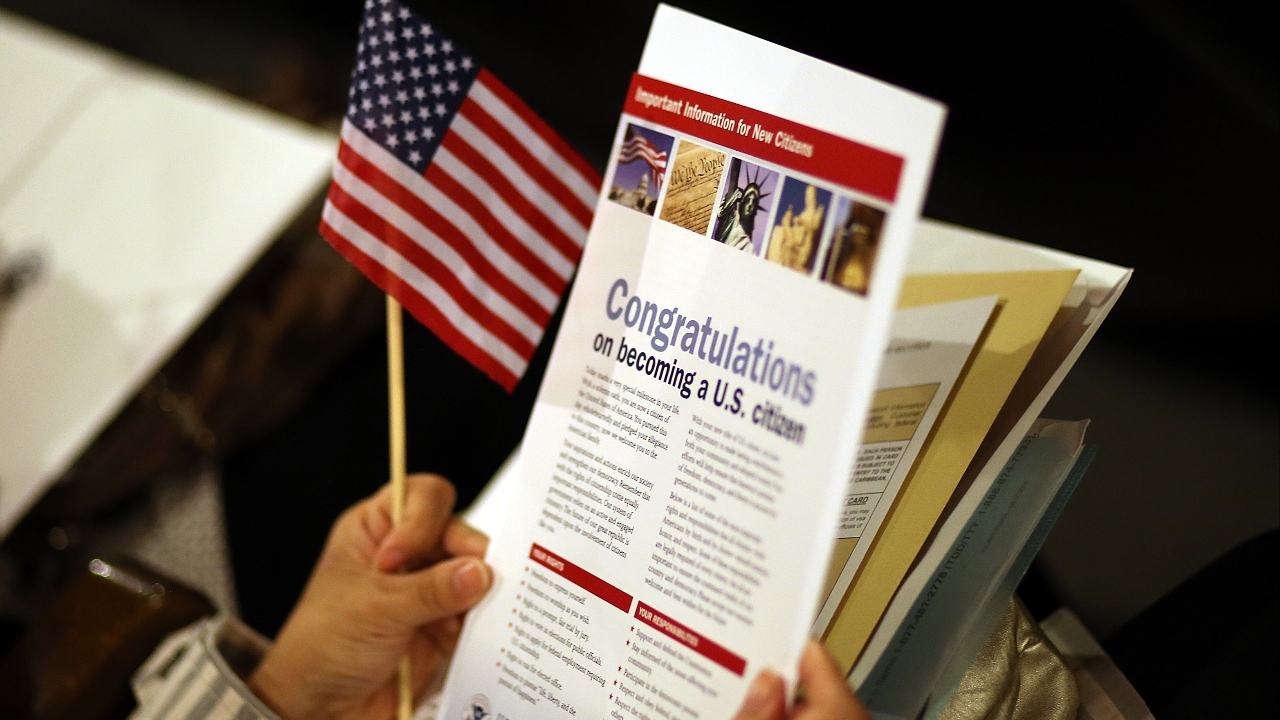
President Donald Trump officially announced the suspension of the Diversity Immigrant Visa Program, commonly known as the "green card lottery," last Thursday (18 Dec), following revelations that a suspect in the Brown University and Massachusetts Institute of Technology (MIT) shootings had obtained a green card through this program.
Investigations found that Claudio Neves Valente, a 48-year-old Portuguese suspect recently found dead from an apparent suicide, had traveled to the U.S. multiple times. In 2000, he entered on a student visa to attend Brown University but dropped out in 2001. Later, in 2017, he received an immigrant visa through the lottery and obtained permanent resident status. However, it remains unclear where he resided between 2001 and 2017.
Homeland Security Secretary Kirsti Noem stated on platform X that she ordered the U.S. Citizenship and Immigration Services (USCIS) to halt the program in compliance with Trump's directive, commenting, "Individuals who commit such heinous acts should never have been allowed to set foot in our country in the first place."
The program was established by Congress to grant permanent residency to people from countries with low rates of immigration to the U.S. It randomly selects about 50,000 recipients annually from nearly 20 million global applicants. Those selected must undergo rigorous background checks and interviews similar to other visa types.
Analysts view this move as another instance where the Trump administration leverages tragic events to advance stricter immigration policies, similar to the case of an Afghan man who attacked homeland forces in November, leading to tightened entry controls from Afghanistan and surrounding countries.
Although Trump seeks to limit legal immigration, a major obstacle is that the visa lottery program is established by law, making the suspension likely to face legal challenges, similar to his recent Supreme Court petition regarding the revocation of birthright citizenship.
For the 2025 green card lottery, nearly 20 million people applied, with over 131,000 selected including spouses. After selection, applicants must pass qualification checks to gain entry to the U.S. Portuguese citizens were allocated only 38 slots.
/AP