

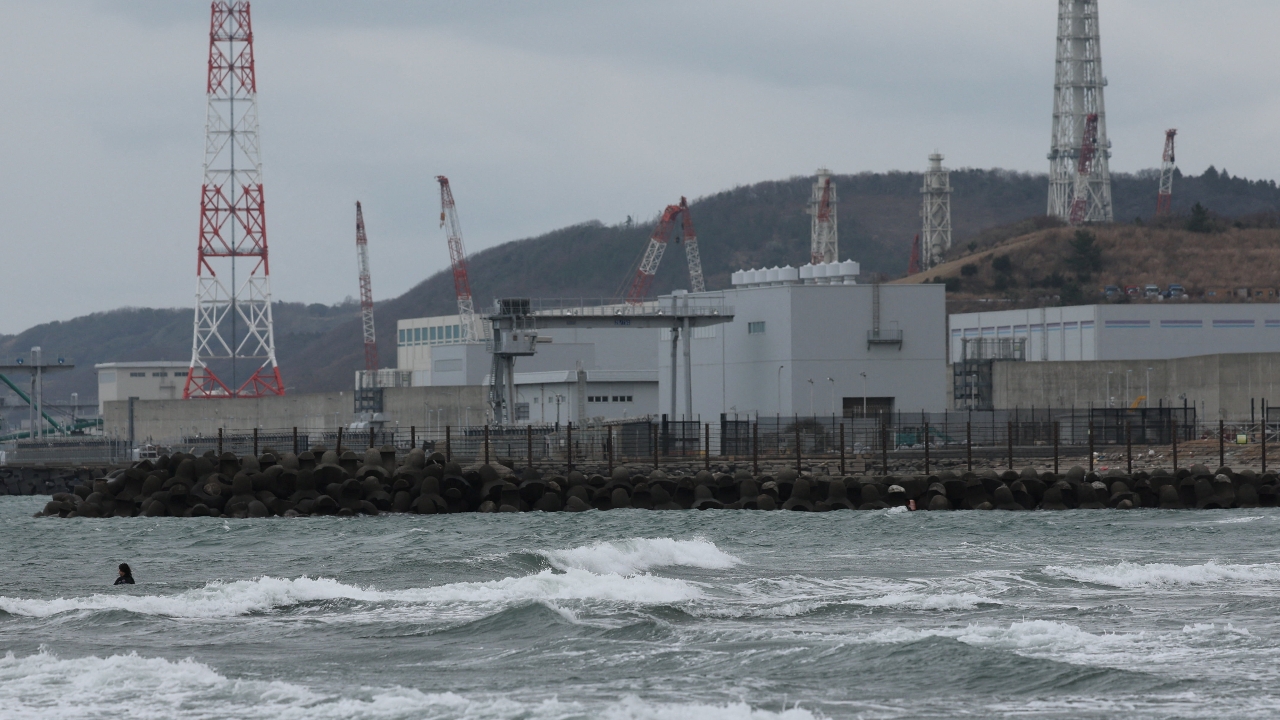
The Niigata Prefectural Assembly has voted on a crucial decision that will determine the restart of the Kashiwazaki-Kariwa nuclear power plant, the world's largest, located about 220 kilometers from Tokyo. This plant has been offline since the 2011 earthquake and tsunami that devastated the Fukushima Daiichi nuclear power station, the most severe nuclear disaster since Chernobyl.
Around 300 protesters, mostly elderly, gathered outside the Niigata Prefectural Assembly building in freezing weather with temperatures at only 6 degrees Celsius. They held signs reading "No to Nuclear" and "Oppose Restarting Kashiwazaki-Kariwa," singing "Furusato," a song expressing love for one's hometown. One protester questioned whether Tokyo Electric Power Company (TEPCO), the operator of the Fukushima plant, is adequately prepared to manage the world's largest nuclear facility again.
Today (22 Dec), the Niigata Prefectural Assembly voted to trust Hideyo Hanasumi, the governor of Niigata Prefecture, who had supported reopening the plant last month. This decision enables the plant to resume operations. Although assembly members backed Hanasumi, the year's final meeting revealed community divisions over restarting the plant, despite potential new jobs and possible reductions in electricity costs.
Prime Minister Sanae Takaichi, who took office two months ago, has clearly supported revitalizing nuclear energy to reduce the burden of importing liquefied natural gas and coal. Last year, Japan spent over 10.7 trillion yen (approximately 2.12 trillion baht) on energy imports. Additionally, electricity demand in Japan is expected to rise due to the expansion of AI data centers, prompting the government to aim for nuclear energy to account for 20% of total electricity production by 2040.
Although TEPCO has tried to win over locals by investing more than 100 billion yen (about 19.83 billion baht) into the prefecture over the next ten years, recent surveys show that 60% of Niigata residents believe the environment is still not ready for the plant's restart, and 70% remain concerned about TEPCO's management.
If approved, TEPCO is expected to restart the first of seven reactors on 20 January next year, immediately boosting Tokyo's electricity supply by 2%. The company has pledged to prioritize safety above all and to ensure history does not repeat itself.
/sourceReuters