

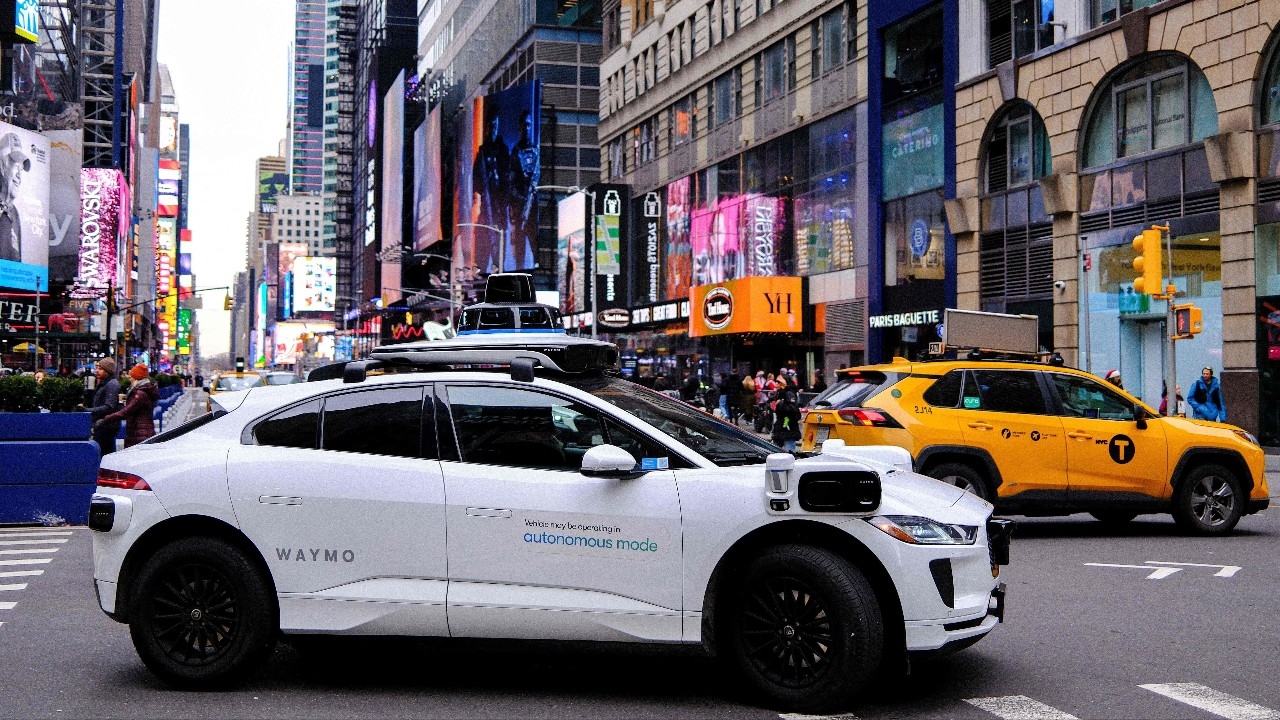
Waymo driverless taxis stalled, blocking roads after a major power outage across San Francisco. Service resumed only after several hours.
Waymo, the driverless taxi company owned by Alphabet, Google's parent company, announced it resumed service on Monday, 22 December, after many autonomous taxis stalled and obstructed traffic during a major power outage that nearly paralyzed the city's traffic system.
The incident occurred on Saturday evening when a fire broke out at a power station, causing a blackout in about one-third of San Francisco. This widespread outage affected many systems, including the city's traffic lights.
Videos shared on social media showed multiple autonomous vehicles lined up stopped at intersections, causing severe traffic jams and confusion among road users.
A Waymo spokesperson explained that their white Jaguar driverless taxis, equipped with cameras and sensors all around, treat non-functioning traffic lights as stop signs. However, the unusually large and prolonged outage caused many vehicles to remain stopped longer than normal.
Ultimately, Waymo decided to temporarily suspend its service for safety reasons before resuming operations on Sunday.
The event sparked intense criticism regarding the readiness of driverless car technology, especially in emergency situations.
Elon Musk, Tesla's CEO, immediately mocked the disruption, noting that Tesla's Full Self-Driving technology relies mainly on cameras and artificial intelligence and claimed it can operate without depending on infrastructure like traffic lights, though a human driver must remain present.
In contrast, Waymo takes a more cautious approach, using multiple sensors combined with high-definition maps, which are costly but may be vulnerable when city infrastructure fails.
This blackout happened as Waymo is rapidly expanding its business, targeting over 15 million trips in 2025, up from 4 million in 2024, and planning to serve 10 U.S. cities by early 2026, with further expansion to about 20 major cities worldwide, including London.
Meanwhile, competition in the driverless car market is intensifying, with Chinese companies beginning overseas testing, Uber announcing plans to launch robo-taxi service in San Francisco by late 2026, and Amazon’s Zoox increasing autonomous shuttle tests in the same city.
Source:channelnewsasia
Read more about:driverless cars