

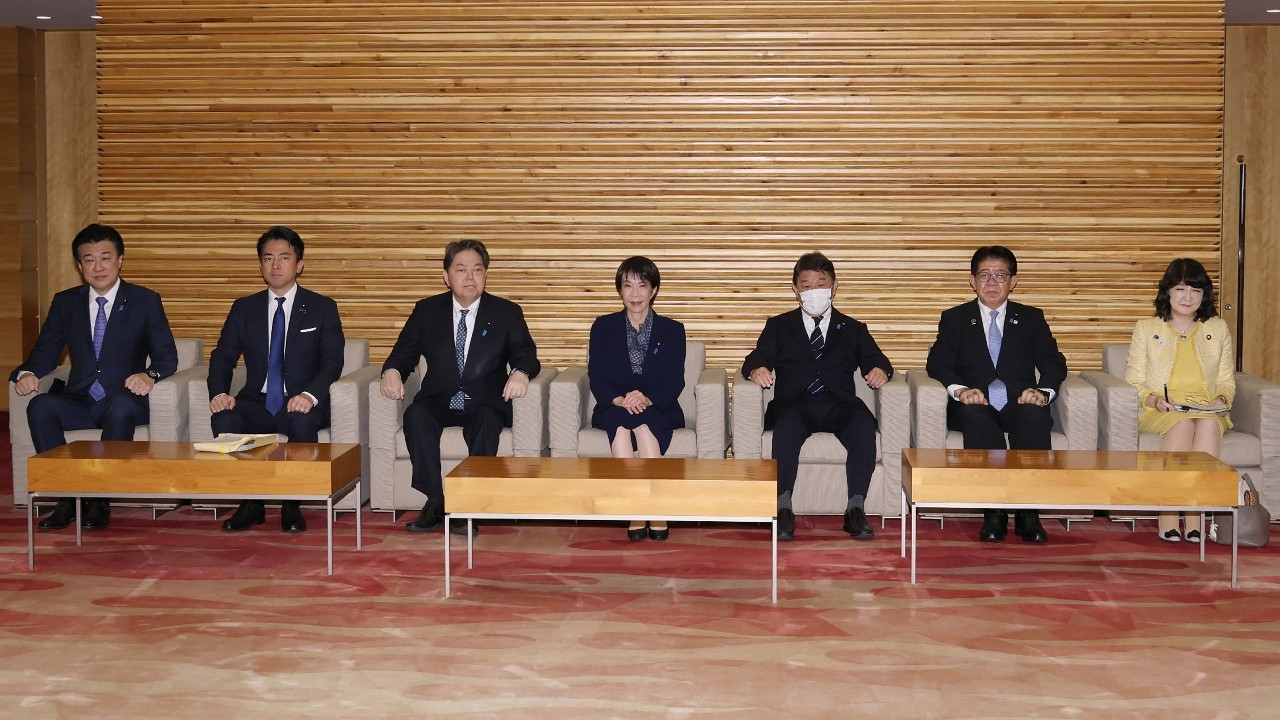
The Japanese government approved a record-high budget exceeding 122.3 trillion yen (over 24.33 trillion baht) for the fiscal year starting April 2026, to accommodate rising defense spending and expanding social welfare costs amid persistent inflation. This new budget surpasses the current year's 115 trillion yen allocation.
The Japanese government has approved the draft budget for fiscal year 2026, beginning in April 2026, totaling 122.3 trillion yen (approximately 24.33 trillion baht), marking the highest amount ever, surpassing the current year’s budget of 115 trillion yen.
This budget includes a defense allocation of 9 trillion yen to rapidly enhance military capabilities in line with Prime Minister Sanae Takaichi’s policy. The Ministry of Defense stated, "Japan is facing the most severe and complex security environment since the end of World War II."
A key highlight is the 100 billion yen funding for the development of the "SHIELD" (Synchronised, Hybrid, Integrated and Enhanced Littoral Defence) coastal defense system, which employs intelligent drone swarms to intercept invasions by foreign forces. The system is targeted for completion by March 2028.
Prime Minister Takaichi emphasized that Japan needs a "proactive fiscal policy" to strengthen the nation instead of overly strict austerity measures. However, this massive spending policy raises concerns in financial markets, as Japan currently has the highest public debt-to-GDP ratio among major economies, with the International Monetary Fund projecting it to reach 232.7% this year.
Analysts from Nomura Research Institute warned that if the budget expands to 125 trillion yen, it could trigger turmoil in the bond market similar to the crisis experienced in the United Kingdom during former Prime Minister Liz Truss’s tenure. Currently, the weakening yen and rising bond yields signal risks to the cost of living, as Japan heavily depends on food and energy imports.
Beyond security spending, the government faces continuously rising social welfare costs due to an aging population and historically low birth rates. Prime Minister Takaichi assured the media that she will maintain the country’s financial stability and will not irresponsibly issue bonds or cut taxes.
This historic budget draft still requires formal approval from the Japanese Parliament in the next steps.
/sourceAFP