

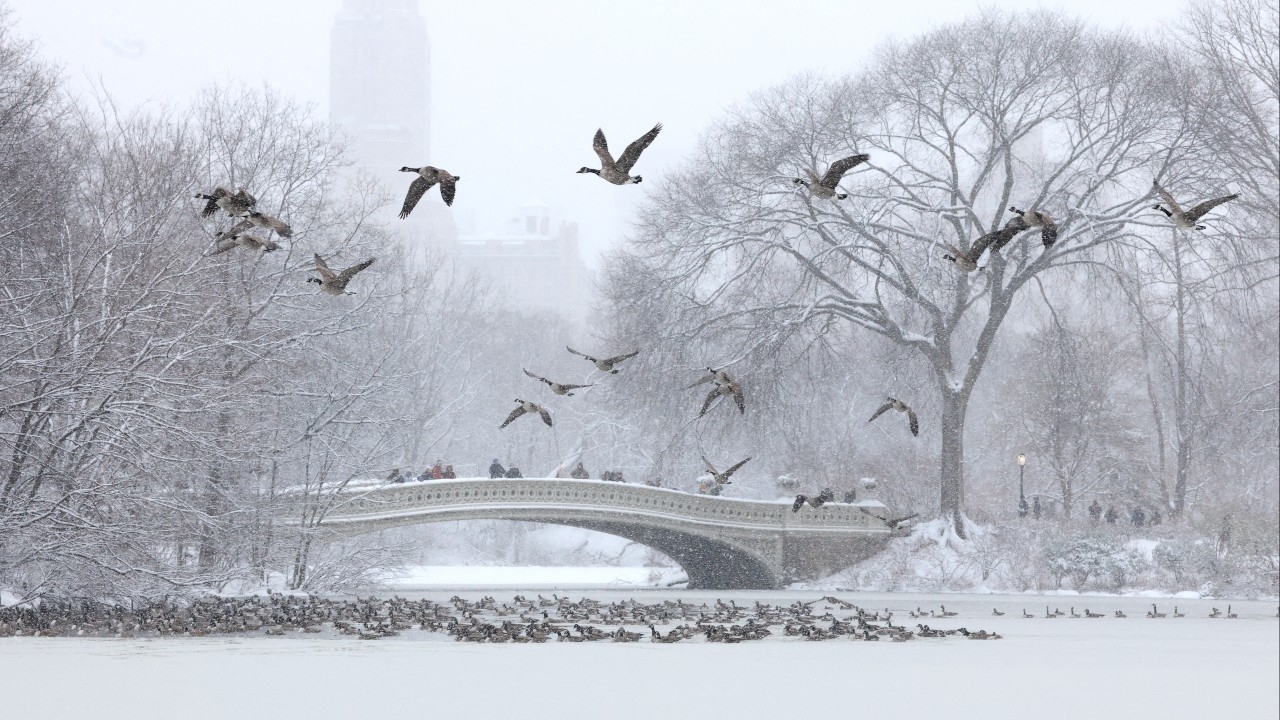
A winter storm swept through the U.S. Northeast, causing heavy snow and ice accumulation. New York City recorded its heaviest snowfall in nearly four years. Airlines canceled and delayed more than 9,000 flights, while the governor declared a state of emergency and warned people to avoid dangerous travel.
Foreign news agencies reported that the winter storm severely struck the U.S. Northeast from Friday through Saturday, paralyzing both ground and air transportation over the post-Christmas weekend.
The U.S. National Weather Service (NWS) reported that Central Park in New York City recorded about 11 centimeters of snow accumulation, the highest level since January 2022. Meanwhile, central and southeastern New York State and Connecticut experienced heavy snowfalls ranging from 15 to 25 centimeters.
FlightAware data indicated that as of Saturday evening (27 Dec), more than 9,000 domestic U.S. flights had been canceled or delayed, especially at the three major New York airports: John F. Kennedy International, LaGuardia, and Newark Liberty International.
However, major airlines such as American Airlines, United Airlines, and JetBlue announced waivers on ticket change fees to assist passengers affected by the weather conditions.
New York Governor Kathy Hochul declared a state of emergency in over half the state, emphasizing that public safety is the top priority and urging everyone to exercise utmost caution throughout the storm. Similarly, New Jersey declared a state of emergency and restricted commercial truck traffic on several major highways due to icy and hazardous road conditions.
Although the storm began to ease by Saturday afternoon, leaving only light snow, officials continued to warn about subfreezing temperatures that could cause melted snow to refreeze into "Black Ice"—a transparent, hard-to-see ice on road surfaces posing extreme danger to drivers.
The snowstorm that struck the U.S. East Coast set records for severity. This video compiles footage of the blizzard, illustrating the winter storm's impact on transportation systems and daily life in similar ways.