

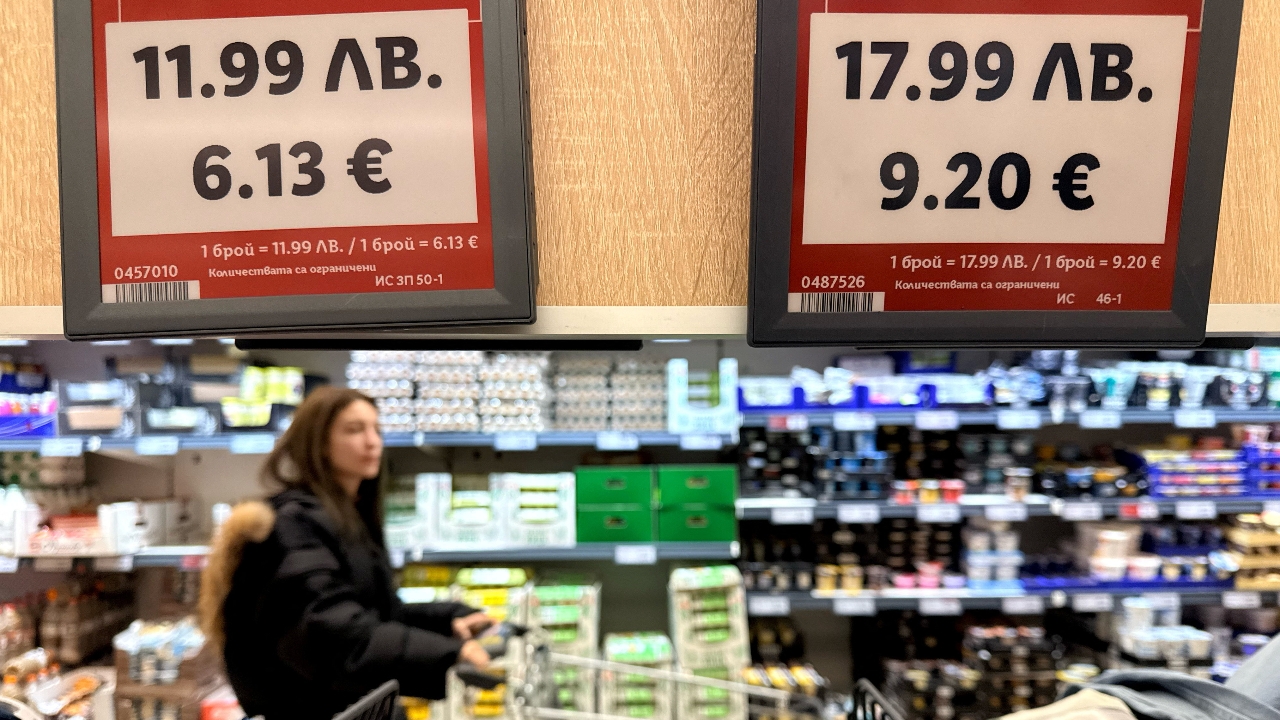
Bulgaria, the poorest country in the European Union, officially joined the Eurozone on 1 Jan 2026 as its 21st member, surpassing economically larger and more stable countries like Poland, the Czech Republic, and Hungary. Public opinion is divided between younger generations who see business opportunities and conservatives worried about inflation and losing monetary sovereignty.
On 1 Jan 2026, Bulgaria reached a significant milestone by becoming the 21st official member of the Eurozone, replacing its long-used currency, the "lev," which had been in use since 1881. This move marks the final step in integrating Bulgaria into the core European framework, following its memberships in NATO, the European Union, and the Schengen Area.
To ease the transition for citizens, the Bulgarian government designated January 2026 as a dual-currency period. Stores would accept both euros and levs but must give change only in euros. Starting 1 Feb 2026, the euro will be the sole legal tender for debts, fixed at an exchange rate of 1 euro to 1.95583 lev.
This change has clearly divided the nation of 6.5 million people. Supporters, mainly young urban residents and entrepreneurs, believe adopting the euro will reduce transaction costs, attract investment, and provide long-term economic stability.
Opponents, largely elderly rural populations and conservatives, fear that switching currencies will cause price hikes due to rounding and lead to a loss of national identity.
The transition comes amid internal political turmoil. Prime Minister Rosen Zhelyazkov’s coalition government lost a no-confidence vote in December after protests against the 2026 budget. Additionally, President Rumen Radev proposed a referendum on the matter, but the government rejected it.
To ease fears of losing sovereignty, Bulgaria has placed national symbols on its euro coins: the 1-euro coin features Saint Ivan of Rila; the 2-euro coin depicts Paisius of Hilendar, a monk credited with reviving the national spirit; and the cent coins show the Madara Rider, a symbol of early Bulgarian statehood.
Although the government has set up a price monitoring agency to prevent opportunistic price hikes, Bulgarians closely watch lessons from previous member states—comparing the success of Estonia, a Baltic model country, with Italy’s stagnant economy—to see which path their country will follow with this major step.
,BBC