

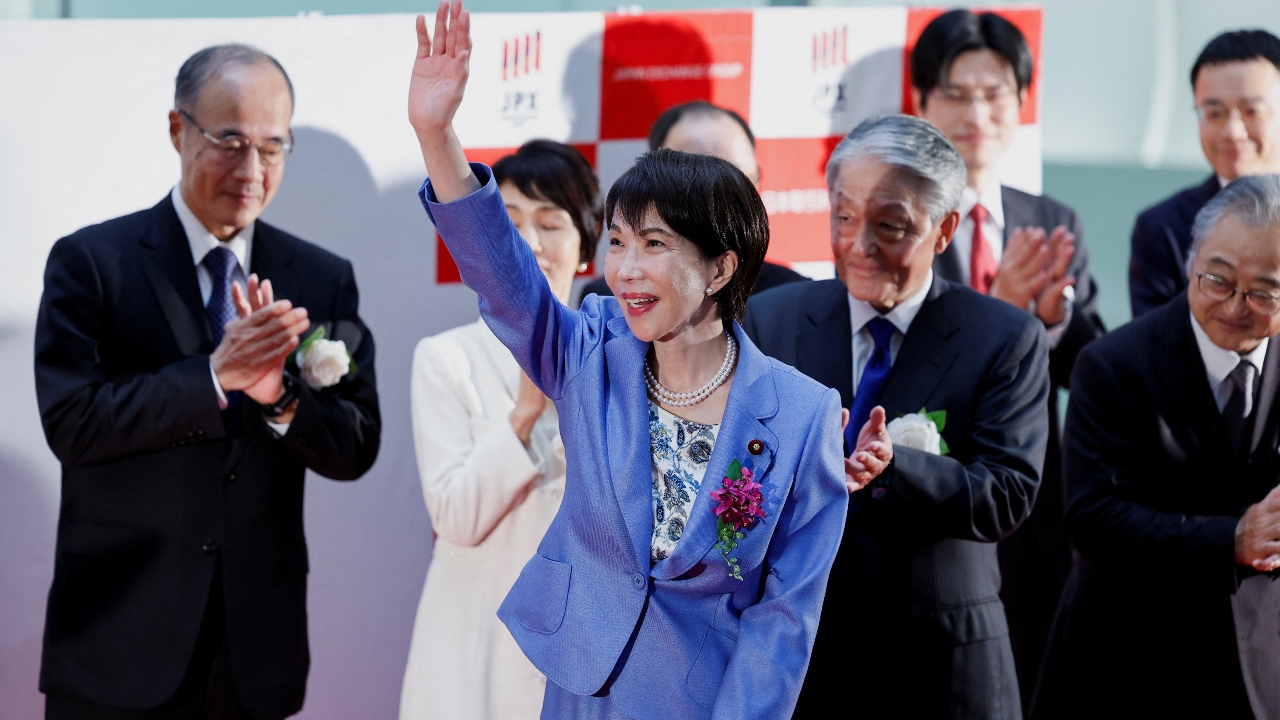
Japan's first female Prime Minister, Sanae Takaichi, along with over 60 female members of parliament, submitted a request to increase the number of women's restrooms in the National Diet building. This follows an imbalance between the restroom facilities and the rising number of female MPs, now totaling 73. Near the main chamber, there is only one women's restroom with just two stalls, leading to long queues, and some women have even given up and refrained from using the restroom before sessions begin.
The issue has attracted widespread attention as female Japanese parliamentarians, led by Yasuko Komiyama from the opposition party, revealed the difficulties they face in parliamentary life. They noted frequent "long lines" outside women's restrooms before sessions start, with some MPs saying they "gave up" and avoided using the restroom for fear of missing part of the meeting.
Ms. Komiyama from the Constitutional Democratic Party, an opposition party, posted on Facebook that the current situation is "often inconvenient" because female staff and female visitors share the same restroom facilities. "I want to express my views and prepare for a future day when women will hold more than 30% of the seats in parliament," she said.
The National Diet building is a large, three-story structure with a central section rising nine stories. It covers 13,356 square meters, roughly equivalent to two football fields, with a total usable floor area of 53,464 square meters.
Currently, there is only one women's restroom near the main chamber, comprising just two stalls. Meanwhile, 73 female MPs were elected in the October 2024 election, marking an all-time high. Across the entire building, the disparity is clear: there are nine women's restrooms totaling 22 stalls shared among staff and visitors, while men's restrooms number 12 with 67 facilities including stalls and urinals.
The main cause of this problem is that the National Diet building was constructed in 1936, a decade before Japanese women gained the right to vote in 1945. As a result, the building's design did not anticipate accommodating women as members of parliament.
Prime Minister Sanae Takaichi, Japan's first female leader, has pledged to raise the proportion of women in government to levels comparable with Nordic countries. Although her current cabinet includes only two female ministers, this initiative serves as a test of the government's commitment to "empowering women."
Yasukatsu Hamada, chairman of the House of Representatives committee, has begun signaling willingness to consider the proposal to improve basic welfare, aligning with the national goal of achieving 30% female leadership by 2030.
/sourceBBC