

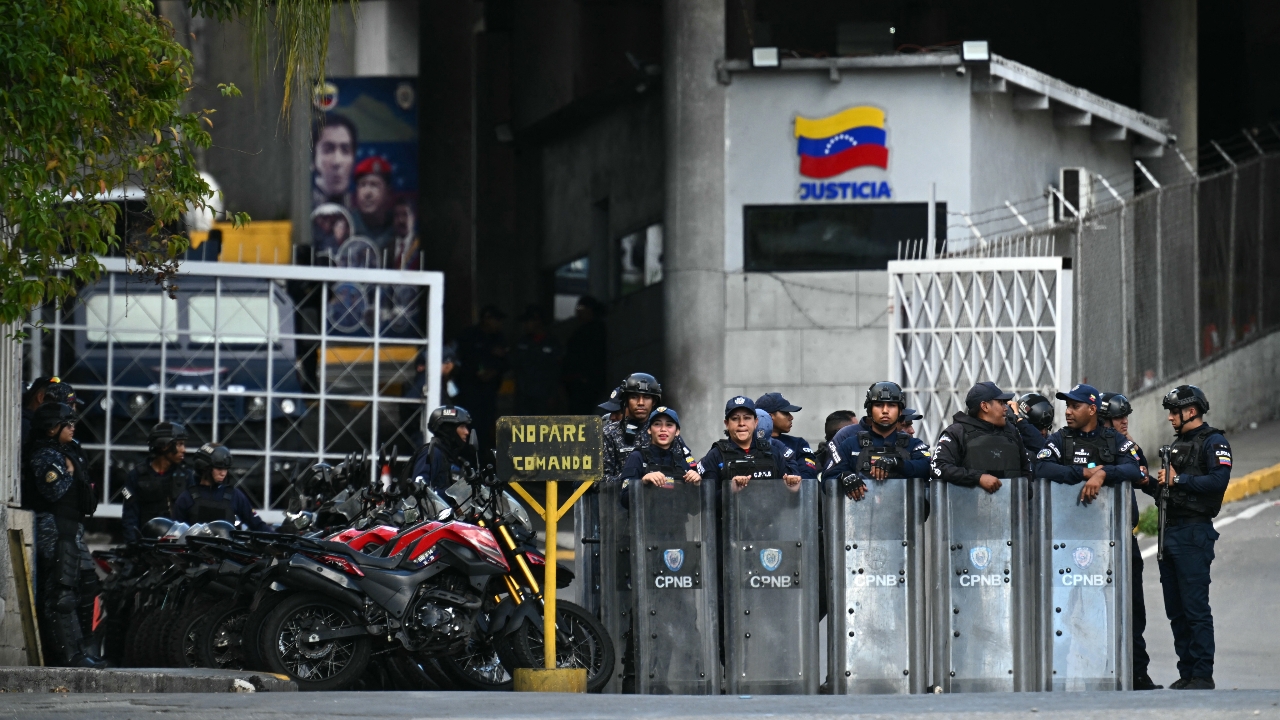
The Venezuelan interim government, led by Delcy Rodríguez, has begun releasing the first group of political prisoners to promote national reconciliation and demonstrate goodwill toward the United States. Meanwhile, President Donald Trump ordered the immediate closure of the notorious El Helicoide prison. Opposition leader María Corina Machado is scheduled to meet Trump next week.
The Venezuelan government has initiated the release of detainees identified by human rights groups as "political prisoners." This move signals a significant shift following a U.S. special forces raid in Caracas on Saturday (3 Jan) to arrest President Nicolás Maduro on drug trafficking charges in New York.
Spain's Ministry of Foreign Affairs confirmed that five Spanish nationals have been freed, including Rosío San Miguel, a security expert and prominent activist arrested in early 2024 on charges of treason and conspiracy to assassinate Maduro. She has been a vocal critic and imprisoned for nearly two years.
George Rodríguez, president of the National Assembly and brother of interim president Delcy Rodríguez, stated on a joint television broadcast that the release was aimed at "national unity and peaceful coexistence." Although the total number or names were not disclosed, a significant number of prisoners are expected to be freed.
This development coincides with U.S. President Donald Trump's announcement ordering the closure of El Helicoide prison, a symbol of political repression infamous for torturing inmates through beatings and electric shocks. However, human rights group Provea warned that closing this facility should not cause society to overlook other detention centers still operating nationwide.
Opposition leader María Corina Machado, a Nobel Peace Prize laureate who has consistently called for the release of her allies, is scheduled to visit the United States next week.
In an interview on Fox News’ Hannity program, President Trump revealed that Machado offered to give him her Nobel Peace Prize, which he described as "a great honor."
Amid years of political purges under Maduro's government, especially following the highly contested 2024 election, opposition and human rights groups have accused the government of using arrests to silence dissent. Maduro's attorney general has consistently denied the existence of political prisoners, insisting only actual lawbreakers are detained.
The commencement of prisoner releases is viewed as a crucial step in the power transition and reflects the interim government's willingness to cooperate with the United States in shaping Venezuela's future.
,BBC