

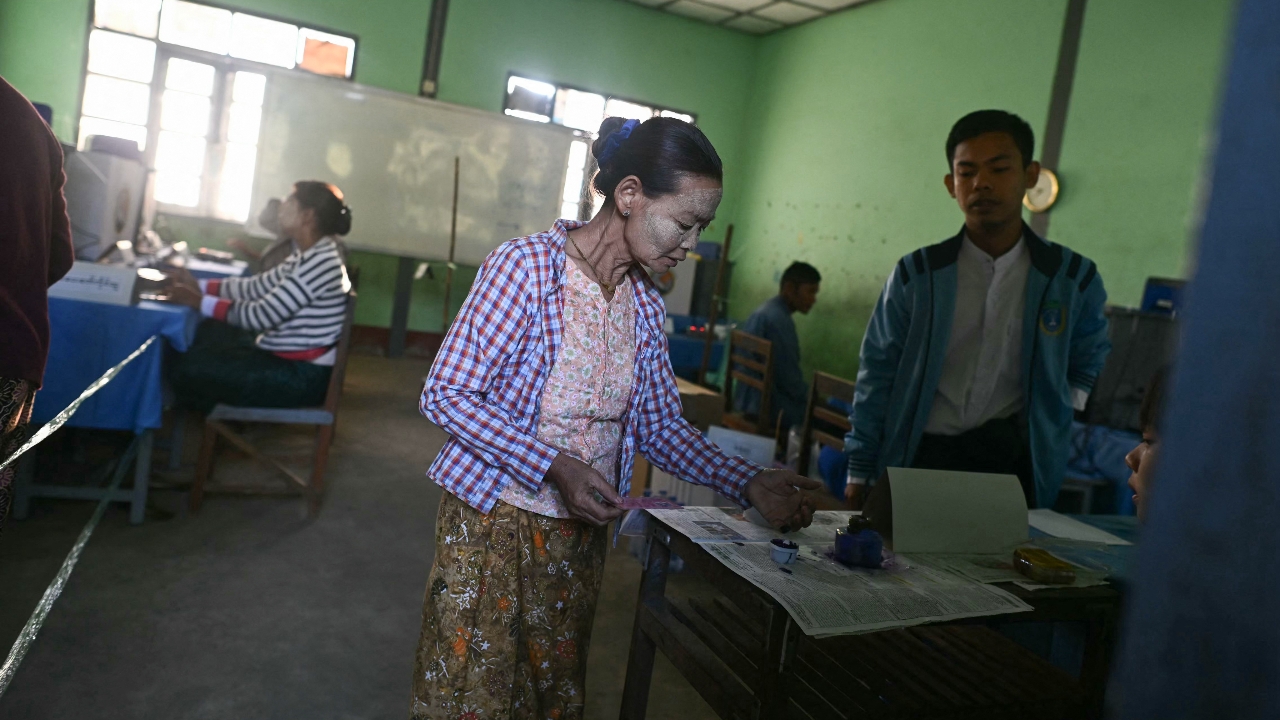
Myanmar's military government is moving forward with the second phase of elections today, despite academics and human rights groups viewing it as a mere image-building exercise to maintain power under a civilian guise. The first phase results saw the military's proxy party secure nearly 90% of seats amid a civil war that has caused nearly 100,000 deaths.
On 11 Jan 2024 GMT+7, Myanmar began opening polling stations for the second phase of the general election. A notable location is the Kawmu constituency, about 25 kilometers south of Yangon, which was formerly the electoral district of detained democracy leader Aung San Suu Kyi.
In an interview, a 54-year-old voter said she participated as a citizen hoping for peace, acknowledging that change might not come immediately. Conversely, some Yangon residents said they voted out of civic duty and hope for peace, despite recognizing that the country's problems may not be resolved soon.
In the first phase, the Union Solidarity and Development Party (USDP), representing the military, won nearly 90% of lower house seats in late December. Voter turnout then was about 50%, a sharp decline from 70% in 2020. The military-drafted constitution reserves 25% of parliamentary seats for military appointees without election.
Currently, over 22,000 political prisoners are detained, and more than 330 people face charges under a new law imposing up to 10 years imprisonment for criticizing the election process.
Tom Andrews, United Nations human rights expert, stated this election is designed to create "false legitimacy" for the military government to improve international relations and attract foreign investment.
The Asian Network for Free Elections (ANFREL) noted that political parties which previously won 90% of seats in 2020, including Aung San Suu Kyi's National League for Democracy (NLD), have been dissolved and are absent from this election, resulting in unfair competition.
In many parts of Myanmar, elections are not held due to ongoing conflict zones controlled by ethnic armed groups and People's Defense Forces (PDF). The Armed Conflict Location & Event Data Project (ACLED) estimates over 90,000 deaths from conflict since the 2021 coup. Observers also watch whether Senior General Min Aung Hlaing will retire from the military to assume the presidency as a civilian after all three election phases conclude on 25 Jan 2024 GMT+7.
. AFP