

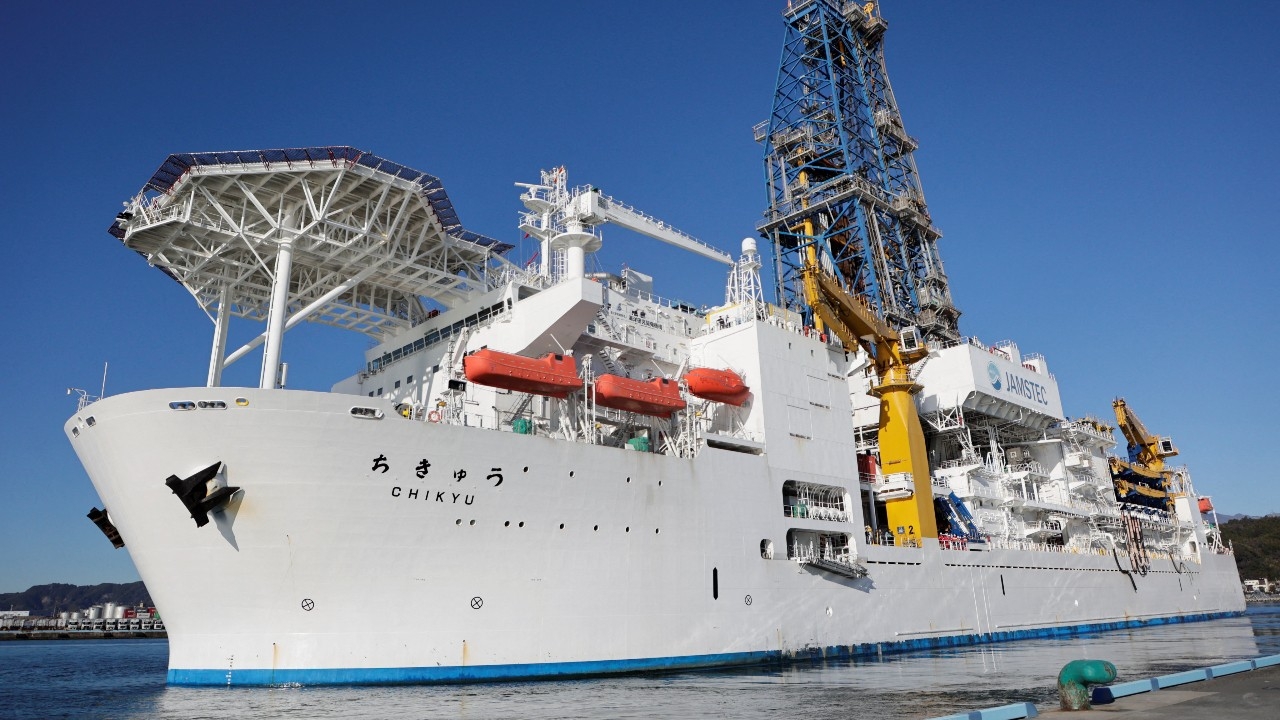
Japan has dispatched the drilling vessel "Chikyu" toward Minamitori Island to begin the world's first test of rare earth mineral extraction from 6 kilometers beneath the deep sea. The goal is to establish domestic resource sources after China started tightening exports of key minerals used in the electric vehicle and military equipment industries.
The drilling ship "Chikyu" departed from a port in Shizuoka Prefecture heading to Minamitori Island, located about 1,900 kilometers southeast of Tokyo, to start a mission testing the extraction of rare earth minerals from seabed mud. This mission marks the world's first continuous sediment pumping from a depth of 6 kilometers.
This development comes amid rising tensions between Japan and China. Recently, China announced a ban on exporting goods critical to the Japanese military, including certain important minerals. Additionally, reports indicate China is broadly restricting rare earth mineral exports in response to diplomatic conflicts.
Project leader Shoichi Ishii, supported by the Japanese government, revealed, "After seven years of intense preparation, we have finally begun this crucial test. If successful, this project will transform Japan's resource procurement and greatly reduce reliance on external sources."
Currently, Japan has reduced its dependence on Chinese rare earth minerals from 90% to about 60% through overseas investments and recycling. However, for some rare earth minerals used in magnets for electric vehicle motors and weapon systems, Japan remains almost 100% dependent on China, posing significant risks to its key automotive industry.
Since 2018, the Japanese government has invested over 40 billion yen. Although deep-sea mining was previously seen as uneconomical, rising mineral prices driven by China's political use of resources may make this project commercially viable in the future.
In the past, Japan faced pressure from China on rare earth minerals. In 2010, China temporarily suspended exports following a dispute near islands in the East China Sea, prompting Japan to reduce reliance on China from 90% to 60% through overseas investment, recycling, and developing technologies that use fewer rare earth minerals.
However, the project is closely monitored by China. Ishii stated that during last year's survey, Chinese naval fleets approached the exploration area, causing significant tension for the team. The Chinese government claims their navigation complies with international law and has urged Japan to stop spreading fear.
The Chikyu vessel is scheduled to return on 14 February. If preliminary tests succeed, Japan plans to conduct full-scale mining trials in February 2027 to pave the way toward sustainable resource security.
. Reuters