

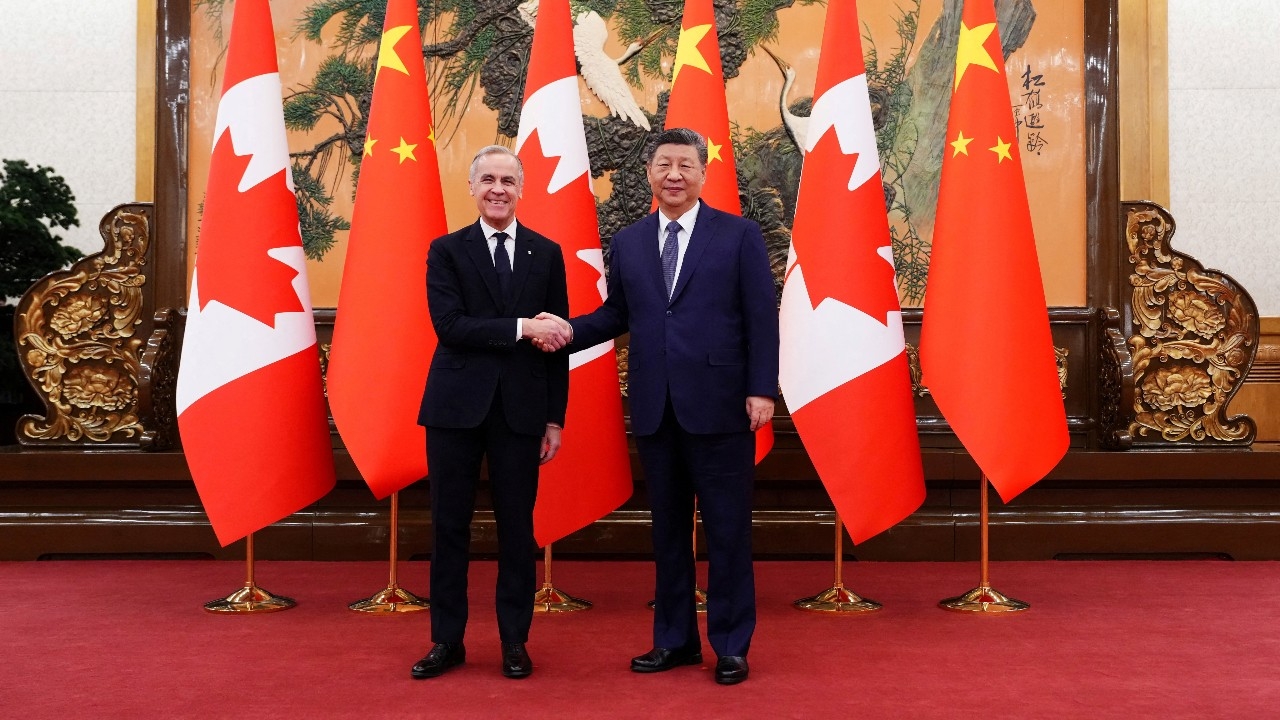
Canadian Prime Minister Mark Carney made his first official visit to China in nine years, reaching a historic strategic cooperation agreement focusing on energy security and smart agriculture. The deal includes approval for importing 49,000 Chinese electric vehicles (EVs) in exchange for significant reductions in Canadian agricultural tariffs, with the goal of boosting exports by 50% by 2030.
Prime Minister Mark Carney's visit to Beijing this week marks the first visit by a Canadian leader to China since 2017. He met with President Xi Jinping and other senior Chinese officials to jointly announce a "new strategic partnership" amid global uncertainty.
A key highlight is the electric vehicle (EV) agreement, whereby Canada will allow imports of up to 49,000 Chinese EVs subject to a special import tariff of just 6.1%, representing less than 3% of Canada's new car market.
The deal aims to attract joint venture investments from Chinese companies to establish production bases in Canada within three years, creating jobs in the automotive industry and strengthening domestic supply chains. It is expected that within five years, half of the imported vehicles will be affordable models priced under $35,000, providing new options for Canadian consumers.
In agriculture and food sectors, both sides reached a preliminary agreement to remove long-standing trade barriers. By 1 March 2026, China will reduce canola seed import tariffs from Canada to about 15%, down from as high as 85%. This market is valued at $4 billion. Additionally, tariffs on canola meal, lobster, crab, and peas will be exempted from discriminatory duties until the end of 2026. This agreement is expected to generate nearly $3 billion in new orders for Canada.
Regarding energy cooperation, clean technology, and climate competitiveness, the two energy powerhouses will expand bilateral energy cooperation to reduce greenhouse gas emissions and accelerate investments in batteries, solar power, wind energy, and energy storage systems. Prime Minister Carney also met with Chinese business leaders to attract investments in energy and clean technology sectors to Canada.
Furthermore, a public safety agreement was reached to coordinate law enforcement efforts to combat transnational drug trafficking, cybercrime, and money laundering. To strengthen people-to-people ties, President Xi Jinping pledged to allow Canadians to travel to China visa-free. Meanwhile, Canada plans to collaborate with China Media Group to promote tourism in preparation for co-hosting the 2026 FIFA World Cup.
Prime Minister Carney affirmed that this approach is based on practical realities to build a strong Canadian economy without over-reliance on any single partner. He plans to return to China for the APEC summit in 2026.