

Myanmar has begun its defense against genocide allegations at the International Court of Justice, maintaining that its military operations were counterterrorism efforts, while Gambia insists these represent a state policy to "erase the existence" of the Rohingya.
On 16 Jan 2026 GMT+7, Mr. Ko Ko Lay, Myanmar's government representative, formally presented the defense to the International Court of Justice (ICJ), denying allegations of genocide against the Rohingya and asserting that Gambia has failed to provide sufficient evidence to prove Myanmar's intent.
Myanmar's representative told the judges that the genocide accusations are unsupported by evidence, emphasizing that Myanmar could not remain passive while terrorist groups operated freely in northern Rakhine State, where most Rohingya reside. He added that the 2017 military operations were "clearing operations," a military term for counterinsurgency or counterterrorism—not attacks on civilians.
Mr. Ko Ko Lay informed the court that Myanmar remains committed to repatriating refugees but acknowledged external obstacles such as the COVID-19 pandemic. He reiterated that these efforts contradict the claim that Myanmar intends to destroy or expel the Rohingya people from the country.
Earlier, Gambia's Foreign Minister Dawda Jallow told the court that Myanmar has pursued a policy of systematic genocide to destroy the Muslim Rohingya minority, highlighting decades of oppression followed by dehumanizing propaganda and culminating in large-scale military crackdowns.
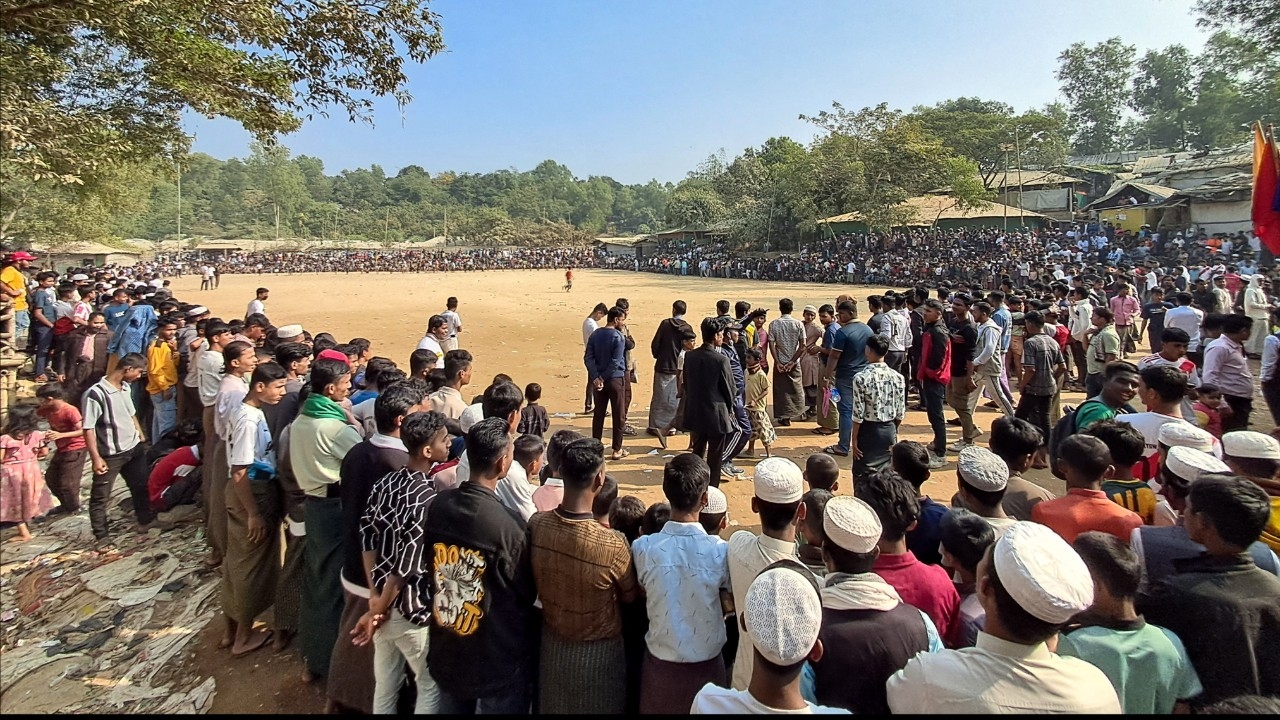
In 2017, Myanmar's military crackdown resulted in thousands of Rohingya deaths and over 700,000 fleeing to Bangladesh. According to the UN High Commissioner for Refugees, over one million Rohingya currently live in refugee camps in Bangladesh's Cox's Bazar district, among the world's largest and most crowded camps. UN reports indicate that Myanmar's senior military leaders should be investigated for genocide in Rakhine State and crimes against humanity elsewhere.
The ICJ is set to hear additional witnesses, including Rohingya survivors, during a three-day closed hearing not open to the public or media. The final ruling is expected by late 2026.
,BBC