

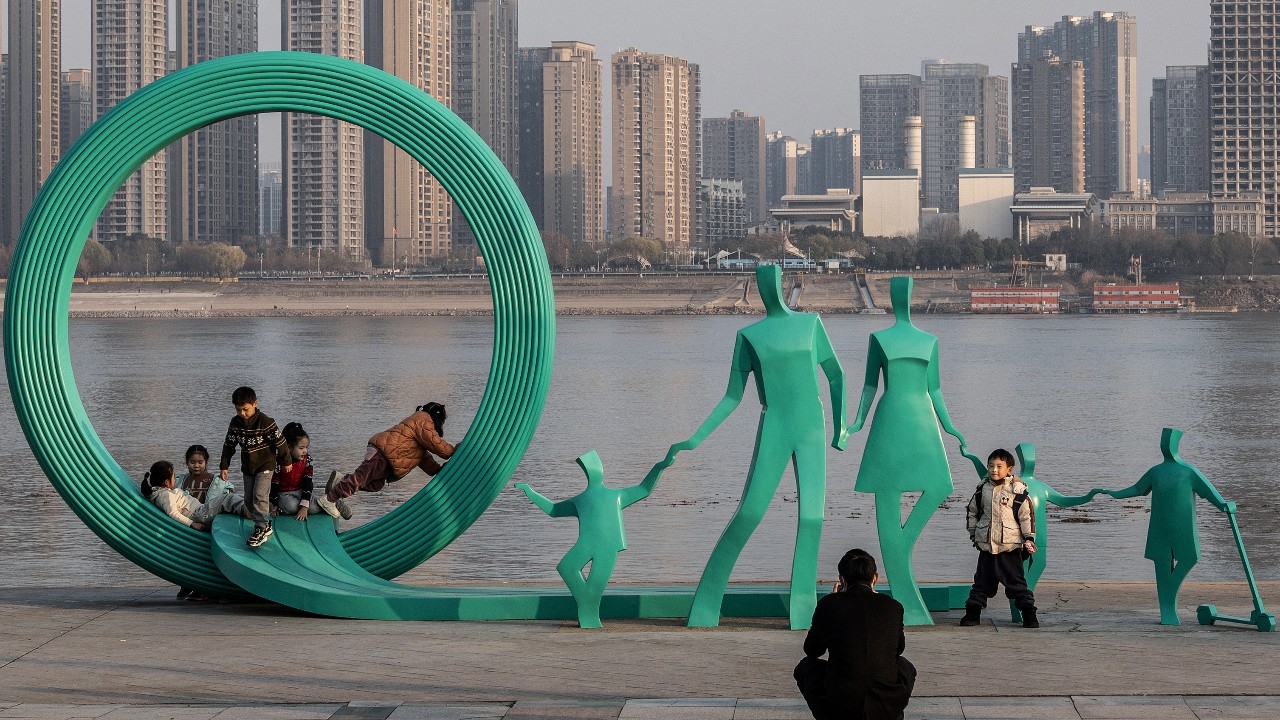
China's National Bureau of Statistics revealed that the country's population declined by more than 3.3 million people, marking the fourth consecutive year of decrease in 2025 after birth rates fell to a historic low. Meanwhile, the elderly population is rapidly expanding, prompting experts to warn of a prolonged downward trend affecting labor, the economy, and social welfare systems.
The National Bureau of Statistics of China announced today (19 Jan) that China's population in 2025 fell for the fourth consecutive year amid a birth rate plunging to a record low. The population decreased by 3.39 million, leaving 1.405 billion people, a faster decline than in 2024.
Data shows that in 2025, only 7.92 million babies were born, a 17% drop from 9.54 million the previous year, while deaths rose to 11.31 million from 10.93 million. This resulted in a birth rate of 5.63 per 1,000 people and a death rate of 8.04 per 1,000—the highest since 1968.
Demographers note that the number of newborns in 2025 is comparable to figures from 1738, when China’s population was about 150 million, reflecting severe structural changes. China has faced population shrinkage since 2022 and is rapidly entering an aging society.
Data indicates that people over 60 years old make up about 23% of the population, and by 2035 this number is expected to reach 400 million, equal to the combined populations of the United States and Italy. This will cause a massive workforce exit amid tight pension budgets. Consequently, the Chinese government has raised retirement ages to 63 for men and 58 for women.
Regarding family structure, marriage registrations in 2024 dropped nearly 20%, the largest decline on record, aligning with the slowing birth rate trend. Although the government relaxed rules allowing couples to register marriages anywhere from 2025, leading to a more than 22% increase in marriages in the third quarter, experts view this as only a short-term boost.
Although authorities have tried to undo the effects of the "one-child policy" (1980-2015), younger generations' attitudes have changed significantly. Migration to expensive urban areas has made child-rearing burdensome. However, a slight positive sign emerged after law amendments allowing couples to "register marriage anywhere," which increased marriage registrations by 22.5% in Q3 2025.
At the same time, urban migration to cities with high child-rearing costs further lowers fertility rates. China's urbanization rate rose to 68% in 2025 from about 43% in 2005.
For economic policy in 2026, the Chinese government plans to allocate over 180 billion yuan to stimulate births. Key measures include the national child subsidy, first introduced last year, and the "No Cost for Mothers" policy, where the state covers all pregnancy and childbirth expenses, including IVF treatments under the National Health Insurance Fund.
Currently, China’s fertility rate is about one child per woman, far below the replacement level. The number of women of childbearing age is expected to fall below 100 million by the end of this century, posing an unavoidable long-term challenge to China's economy and society.
/sourceReuters