

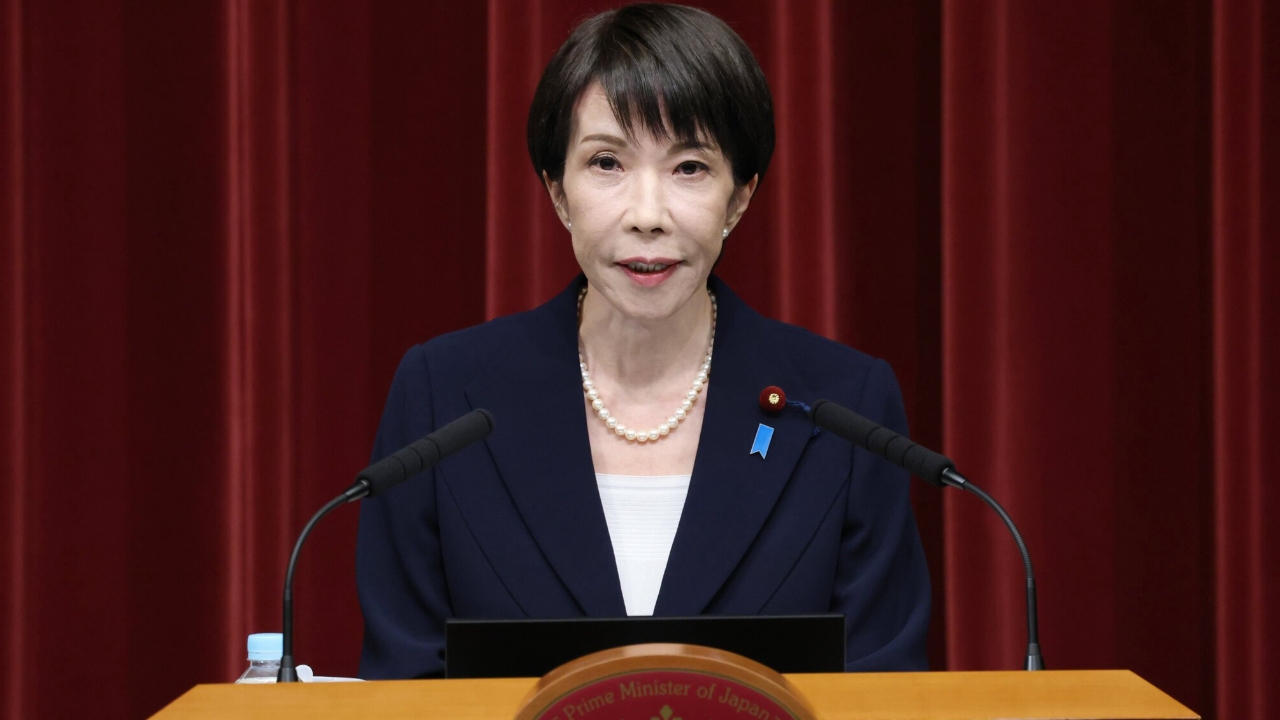
Prime Minister Sanae Takaichi is set to announce the dissolution of Japan's House of Representatives on 23 January, with a general election scheduled for 8 February. She hopes to gain voter support for her security strategy and a major increase in the defense budget amid critical challenges from the rising cost of living.
Prime Minister Sanae Takaichi announced the dissolution of the House of Representatives on Friday, 23 January, with the election announced on 27 January and voting to take place on 8 February. This move seeks public approval for increased government spending and a new security strategy, expected to accelerate the strengthening of Japan's defense capabilities.
Prime Minister Takaichi explained that it is time for the people, as sovereign owners of power, to decide the country’s direction and whether she is fit to continue serving as prime minister.
Takaichi stated that dissolving parliament was a difficult but necessary decision to confront problems head-on without delay and to determine Japan’s "direction" together with the people. Many key policies to be advanced were not part of the previous election platform and will become concrete in the fiscal 2026 budget and government bills.
The prime minister clearly said she is putting her position on the line in this election and asked the public to directly decide whether to trust her to continue governing. She emphasized that the House of Representatives election is an "indirect choice of the executive branch." If the ruling coalition—comprising the Liberal Democratic Party and the Japan Innovation Party (Ishin)—retains a majority, she will remain prime minister; if not, a new prime minister from the opposition may emerge.
On the economy, Takaichi assured that dissolving parliament will not create a policy vacuum. The government has urged related agencies to expedite this year’s additional budget disbursements, and measures to address rising living costs are being implemented. She stressed that policies ensuring citizens’ livelihood security will continue.
Regarding finance, Prime Minister Sanae noted that the new budget limits new government bond issuance to 29.6 trillion yen and aims to reduce reliance on public debt to the lowest level since the global financial crisis, reflecting a policy of "proactive yet responsible fiscal management." She affirmed plans to keep debt growth within economic growth limits to maintain fiscal sustainability and market confidence.
She also mentioned sustainable social security reform, establishing a tax credit system with subsidies, and sensitive issues like revising imperial and constitutional laws. She emphasized that these policies require political stability and clear public trust.
As for the election schedule, the prime minister said candidate registration would open on 27 January, with voting on 8 February. She reiterated that this dissolution confronts the people directly to seek a clear decision on the country’s future and her leadership role.
This election will decide all 465 seats in the House of Representatives and marks Prime Minister Takaichi’s first major political test since becoming Japan’s first female prime minister last October.
The early dissolution and election aim to capitalize on currently strong approval ratings, strengthen unity within the Liberal Democratic Party, and support the fragile ruling coalition majority in parliament.
However, this election is a crucial test of economic policy direction, especially the increased budget amid rising living costs, which is the public’s top concern. An NHK poll showed 45% of respondents view rising prices as the main issue, followed by diplomacy and national security at 16%.
Analysts say the election results will clearly indicate whether Japanese voters support the government’s higher spending and tougher security stance amid ongoing economic pressures and increasing geopolitical uncertainty.