

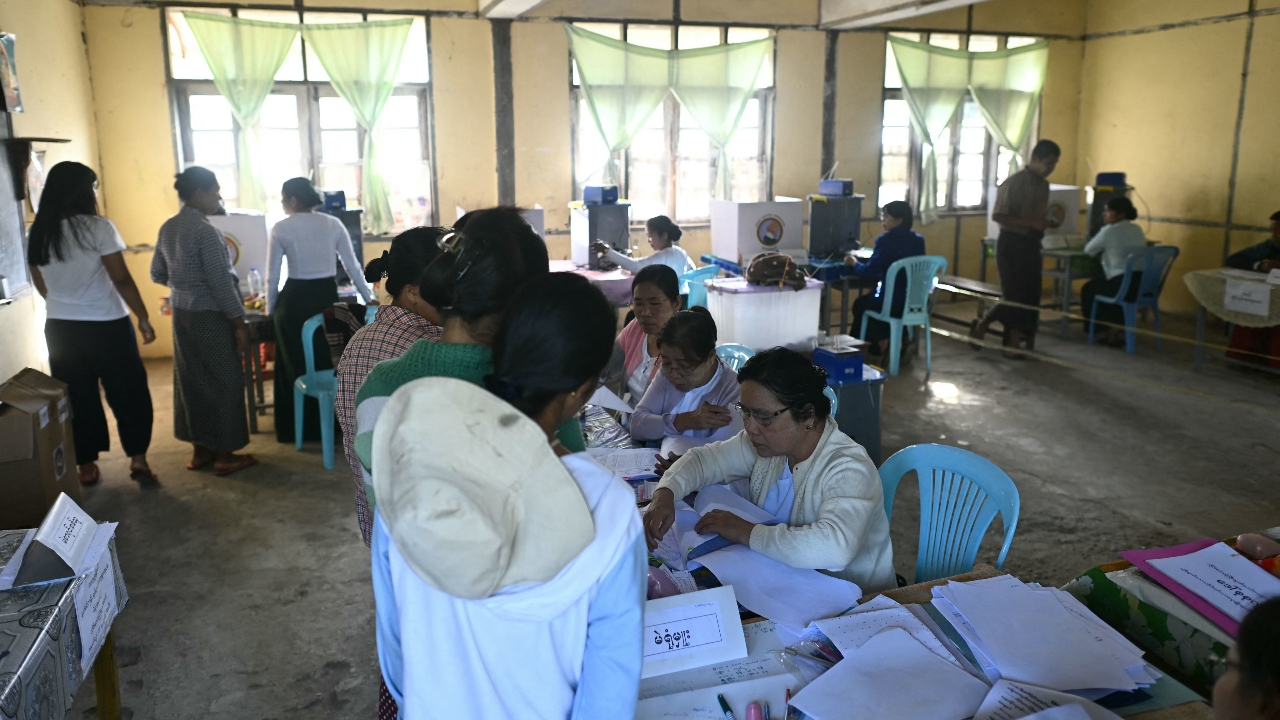
Myanmar's military government is moving ahead with the final phase of elections on 25 January, with candidate lists dominated by ministers, party leaders, and generals' heirs. Many areas remain heavily contested by fighting. ASEAN reiterated it will not recognize the election results and has never sent observers to participate in the process. Tags: [Myanmar, military government, election, ASEAN, political conflict, observers, generals' heirs]
On 21 January 2026, the Irrawaddy news website reported that Myanmar's military government is advancing its phased election plan by preparing to hold the third and final voting phase on 25 January. This comes amid heavy criticism as candidate lists reflect the same pattern: ministers from the military junta, political party leaders, heirs of former high-ranking military officers, and individuals close to the military.Tags: [Myanmar, military government, election, candidates, political parties, criticism]
This election phase will take place in 63 local administrative districts covering nine states and regions: Kachin State, Kayin State, Sagaing Region, Tanintharyi, Bago, Mandalay, Yangon, Shan State, and Ayeyarwady. Many of these areas continue to experience ongoing airstrikes and ground fighting by the Myanmar military.Tags: [Myanmar, election, conflict zones, states, regions, military operations]
Reports indicate that the Union Solidarity and Development Party (USDP), representing the military, secured nearly all victories in the first two phases. Leading candidates include party chair Khine Yi, vice chairs Myat Htwe and Myo Soe Teng, and Prime Minister appointed by the military junta, Yaw Soe. Additionally, there are union ministers, state governors, and high-ranking military officers such as Major General Tet Pan.Tags: [USDP, Myanmar, election results, military party, political leaders]
In the final phase, candidate lists remain from the same group, including Tun Ohn, Minister at the President's Office; Aung Cho Htaw, Minister of Labour; and Yan Cho, member of the military government's Central Advisory Committee, who is of Wa ethnicity. Also appearing are heirs of the new generation of military figures, such as Nanda Cho Zwar, son of a former close officer to Ne Win, Myanmar's former military dictator.Tags: [Myanmar, election candidates, military heirs, government officials, ethnic groups]
Previously, the military government held the first election phase on 28 December 2025 in 102 districts and the second phase on 11 January 2026 in 100 districts. Each phase was conducted under strict military security amid escalating conflict and widespread public opposition.Tags: [Myanmar, election phases, military security, conflict, public opposition]
Although the military government claims the election is internationally recognized, Western governments, the National Unity Government (NUG), ethnic armed groups, and pro-democracy movements all reject the election results. They concur that the election is neither free nor fair and is merely a staged event to perpetuate the military's power.Tags: [Myanmar, election legitimacy, international reaction, NUG, pro-democracy, military power]
Malaysian Foreign Minister Mohammad Hassan told Malaysia's parliament that ASEAN had previously rejected Myanmar's request to send election observers during last year’s ASEAN summit in Kuala Lumpur, although some member countries sent representatives in their national capacities. For this reason, ASEAN will not recognize the current election.Tags: [ASEAN, Myanmar election, observers, Malaysia, diplomatic relations]
Source: Irawaddy, BernamaTags: [news sources, Myanmar election]