

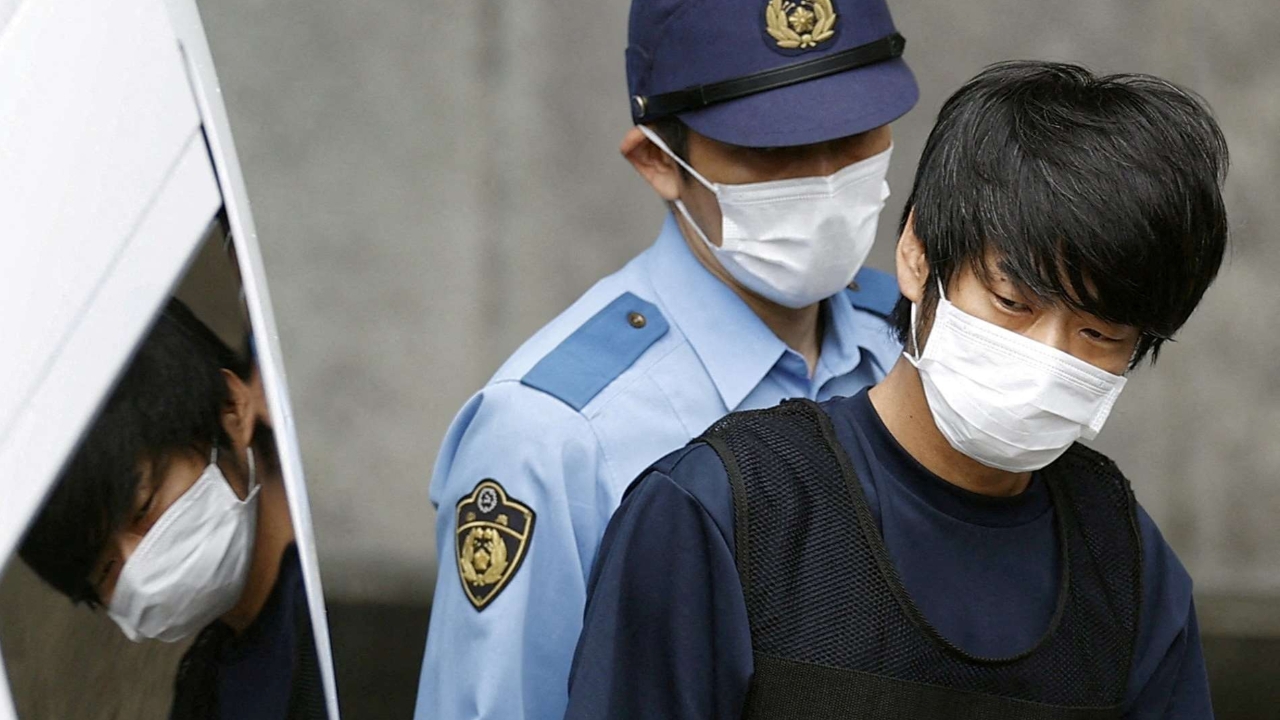
The Nara District Court sentenced Tetsuya Yamagami to life imprisonment as prosecutors demanded in December 2025, ruling that he committed an unprecedented violent act in Japan's post-World War II history after Yamagami admitted during his first court appearance in October that he indeed killed Abe.
Yamagami was arrested at the scene after using a homemade gun to shoot Abe, who at the time was a former prime minister giving a campaign speech for the Liberal Democratic Party (LDP) in Nara, western Japan, in July 2022. This case was not only a shocking crime but also exposed scandalous ties between high-ranking politicians and religious cults.
At the initial hearing in October 2025, Yamagami confessed, saying, "Everything is true. I did it myself." He used a homemade gun made from steel pipes and tape to fire two consecutive shots at Abe while he was campaigning in Nara.
Yamagami's motive became a widely debated topic in Japanese society. The defense lawyer described him as a "victim of religious abuse," revealing that his mother donated over 100 million yen (about 20 million baht) to the "Unification Church," also known as the Moon sect, leading to bankruptcy, including his father's life insurance money.
Yamagami stated his resentment was directed at Abe after seeing a video of Abe expressing support for the church's activities, although he admitted his initial target was the church's senior executives.
Eito Suzuki, a reporter covering the case, said the courtroom atmosphere was filled with sorrow, especially when Abe's widow, Akie Abe, heard testimony suggesting her husband was merely a "tool" in the religious cult's revenge. She tearfully told the court, "The grief of losing my husband will never fade... I just want him to be alive."
Meanwhile, Yamagami's older sister testified as a defense witness, recounting the hardships their family endured due to their mother's obsession with the cult, which deeply moved those attending the trial.
Previously, the prosecution demanded a life sentence, emphasizing the brutality of the act and its disruption of Japan's peaceful society, which strictly regulates firearms. In contrast, the defense requested a sentence of no more than 20 years, urging consideration of social circumstances and personal tragedy that shaped the defendant's actions.
Rin Ushiyama, a sociologist from Queen's University Belfast, commented that public sympathy for Yamagami stems from accumulated dissatisfaction among Japanese people toward religious groups that pressure for donations. However, she stated that his status as a "victim" cannot justify committing such a serious crime.
,BBC