

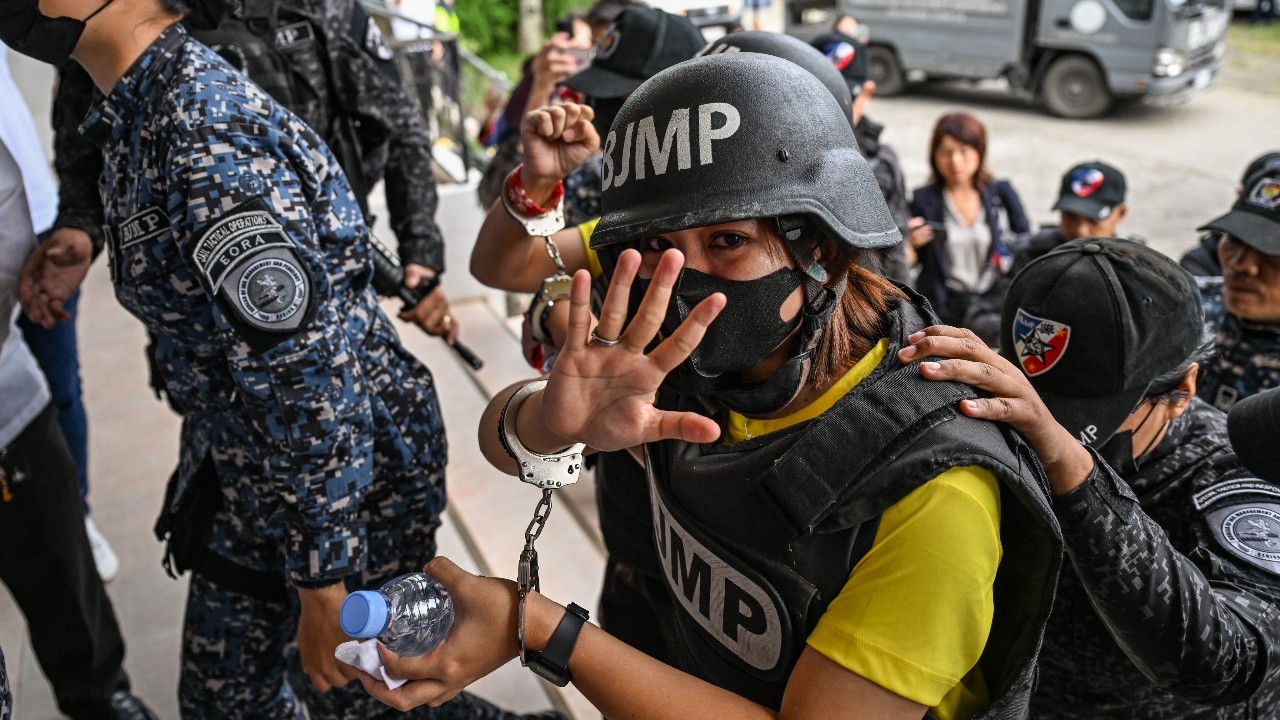
Frenchie Mae Cumpio, a human rights journalist from the Philippines, was sentenced by a court to at least 12 years in prison for providing financial support to terrorism after being detained for six years without trial. Media organizations worldwide condemned the verdict as an abuse of state power to silence critics and a dangerous sign for press freedom in the country.
Cumpio was arrested in February 2020 after police and military forces raided her home at night. Authorities claimed to have found hand grenades, firearms, and a communist flag on her bed. Additionally, they seized a large amount of cash, which Cumpio consistently explained was raised through fundraising for public activities.
Today (22 Jan), after being held in prison for six years without trial, the court acquitted Cumpio of illegal possession of firearms and explosives but convicted her of "providing financial support to terrorism." Cumpio’s lawyer stated that this verdict severely impacts reporting focused on local issues, as independent journalists covering remote areas and highlighting the struggles of the poor often become targets of "fabricated charges" by the state.
Cumpio is the former director of the Eastern Vista news agency and a radio host, regularly reporting on human rights abuses by the military and police in the Eastern Visayas region.
Alexandra Belagovska, Support Manager at Reporters Without Borders, said the verdict shows "blatant disregard for press freedom." She added, "The Philippines should be an international example in protecting press freedom, not a violator that accuses, prosecutes, and imprisons journalists simply for doing their job."
Beh Lee Yee, Asia-Pacific Director of the Committee to Protect Journalists (CPJ), condemned the court’s ruling as "absurd," stating it demonstrates that the promises made by President Ferdinand Marcos Jr. to uphold press freedom are empty words. She noted this is the first time a journalist in the Philippines has been charged with financing terrorism, emphasizing that "the verdict highlights the government’s efforts to silence critical reporting."
The International Association of Women in Radio and Television (IAWRT) and several media freedom groups jointly issued a statement condemning the ruling as a "failure of justice" and a state attempt to silence those who dare to speak the truth, warning that this case sends a chilling message that "documenting people’s hardships has become a punishable offense."
According to Reporters Without Borders (RSF), the Philippines remains the most dangerous country for media workers.