

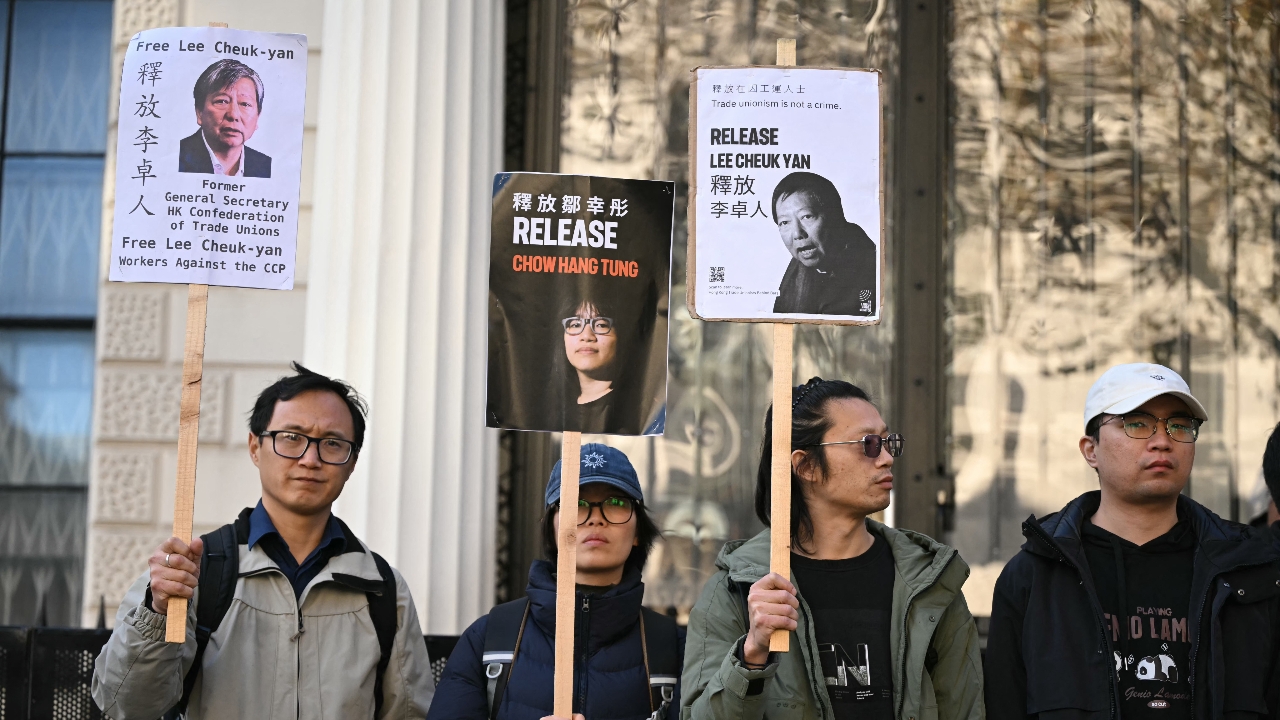
Hong Kong's court has begun a national security trial against three activists who formerly organized candlelight vigils commemorating the Tiananmen Square incident. They have been detained for more than three years and face charges of "inciting subversion of state power." Human rights organizations view the case as an attempt to "rewrite history," while authorities insist they are enforcing the law to maintain security.
The significant trial under the National Security Law began today (22 Jan). The defendants are former leaders of the "Hong Kong Alliance," the group that organized the annual candlelight vigil commemorating the crackdown on protesters at Tiananmen Square (4 June 1989) for over 30 years before the group was ordered to disband in 2021.
The defendants include Chow Hang-tung and Lee Cheuk-yan, both of whom deny the charges and have been detained since 2021. The third defendant, Albert Ho, has pleaded guilty. All face a maximum sentence of 10 years for inciting subversion of state power, as the group frequently called for "an end to one-party rule" in China.
In the cold weather, about 70 people lined up from early morning to attend the trial, with dozens of police officers maintaining tight security around the courthouse. Former vigil participants said the candlelight vigil at Victoria Park was once a symbol demonstrating how Hong Kong's political system was fundamentally different from mainland China.
Prosecutors plan to present evidence including company records, social media content, public speech videos, and items seized from the now-closed Tiananmen Museum. Amnesty International criticized the trial, stating it is not about security but an effort to rewrite history to erase memory of the Tiananmen events. Human Rights Watch called for all charges to be dropped and for the activists to be released.
The Hong Kong court affirmed that the trial will proceed based solely on legal provisions and evidence, refusing to allow the court to be used as a tool for political repression as claimed by the defendants. The case is closely watched internationally, following last month's sentencing of media tycoon Jimmy Lai.
Hong Kong was once one of the few places within Chinese territory where people could gather to remember the violent crackdown on pro-democracy protesters in 1989. However, authorities banned these gatherings in 2020, citing COVID-19 policies, and they have not resumed since. Additionally, 2020 saw the official implementation of the National Security Law, which criminalizes widespread dissent.
The Hong Kong Alliance was established in 1989 to support the pro-democracy movement in Beijing, where the Communist Party deployed troops and tanks to suppress protests at Tiananmen Square. Tens of thousands had gathered, with estimated deaths ranging from several hundred to thousands. The group became a key voice demanding accountability from the Chinese government, release of political prisoners, and democratic reforms.