

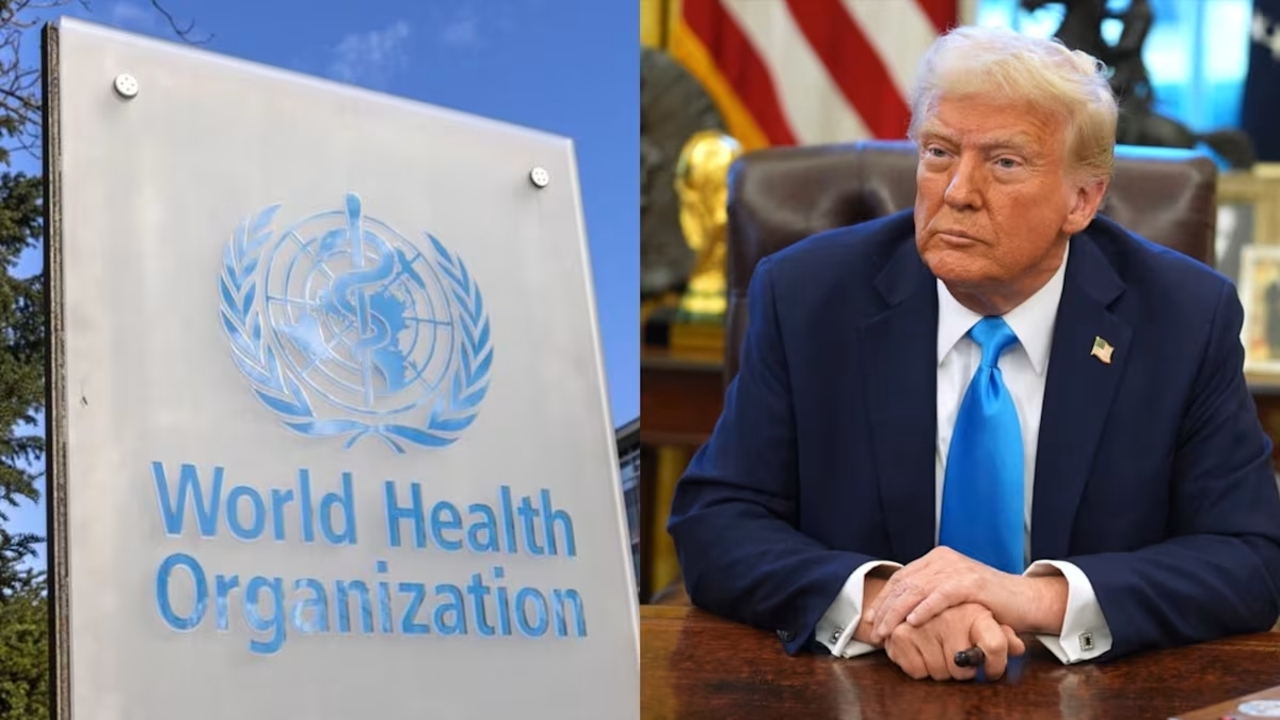
The United States officially ended its membership with the World Health Organization (WHO) on Thursday (22 Jan) following an order from Donald Trump amid issues concerning over 8.1 billion baht in unpaid membership fees prior to withdrawal. Experts warn that losing a major nation like the U.S. will weaken the global epidemic surveillance system and force WHO to face a budget crisis leading to major staff layoffs.
The United States is scheduled to officially withdraw from the World Health Organization (WHO) today (22 Jan), a decision stemming from President Donald Trump’s initial decision upon taking office in 2025. This resignation has been questioned as possibly violating U.S. law, which requires the government to fully pay outstanding membership fees before withdrawal, currently totaling about $260 million USD (approximately 8.16 billion baht).
A spokesperson for the U.S. State Department stated via email that WHO’s failure to contain and share information about past epidemics has caused economic damage to the U.S. worth trillions of dollars. “Americans have paid this organization more than enough, and the economic losses the U.S. has suffered exceed any financial debts owed to this organization,” they said, confirming that the president has used his authority to suspend all transfers of resources and funding to WHO.
The absence of the U.S., the largest contributor accounting for 18% of WHO’s total budget, has severely impacted the organization. Recently, WHO announced it would reduce its management team by half and plans to lay off about one quarter of all staff by mid-year to save costs and restructure to survive the financial crisis.
WHO Director-General Tedros Adhanom Ghebreyesus expressed hope that the U.S. would reconsider and rejoin in the future, stressing that “this withdrawal is a defeat for both the U.S. and the world.” Similarly, Bill Gates, chairman of the Gates Foundation, said in a conference in Davos that he does not believe the U.S. will rejoin in the near future, even though the world still needs WHO to detect and respond to health threats.
Lawrence Gostin, director of the O’Neill Institute for National and Global Health Law at Georgetown University, commented, “This is a clear violation of U.S. law, but Trump is likely to avoid liability.”
Meanwhile, WHO’s Executive Board is scheduled to meet in February to discuss management strategies following the official withdrawal of the United States.
. SourceReuters