

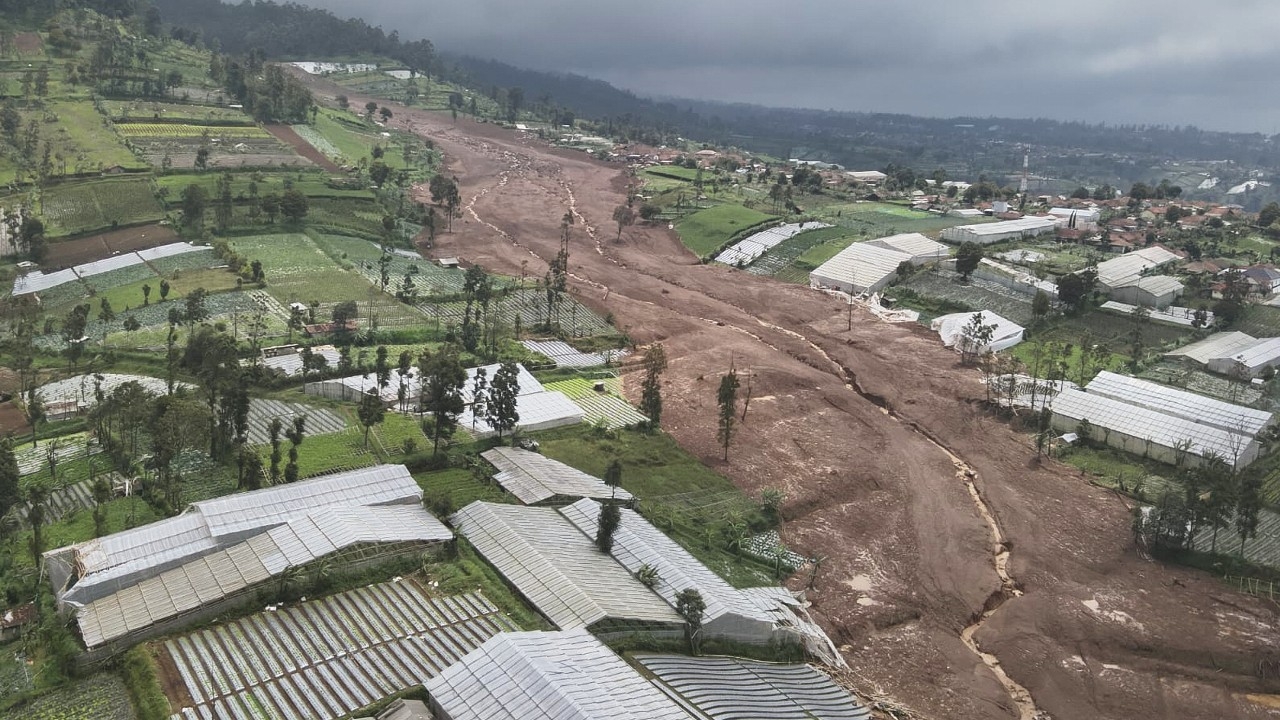
A severe landslide occurred on Java Island, Indonesia, killing at least 8 people and leaving more than 80 missing after continuous heavy rainfall hit the West Bandung area.
The incident happened around 02:30 local time, causing massive amounts of earth and mud to bury residential areas in two villages in West Bandung, with many houses trapped under the mud.
Abdul Muhari, spokesperson for the National Disaster Management Authority (BNPB), stated that by 10:30 the same day, some residents had been rescued safely, while at least 82 people remained missing and were still being searched for.
Rescue workers from various agencies, including the military, police, and volunteers, immediately mobilized to the site to search for survivors beneath the landslide debris. However, operations are difficult due to the steep mountainous terrain and unstable soil that risks further landslides.
Local search and rescue teams reported they are using manual digging, water pumps to spray soil, and drones for aerial surveys to increase the chances of finding the missing.
Indonesia regularly experiences floods and landslides during the rainy season, which typically runs from October to March. Late last year, countries in South and Southeast Asia faced severe tropical storms and monsoons, resulting in widespread disasters from Sumatra to highland areas in Sri Lanka.
Official data shows that floods and landslides in Indonesia at the end of last year claimed about 1,200 lives and displaced over 240,000 people on Sumatra Island.
Environmentalists and experts point to deforestation as a major factor exacerbating the severity of floods and landslides.
A report from the Nusantara Atlas project by The TreeMap notes that Indonesia lost more than 240,000 hectares of primary forest in 2024, maintaining its status as one of the countries with the highest rates of forest loss worldwide.
Click to read news aboutIndonesia