

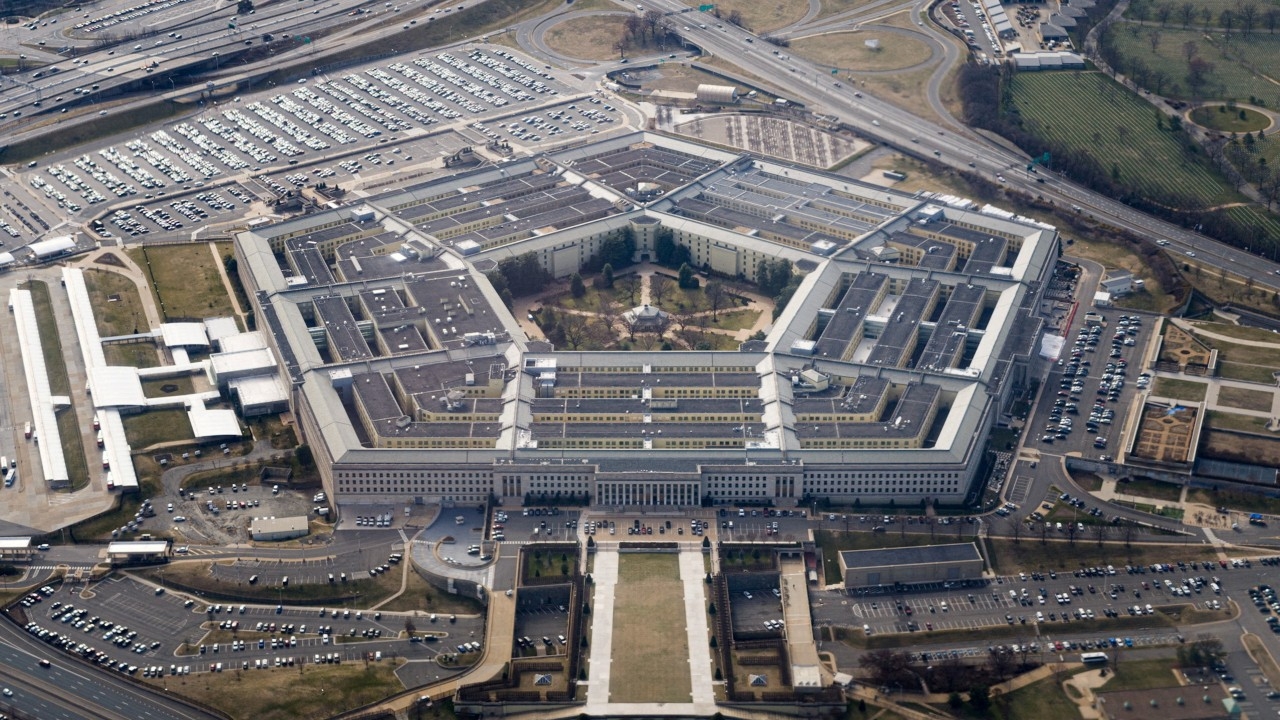
The U.S. has revealed a new national defense strategy that plans to limit the extent of support to allied nations and prioritizes homeland security above all else, no longer focusing primarily on the threat from China.
Foreign news agencies report that the Pentagon, or U.S. Department of Defense, unveiled the new national defense strategy on Saturday, 24 Jan 2026 GMT+7, marking a major shift in security priorities. The U.S. will provide support to allies in a more "limited scope" manner.
According to the latest national defense strategy, the U.S. Department of Defense prioritizes homeland and Western Hemisphere security as the foremost concern, unlike previous versions that emphasized the threat from China. It states that relations with China will be driven by "strength but not confrontation."
This new 34-page national defense strategy also reinforces recent demands by President Donald Trump, including asking allied countries to increase "burden-sharing" in countering threats from Russia and North Korea.
The U.S. calls on its allies to step up their contributions, noting that until now many partners have been "content" to let Washington subsidize their defense budgets.
However, the U.S. denies that this change signals a move toward "isolationism." “On the contrary, it represents a focused and genuinely strategic approach to the threats our country is facing,” it said.
The report also states that Washington has long neglected the tangible interests of the American people and does not want to mix American interests with those of other parts of the world, pretending that threats to individuals in other hemispheres are equally important as threats to Americans.
Conversely, allies—especially in Europe—"must take the lead in confronting threats that are less severe for the U.S. but more severe for them."
The U.S. notes that Russia's invasion of Ukraine, which began nearly four years ago, remains a prolonged but manageable threat for NATO members in Eastern Europe, referring to European nations.
Furthermore, the latest defense strategy makes no mention of Taiwan, unlike previous versions. However, the document states that the U.S. aims to "prevent anyone, including China, from dominating us or our allies."
The strategy also assigns a "more limited" role for the U.S. in deterring North Korea, stating that South Korea holds primary responsibility for this mission.
The strategic plan emphasizes that the Pentagon will ensure U.S. access to key strategic areas, especially the Panama Canal, the Gulf of America, and Greenland, both militarily and commercially.
The document states that the Trump administration's approach will be "completely different from the overblown strategies of previous post-Cold War administrations" and adds: “Stop dreaming of utopian ideals and face reality.”
/foreign news updateshttps://www.thairath.co.th/news/foreign
Source:bbc