

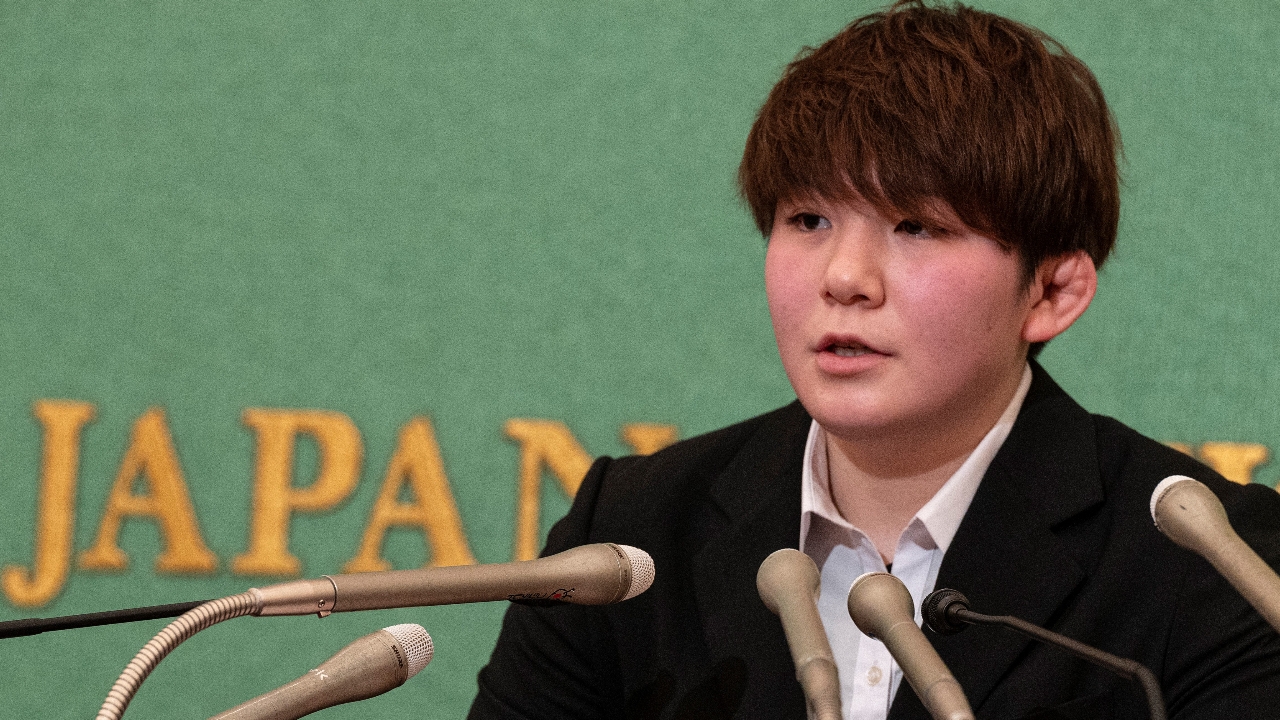
"Rina Konoi," a former female soldier who made a nationwide impact in Japan, has reached a settlement with the government and former colleagues, concluding a civil lawsuit lasting over four and a half years regarding sexual harassment during her service. She emphasized that she does not regret speaking the truth despite facing immense pressure and hopes her case serves as a lesson to society to stop ignoring victims of sexual violence.
Rina Konoi's lawyer, representing the former member of Japan's Self-Defense Forces (SDF), revealed that their client has reached a settlement with the last two defendants—the Japanese government and one former male colleague—thus ending the civil litigation that attracted global attention.
Under the agreement, the Japanese government will pay Konoi compensation of 1.6 million yen (approximately 322,305 baht). However, the final former colleague defendant will neither pay compensation nor issue an apology.
Previously, Konoi sought damages totaling 5.5 million yen from the five former male soldiers for causing her psychological distress, and an additional 2 million yen from the state for failing to adequately prevent or address the harassment.
At a press conference today (26 Jan), the 26-year-old Konoi expressed deep emotion, calling the past four and a half years since she decided to come forward "a very long and heavy time." "I experienced firsthand the heavy burden of speaking the truth, but I have never regretted choosing to speak out," she said.
Back in 2022, Konoi made history by posting a video on YouTube describing how three male colleagues forcibly pinned her down and sexually harassed her at a military camp in 2021. Initially, her complaints were ignored by her superiors.
The viral video sparked a petition with over 100,000 signatures urging Japan's Ministry of Defense to investigate the facts, leading to a thorough probe into military issues that uncovered more than 1,000 additional reports of sexual harassment.
In 2023, a criminal court found the three former soldiers guilty of sexual harassment and sentenced each to two years in prison, suspended for four years, so they avoided actual imprisonment. Nevertheless, Konoi's case is hailed as a significant step in Japanese society, which often pressures sexual violence victims to keep silent.
This case is among the landmark cases, alongside journalist Shiori Ito's and the exposure of entertainment mogul Johnny Kitagawa's scandal, that have encouraged Japanese society to more openly criticize and fight for the rights of sexual violence victims today.
/sourceBBC