

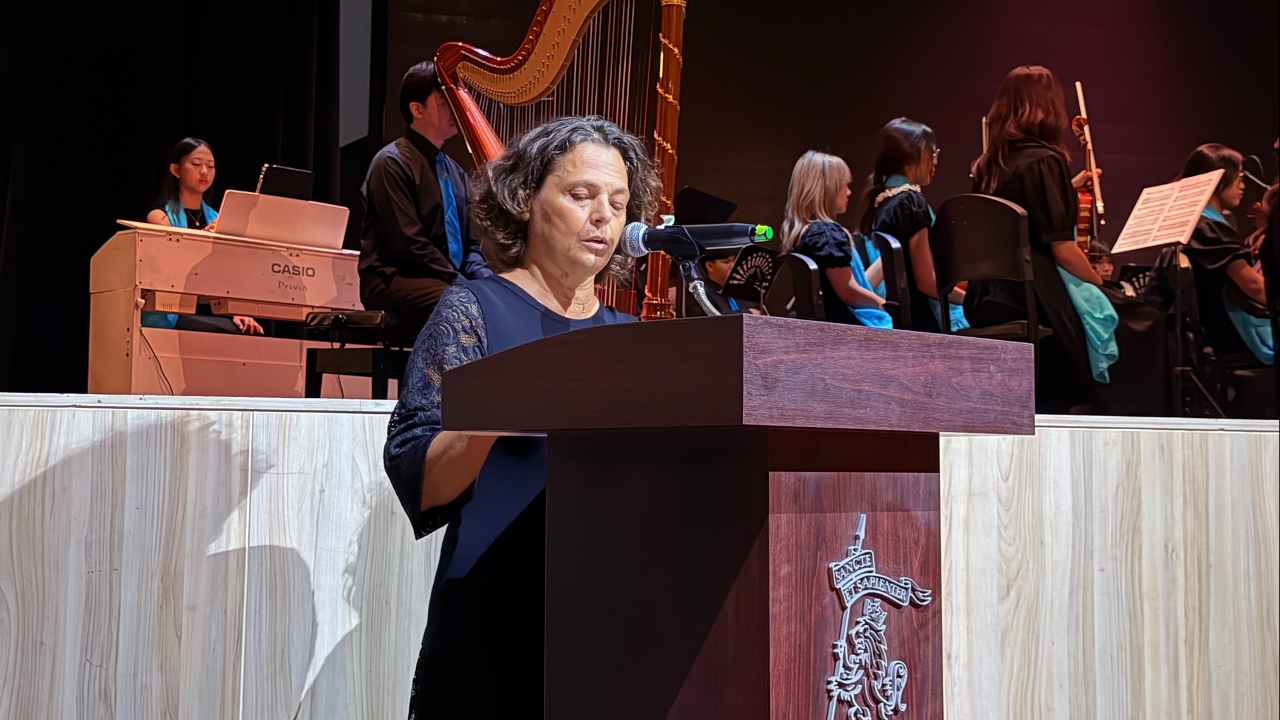
The Israeli Ambassador to Thailand wrote an article, as the daughter of a Holocaust survivor, pointing out that distorting the term genocide undermines morality and emphasizing that remembrance is a shield to prevent the tragedy from happening again.
Her Excellency Alona Fisher-Kamm, Israel’s Ambassador to Thailand, penned an open article on International Holocaust Remembrance Day, observed annually on 27 January, titled "Why Remembering the Jewish Genocide (Holocaust) Still Matters to Everyone," with the following content.
The United Nations General Assembly resolution in 2005 designated 27 January each year as International Holocaust Remembrance Day to mark the liberation of the Auschwitz-Birkenau camp in 1945, the largest and most brutal Nazi death camp. The purpose of this resolution is clear and urgent: to ensure that the memory of the Holocaust and its lessons do not fade over time.
The United Nations established this day not only to recall the suffering of the Jewish people but also to warn humanity about what can happen when hatred becomes normalized, when dehumanization goes unchallenged, and when the international community turns a blind eye. This day serves as a protective shield to prevent history from repeating itself.
For many around the world, the Holocaust may seem distant or abstract, yet it remains one of the most thoroughly documented crimes in human history. Between 1933 and 1945, Nazi Germany and its collaborators systematically murdered six million Jews—men, women, and children—solely because they were Jewish. Entire communities across Germany, Poland, Ukraine, Hungary, Lithuania, the Netherlands, France, Greece, and many other countries were destroyed. Jews were massacred, starved in ghettos, transported in cattle cars, and killed in death camps designed for mass extermination.
The Holocaust is unique both in intent and scale. It was the first time in modern history that a country mobilized all its legal, bureaucratic, military, and technological resources to completely eradicate an entire people, regardless of where they lived.
Jews were targeted not for their actions, beliefs, or possessions, but simply because they were Jewish. The goal was not conquest, conversion, or expulsion, but total annihilation—of people, culture, memory, and future. It was a deliberate attempt to destroy the Jewish race entirely.
It is no coincidence that the term "genocide" was coined after the Holocaust. As the daughter of a Holocaust survivor and an Israeli, I feel deeply pained to see the term genocide used today carelessly and irresponsibly, especially when it is wielded against Israel. Such accusations ignore the term’s historical origins, undermine its clear legal and moral meaning, and reduce it to a mere political slogan.
Criticism of policies is legitimate in a democracy, but denying Israel’s right to exist, refusing its right to protect its citizens—be they Jewish, Muslim, Christian, or others—and distorting Israel into a criminal state is an entirely different matter.
When Israel is singled out as the only country in the world to be discriminated against, demonized, and accused of crimes resembling the ideology that once sought to annihilate the Jewish people, we must call these things by their true name: antisemitism cloaked in political rhetoric.
Therefore, Holocaust Remembrance Day is not only about the past but painfully relevant today. Although the Holocaust occurred over eighty years ago, Jews continue to be killed solely for being Jewish. Jewish synagogues are burned, homes vandalized with swastikas, and antisemitism is rising openly and violently across all continents.
These developments affect more than just Jews. History teaches us that hatred never stops with one target. The Holocaust did not begin with death camps but with words, lies, and indifference; with making hatred seem normal, failed education, overt hate speech, and interference.
That is why Holocaust education is essential everywhere, including in countries geographically and historically distant from Europe. The lessons of the Holocaust are universal. In today’s uncertain, divided, and chaotic world, societies are vulnerable to rhetoric rooted in fear and scapegoating.
Remembering the Holocaust is not endless blame but awareness of warning signs and reaffirming shared responsibility to protect human dignity. When the world is chaotic, hatred always seeks victims. Today it may be Jews; tomorrow... it could be others.
Source: Embassy of Israel in Thailand