

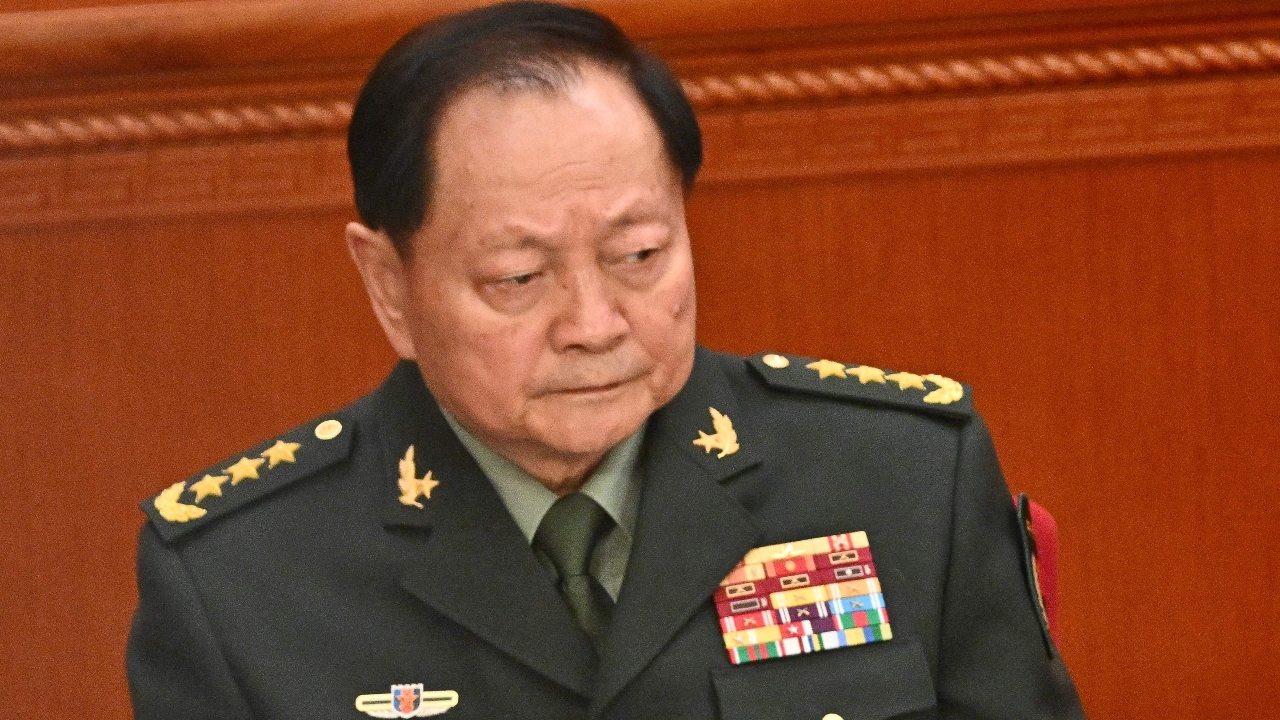
Foreign media are monitoring the chaotic internal situation within China's military following the continuous removal of high-ranking generals. Analysts indicate that the leadership vacuum in the military may shift Beijing's military decision-making balance.
The latest purge of senior Chinese military officers is violently shaking the power structure of the People's Liberation Army (PLA), revealing ongoing power struggles under Xi Jinping’s leadership. It also raises critical questions about China’s military capability and the implications for Taiwan's future.
At the center of this upheaval is the downfall of Zhang Youxia, China's second-highest-ranking general and former vice chairman of the Central Military Commission (CMC), the supreme body controlling all armed forces. China's Ministry of National Defense confirmed Zhang is under investigation for serious disciplinary and legal violations.
Simultaneously, Liu Zhenli, another general and a deputy member of the CMC who once oversaw the PLA Joint Staff Department, is also under investigation. Chinese authorities have not disclosed any details of the allegations against him.
CMC Reduced to Two Members, Power Vacuum Emerges
As a result of the ongoing purge, the Central Military Commission, which normally has about seven members, now has only two remaining: Xi Jinping and General Zhang Shengmin. Such a situation is unprecedented in the history of modern Chinese politics.
Analysts view this not merely as a routine anti-corruption effort but as a sign of structural turmoil within the military, which commands millions of troops and stands as a key pillar of the Chinese Communist Party’s power.
An editorial in the PLA Daily, the official military newspaper, explicitly stated that Zhang and Liu undermined the accountability system under the CMC chairman—Xi Jinping—and accused them of causing severe political problems and corruption that harmed the military’s combat readiness.
These statements have led many analysts to believe that the cases involve political loyalty, which is considered paramount in China’s political system, rather than just issues of personal gain or corruption.
Alessandro Arduino, a China security expert at the Royal United Services Institute in London, said Zhang’s removal is a direct warning from Xi Jinping.
He sees this as an emphasis that political loyalty is more important than combat readiness, and disloyalty is the gravest offense within the party, with no one being immune.
He noted that if Xi wanted to save face, Zhang, aged 75, could have quietly retired. But choosing to open a political case against a former close ally shows that the Chinese leader wants to send a strong, uncompromising signal to the entire military.
Not Even Old Allies Are Safe
Zhang Youxia was once seen as untouchable within the Chinese military, not only because of his high-ranking position just below Xi Jinping but also due to long-standing personal ties stemming from his family’s revolutionary lineage.
Additionally, he was one of the few senior PLA generals with real combat experience, making his removal a strategic loss for the military.
The disappearance of Zhang’s biography from the official PLA website further confirms that he has fallen completely out of favor with China's leadership.
Centralized Power and Its Side Effects
Since coming to power in 2012, Xi Jinping has launched a sweeping anti-corruption campaign across all state sectors, with the military becoming a clear focus in recent years.
Previously, the Chinese Communist Party had removed He Weidong, another CMC vice chairman, and in 2024, two former Chinese defense ministers were expelled from the party for corruption.
While these recent events help Xi consolidate absolute power, experts warn that an atmosphere of suspicion may cause practical problems for the PLA, including overly cautious decision-making and reluctance to offer military opinions that contradict the leader.
Impact on Taiwan
Amid tensions in the Taiwan Strait, most analysts agree that the purge of generals will not alter China’s goals toward Taiwan, as these are party-level policies backed directly by Xi Jinping.
However, what may change is the military decision-making process, as power and final authority become increasingly concentrated in the top leadership amid a military lacking professional leadership and rife with political paranoia.
In this context, the purge of senior generals is not just internal Chinese political news but a signal the world must watch closely, indicating whether China's military under Xi Jinping is moving toward greater strength or a new form of vulnerability.
Click to read related news aboutChinese military