

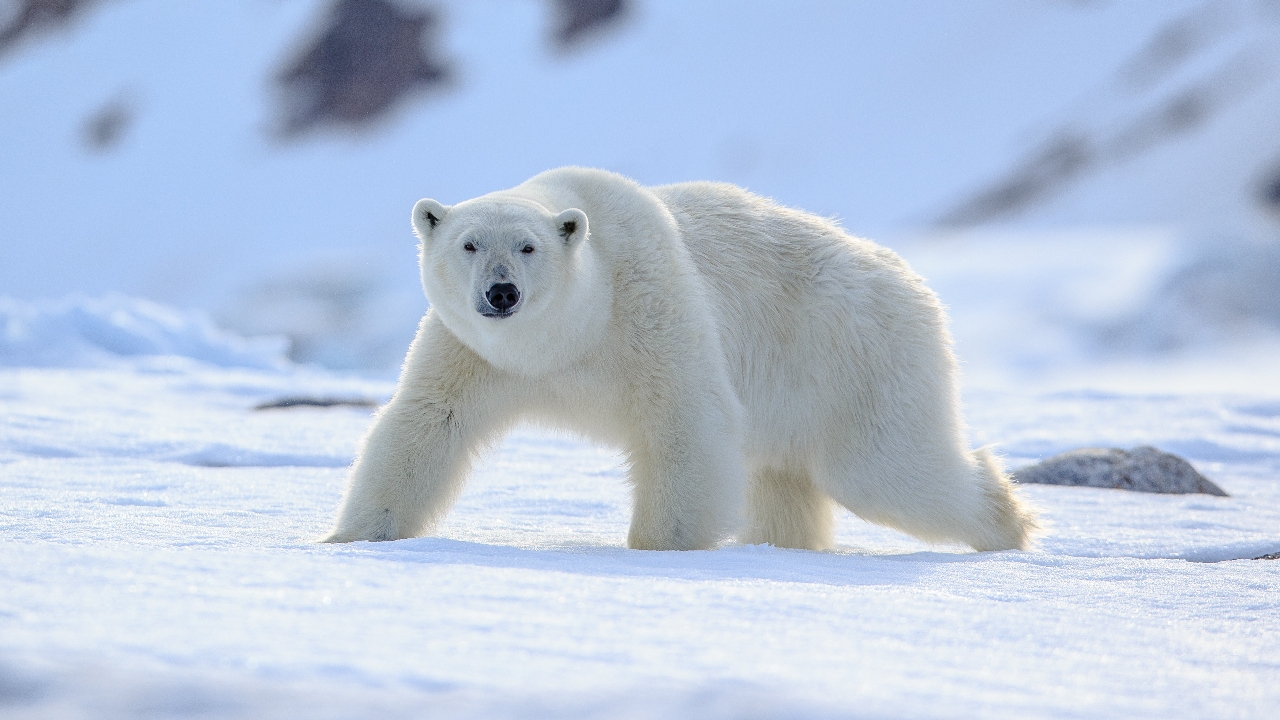
Recent research has found unexpected results: polar bears in Norway have become fatter and healthier over more than 30 years, despite global warming causing continuous Arctic ice loss.
Scientists reported that from the early 1990s until 2019, the research team weighed and measured 770 adult polar bears, finding a significant increase in fat accumulation in bears in the area, even though sea ice— the bears’ primary hunting ground—continued to decline due to global warming.
Normally, polar bears rely on sea ice platforms to hunt seals, which are their main high-energy food source. Seal fat not only provides energy and warmth to the bears but is also crucial for mother bears to produce high-fat milk for their cubs.
However, researchers believe polar bears in Svalbard have adapted to ice loss by increasingly hunting land prey such as reindeer and walruses, which are large, high-fat animals as well. This study, published in the journal Scientific Reports, surprised scientists because Svalbard is among the regions most severely affected by global warming.
Dr. Jon Aars, lead researcher at the Norwegian Polar Institute, stated that fatter bears indicate better health, while acknowledging he expected to see deteriorating bear condition given the severe sea ice loss.
A key factor is the walrus, which has been legally protected in Norway since the 1950s after near extinction from hunting. This protection has allowed walrus populations to grow, providing a new, rich fat food source for polar bears today.
Aars further explained that as seal sea ice areas shrink, seals may concentrate in limited zones, making it easier and more efficient for polar bears to hunt them.
Although these findings are positive in the short term, researchers warn the trend may not be sustainable. Continued ice loss will force polar bears to travel farther for prey, expend more energy, and lose essential fat reserves needed for survival.
Polar Bears International conservation group noted that Svalbard polar bears were once among the most heavily hunted populations globally before international protection in the 1970s. The new research may reflect population recovery following hunting pressure and the rise of walrus and reindeer populations over recent decades.
Dr. John Whiteman, senior scientist at the organization, said the study is a short-term positive sign but cautioned that physical condition is only one factor. Other studies have found that increasing ice-free days reduce survival rates of cubs, young females, and older bears.
In other parts of the Arctic, global warming has had a clearly severe impact on polar bears. There are currently 20 subpopulations across the Arctic, and in western Hudson Bay, Canada—one of the most studied areas—population declines have been directly linked to rising temperatures.
Experts emphasize that the long-term outlook remains clear: polar bears depend on ice for survival, and if ice loss continues unchecked, polar bears could eventually disappear from the wild.
This study highlights that the effects of global warming vary by region, but in the long term, if sea ice disappears, polar bears will not be able to survive.
Source:BBC
Click to read news aboutPolar bears