

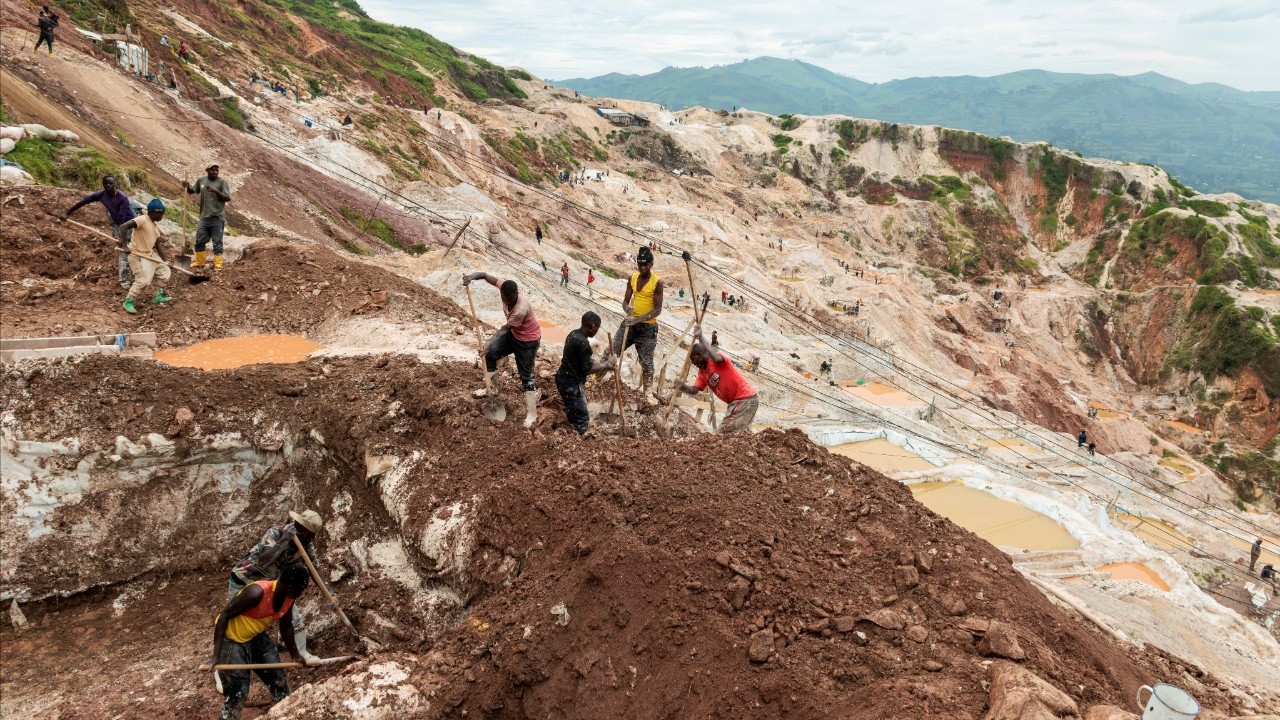
The death toll from the mine collapse in the Democratic Republic of Congo has risen to over 200, while about 20 survivors are currently hospitalized for treatment.
Foreign news agencies reported that the number of deaths from the mine collapse in Rubaya, in eastern Democratic Republic of Congo, on Wednesday, 28 January 2026, had risen to more than 200 by Saturday, 31 January 2026.
A spokesperson for the governor of North Kivu province told local media that the mine in Rubaya collapsed due to heavy rain. Reports stated that women and children were among those mining coltan, a mineral used in electronics manufacturing such as smartphones and computers, at the time of the accident.
A former mine supervisor told the BBC that the mine area was not properly maintained, increasing the risk of accidents and hindering rescue efforts. Furthermore, the loose and fragile soil conditions worsened the situation.
The victims of the mine collapse included women, children, and small-scale miners who were not officially employed by large mining companies. Reports said about 20 survivors are currently receiving hospital treatment.
Rubaya is one of several towns in North Kivu province controlled by the M23 group, which international observers say receives support from neighboring Rwanda.
The mines in Rubaya hold about 15% of the world's coltan reserves, accounting for half of all coltan deposits in the Democratic Republic of Congo.
This metal ore contains the element tantalum, used to produce high-performance capacitors for various electronic devices, making it highly sought after in the global market.
For more international news:https://www.thairath.co.th/news/foreign
Source:BBC