

The Japanese government announced a historic success after a deep-sea exploration mission uncovered sediments containing vast quantities of rare earth minerals at a depth of 6,000 meters near Minamitorishima Island. This represents a significant step toward establishing a supply chain independent of China amid rising geopolitical tensions.
The Japanese government revealed that the experimental deep-sea drilling mission successfully retrieved sediments containing rare earth minerals from around 6,000 meters deep, marking the world's first attempt to extract minerals at such depths.
Government spokesperson K. Sato stated, "We are currently analyzing the collected samples in detail to determine the exact quantity of minerals," emphasizing that this achievement is highly significant for both economic security and comprehensive marine resource development.
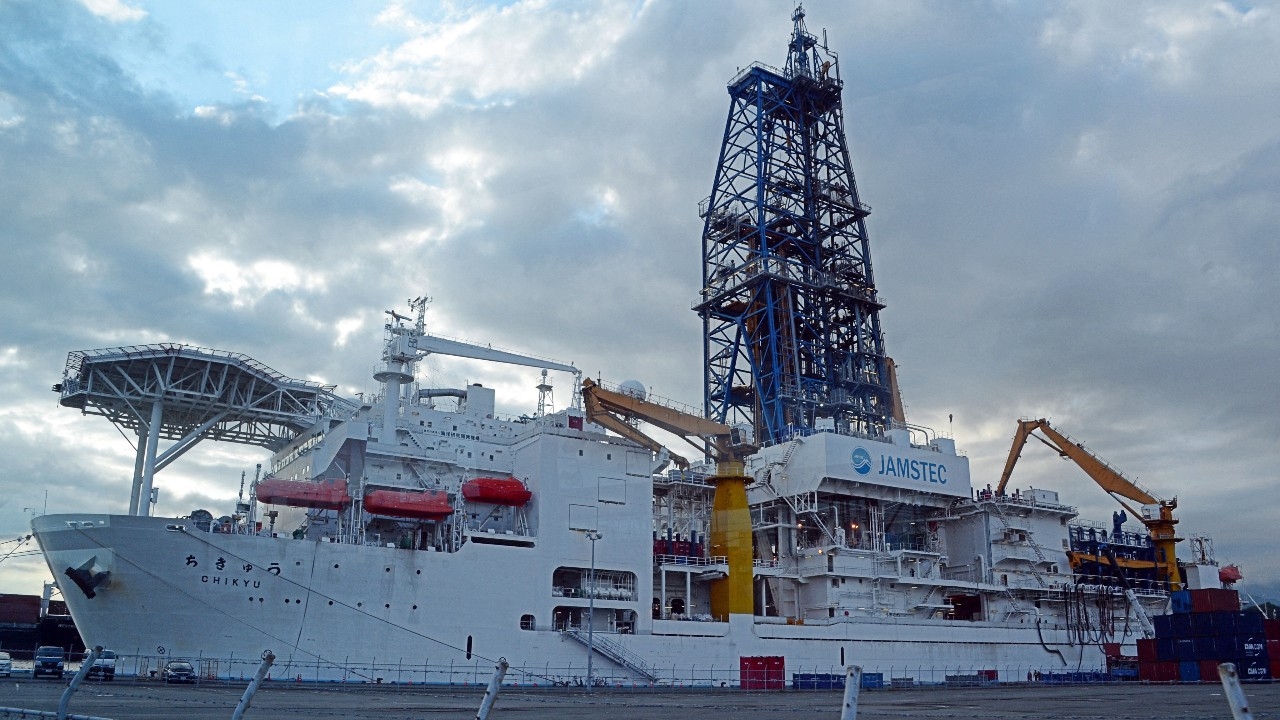
The drilling used the scientific drilling vessel "Chikyu," which departed for Minamitorishima Island in the Pacific Ocean last month. The area lies within Japan's exclusive economic zone and is estimated to contain over 16 million tons of rare earth deposits. Nikkei newspaper reported this as the world's third-largest reserve.
Reports indicate the deposit includes dysprosium, with enough supply to meet global demand for 730 years, used in producing high-power magnets for phones and electric vehicles, as well as yttrium, sufficient for 780 years of use, applied in laser technologies.
Currently, China is the world's largest producer of rare earth minerals, controlling nearly two-thirds of mining and 92% of global refining capacity. Japan's move comes amid Beijing's export restrictions on dual-use goods, including certain minerals, in response to Prime Minister Sanae Takaichi's signals about potential military retaliation if Taiwan is attacked.
Analysts from the International Institute for Strategic Studies (IISS) noted that if Japan can consistently extract minerals from this source, it will become a "strategic asset" significantly reducing reliance on China's supply chains.
However, environmental campaigners warn that deep-sea mining could severely damage marine ecosystems and disturb the seabed. Meanwhile, the International Seabed Authority (ISA) is working on global regulations to control mining in international waters. In this case, Japan's drilling within its sovereign waters is conducted under domestic laws.
This issue also represents a geopolitical flashpoint, following former U.S. President Donald Trump's push to accelerate mining in international waters to compete with China in strategic mineral markets.
/AFP