

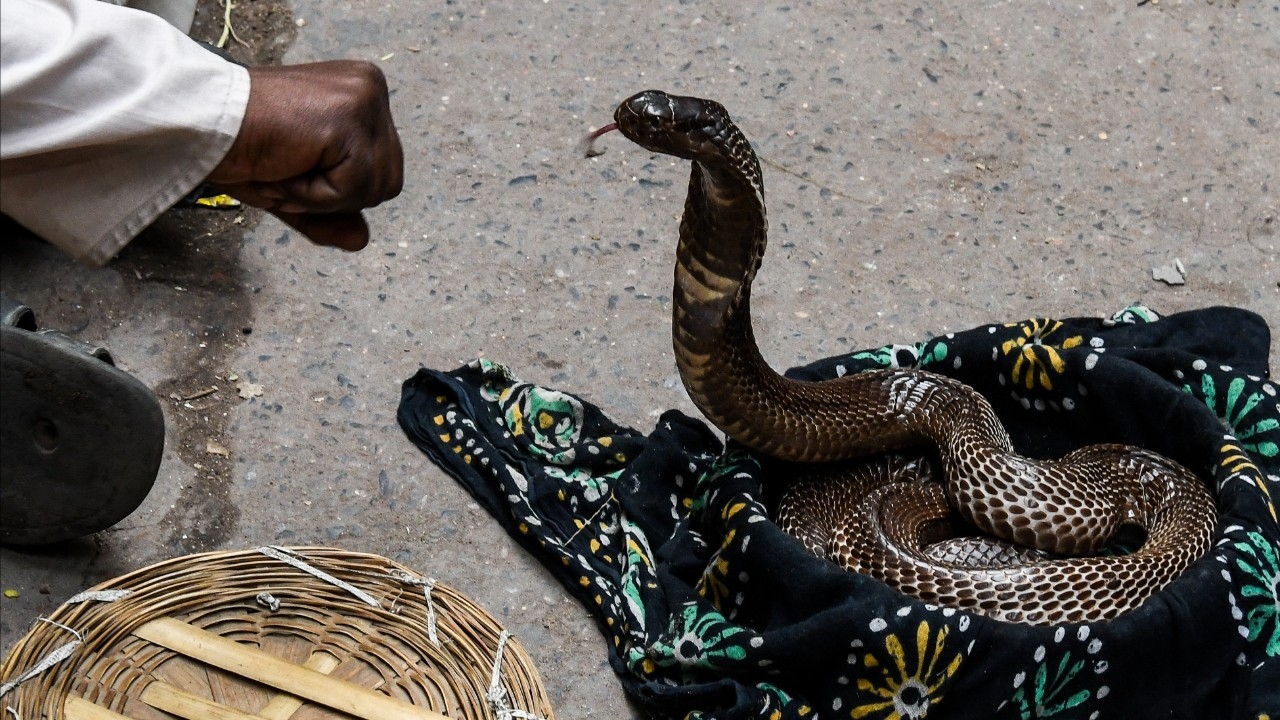
India is seeking ways to resolve its snakebite crisis, which claims tens of thousands of lives annually, pointing to shortages of antivenom serum, unprepared medical personnel, and insufficient rural healthcare access.
BBC News reported on 1 Feb 2026, citing Indian federal government data that about 50,000 Indians die from snakebites each year, representing roughly half of global snakebite deaths. A 2020 study estimated the toll could be higher, suggesting that between 2000 and 2019, India may have had as many as 1.2 million snakebite deaths, averaging 58,000 annually.
A recent report from the Global Snakebite Initiative (GST) found that 99% of medical personnel in India face obstacles in using antivenom serum effectively.
Researchers surveyed 904 healthcare workers in India, Brazil, Indonesia, and Nigeria—countries most affected by snakebites—and found common challenges including poor infrastructure, limited serum access, and inadequate training.
Nearly half of the medical personnel reported that treatment delays led to severe complications in patients, including amputations, surgeries, or lifelong mobility impairments.
In 2017, the World Health Organization (WHO) designated snakebite envenoming as a “high-priority neglected tropical disease” due to its high mortality. WHO estimates about 5.4 million snakebites occur worldwide annually, causing over 100,000 deaths each year.
WHO also noted that snakebite heavily impacts poor rural communities in low- and middle-income countries disproportionately compared to other regions.
Dr. Yogesh Jain, a GST member and physician working in Chhattisgarh state in central India, said that the highest death and injury reports come from central and eastern India, particularly among farmworkers and impoverished tribal communities.
In 2024, India launched the National Action Plan for Snakebite Envenoming (NAPSE), aiming to halve snakebite deaths by 2030. The plan focuses on improved surveillance, better serum supply and research, enhanced medical capacity, and public awareness campaigns.
Experts agree this is a step in the right direction, but implementation remains inconsistent.
“In India, snakebite is seen as a problem of the poor,” Dr. Jain said. “That is why there is insufficient drive or action to prevent these deaths, which are actually entirely avoidable. Every second counts when treating snakebites.”
However, delays in reaching healthcare facilities are common in rural India due to poor roads, remote hospitals, and lack of ambulance services, hindering timely treatment.
Dr. Jain said some states are trying to improve access by stocking antivenom serum at primary and community health centers, but proper administration remains a major challenge because many medical staff are not specially trained and fear administering serum due to risks of severe allergic reactions.
“Administering serum requires diluting it with saline and intravenous injection over more than an hour, but many health centers lack the equipment to manage possible side effects,” Dr. Jain explained.
He added that another problem is that many rural Indians still rely on traditional healers or local beliefs and only seek hospital care when symptoms become severe, which often leads to fatal outcomes.
Another key obstacle is ensuring supply of high-quality antivenom serum.
Jerry Martin, co-founder of The Liana Trust working to reduce human-snake conflicts in Karnataka state, said India currently produces serum targeting only the “four main species”: Indian cobra, common krait, Indian saw-scaled viper, and Russell’s viper, believed responsible for most snakebites.
However, India has dozens of other venomous snake species without specific antivenom serum, including the green pit viper common in Himachal Pradesh in the north, Malabar pit viper, hump-nosed viper in southern states, and many others in the northeast.
A 2025 study by the All India Institute of Medical Sciences (AIIMS) in Jodhpur, Rajasthan, highlighted this problem by finding that among 105 snakebite patients treated with serum for saw-scaled viper bites when the snake type was unknown, two-thirds responded poorly to treatment.
Over the past five years, The Liana Trust has researched venoms from snake species beyond the “four main” to develop broader antivenoms, but Martin said progress is slow due to the labor- and time-intensive nature of this work.
He urged other states to follow Karnataka’s 2024 government order classifying snakebites as a “notifiable disease,” requiring medical personnel to report incidents to authorities to address underreporting issues.
Follow international news:https://www.thairath.co.th/news/foreign
Source:bbc