

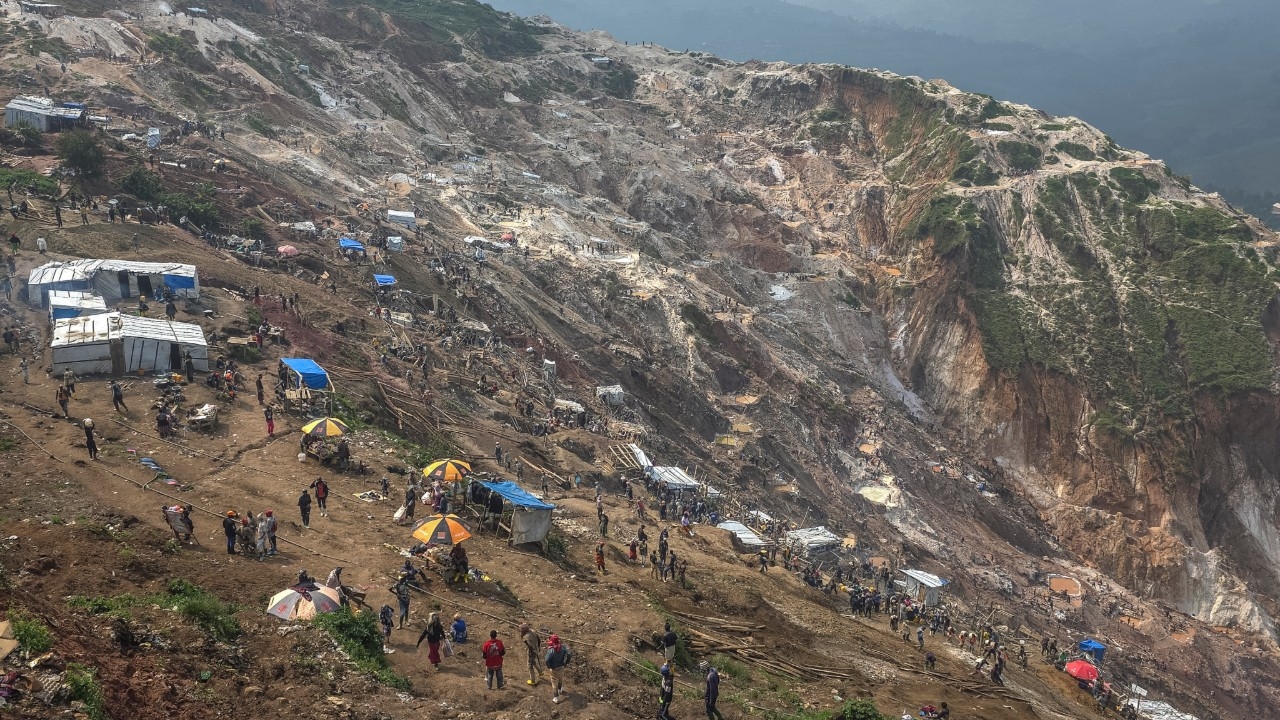
A landslide occurred at the "Rubaya" coltan mine in eastern Congo, killing more than 200 people, including workers, children, and traders. Authorities have acknowledged that some individuals are still trapped inside the mine tunnels.
On 3 February 2026, international news agencies reported a major coltan mine collapse in the Democratic Republic of Congo, resulting in over 200 fatalities, according to a spokesperson for the provincial governor appointed by the M23 rebel group controlling the area.
The Rubaya mine is located about 60 kilometers northwest of Goma, the capital of North Kivu province. Heavy rains during the rainy season caused the soil to soften and collapse onto the hand-dug mine tunnels.
A spokesperson for the North Kivu governor told Reuters on Friday that more than 200 victims, including miners, children, and traders in the area, were affected by the landslide. Some were rescued in time but sustained serious injuries.
He stated that at least 20 injured people are currently receiving medical treatment, noting that the main cause was the fragile soil conditions during the rainy season. "At the time of the incident, the victims were inside the mine shaft when the soil suddenly gave way," said Muyisa.
The Rubaya mine accounts for about 15 percent of the world's coltan production. This mineral is processed into tantalum, a heat-resistant metal in high demand for mobile phones, computers, aircraft parts, and gas turbines. The mine has been under control of the M23 rebel group, supported by Rwanda, since 2024.
Source: Aljazeera