

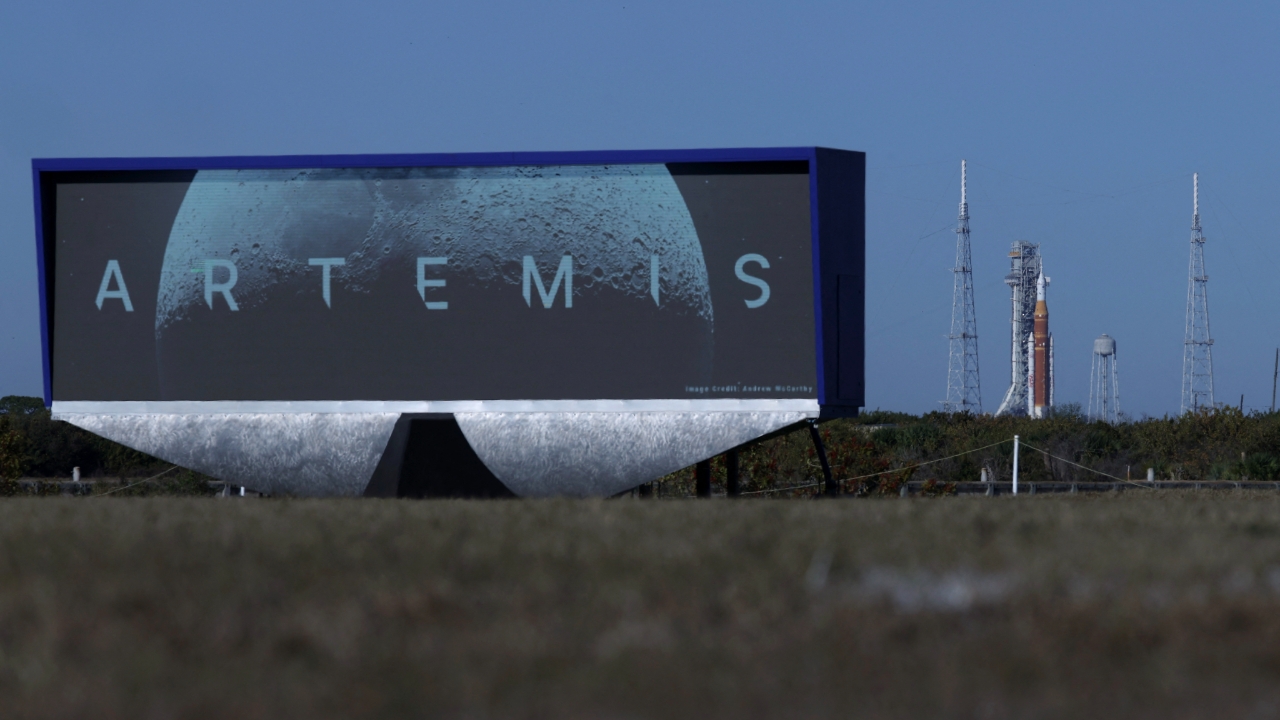
NASA has postponed the "Artemis 2" mission launch until at least March after a hydrogen leak was detected during final testing. The agency emphasized this historic mission will send four astronauts to explore the moon for the first time in 50 years.
On 3 February 2026, the U.S. National Aeronautics and Space Administration (NASA) announced plans to reschedule the launch of the "Artemis 2" rocket to as early as March 2026 after final tests revealed a hydrogen fuel leak. This caused the delay from the originally planned launch date of 8 February.
NASA's decision came early Tuesday morning after completing the "Wet Dress Rehearsal" test, which simulated fueling with 700,000 gallons and the countdown for the actual launch of the giant Space Launch System (SLS) rocket. This rocket will carry four astronauts on a lunar orbit mission.
NASA stated several obstacles emerged during testing, notably a hydrogen leak during fueling caused by extremely cold weather, which delayed test commencement. The agency deemed it necessary to postpone the mission to allow the team to thoroughly review data and conduct repeat tests.
NASA executive Jared Isaacman said it is still unclear whether the rocket must be moved back into the building for repairs, as some fixes can be done while the rocket remains on the launch pad. However, if the rocket cannot launch by March, it will need to be relocated to replace certain batteries in the upper part of the vehicle.
The Artemis 2 mission will carry four astronauts: NASA's Reid Wiseman, Victor Glover, Christina Koch, and Canadian Space Agency's Jeremy Hansen. They will orbit the far side of the moon for 10 days, potentially setting a record for the farthest distance humans have traveled from Earth. The hydrogen leak issue is a recurring problem first encountered during Artemis 1 testing in 2022 because liquid hydrogen fuel, cooled to minus 253 degrees Celsius, is difficult to control due to its small molecular structure.
Source: CNN