

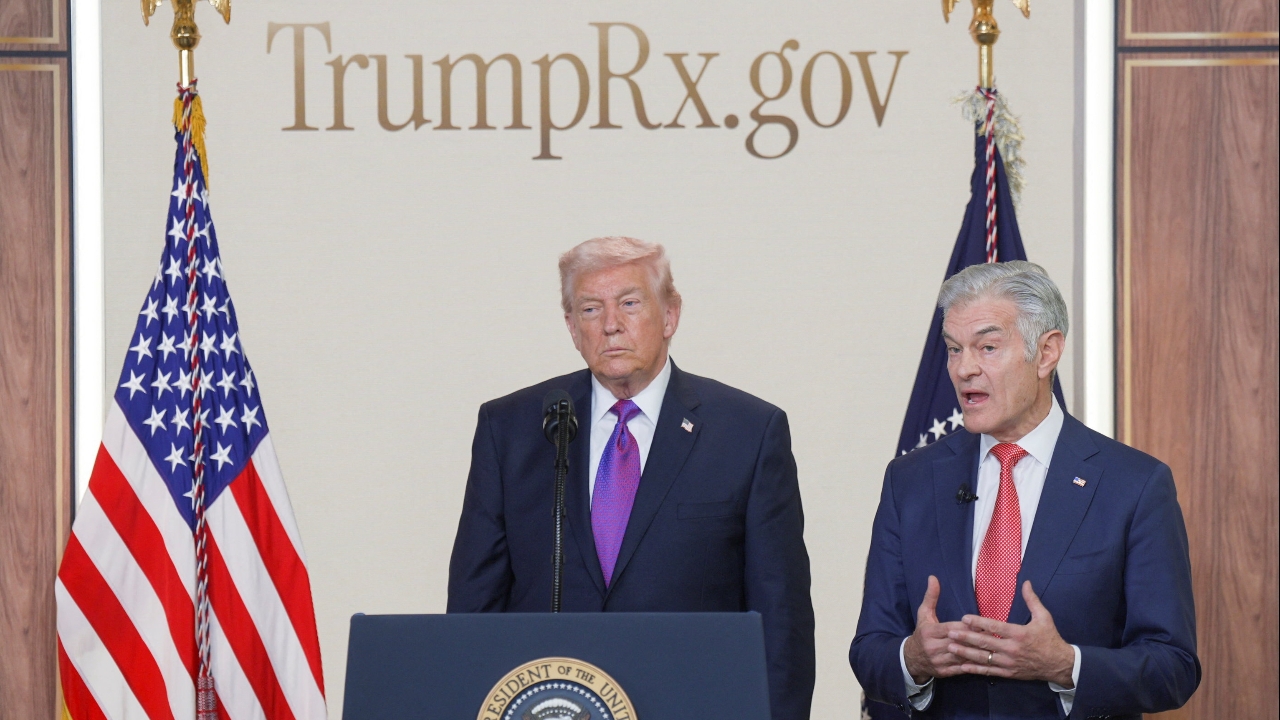
U.S. President Donald Trump has officially launched the website TrumpRx.gov, allowing the public to access prescription drugs at discounted prices. This initiative is a key policy effort to lower drug prices in the United States amid concerns over cost-effectiveness and benefits for insured individuals.
The launch took place at the White House, attended by Dr. Mehmet Oz, head of the Medicare and Medicaid Services Center, and Joe Gebbia, co-founder of Airbnb. Trump stated that the program will help Americans save money and improve their health.
The U.S. government stated it has signed a "Most-Favored Nation" agreement with 16 major global pharmaceutical companies. These companies have agreed to reduce drug prices for the Medicaid program and cash-paying consumers through TrumpRx in exchange for import tax exemptions from the U.S. government.
The agreement includes Eli Lilly and Novo Nordisk, which agreed to lower prices for GLP-1 weight loss drugs such as Ozempic and Wegovy to an average of $149 to $350 per month, down from over $1,000. Novo noted that the oral form of Wegovy, launched last month, is currently sold only directly to consumers while awaiting insurance coverage decisions.
Executives at Novo Nordisk said TrumpRx will facilitate patient access to FDA-approved medications and increase the availability of drugs at prices affordable to cash-paying consumers.
Currently, U.S. patients pay nearly three times more for drugs than those in other developed countries, prompting Trump to continuously pressure pharmaceutical companies to lower prices. Participating companies also include Pfizer, AstraZeneca, and Merck. Key discounted drugs include Merck’s diabetes medication Januvia, Sanofi’s blood thinner Plavix, Amgen’s cholesterol drug Repatha, Gilead’s hepatitis C drug Epclusa, and fertility treatments such as Gonal-F and Cetrotide.
A STAT News report stated that the TrumpRx website uses GoodRx's system and does not sell drugs directly. Instead, it connects patients to other websites to place orders.
However, public health policy experts warn that cost savings are unclear because the main target group is uninsured individuals, whose expenses may not be counted within insurance limits and may still be unaffordable for many.
Juliet Kubansky from the Kaiser Family Foundation noted that the program may not be cost-effective for insured patients and should not be seen as a systemic drug price reduction, even though it benefits some groups.
Analysts point out that although consumer benefits remain uncertain, pharmaceutical companies gain from direct sales without involving insurers, and discounted sales are better than no sales at all.