

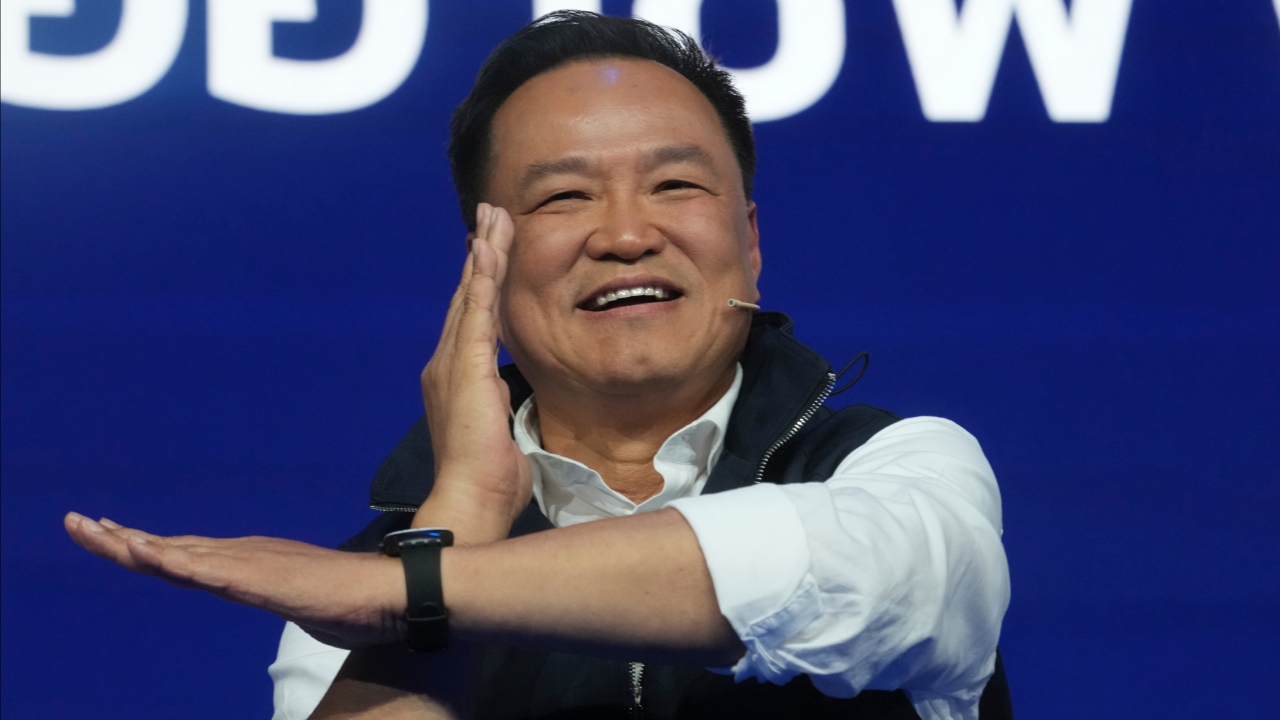
Foreign media reported on the Bhumjaithai Party's victory in the general election held last Sunday, analyzing the "Blue Wall" as the key factor that led to their landslide win.
Singapore's Channel News Asia (CNA) reported that based on unofficial results from the Election Commission, the Bhumjaithai Party, led by Prime Minister Anutin Charnvirakul, achieved a landslide victory in the country's general election on Sunday, 8 Feb 2026 GMT+7.
At 23:45 local time, projections indicated that Bhumjaithai secured 175 constituency seats out of 400 total. Alongside their ally, the Kla Party, expected to gain 56 seats, this positions Anutin as the frontrunner to lead the next government.
The party finishing second was the Progressive People's Party with 85 seats, followed by the Shinawatra family's Pheu Thai Party with 60 seats.
Bhumjaithai's seat count is expected to increase once the party-list proportional representation allocation, based on total votes, is finalized—a process likely taking at least two weeks before official certification.
CNA noted that Bhumjaithai's victory stemmed from building a "Blue Wall"—the party's signature color—encircling Bangkok, with a campaign focused on strong rural support bases.
Instead of emphasizing grand ideologies or broad political doctrines, Bhumjaithai gradually established a formidable grassroots presence in key regions, leveraging the influence of powerful families and political groups, effectively controlling Thailand's conservative movement.
Many areas long regarded as strongholds of former Prime Minister Thaksin Shinawatra's parties shifted from the red of Pheu Thai to Bhumjaithai's blue.
In the run-up to the vote, Bhumjaithai's senior leaders emphasized the party's identity as a right-wing, deeply patriotic political force, positioning themselves as a security-focused, pragmatic alternative to reformist rivals like the People's Party.
The party's platform also included expanding popular subsidy programs to stimulate spending and growth, proposals to lower electricity prices, and heavy investment in national security.
Analysts said Anutin's stance on projecting Thai strength, protecting borders, and centralizing military power amid uncertainty and nationalist pride was a key part of the party's strategy to win votes.
Experts told CNA before the vote that the election, called less than 100 days after Anutin became prime minister, allowed him to capitalize on nationalist sentiments stirred by months of fighting along the Thailand-Cambodia border.
Since taking office and throughout the campaign, Anutin prioritized visits to the northeastern region—comprising 20 provinces—while the party's rivals weakened politically due to Cambodia-related issues.
Pheu Thai's handling of these issues triggered backlash leading to the removal of Paethongtarn Shinawatra for ethical violations, while the People's Party faced opposition for past attempts to challenge the military's role in national affairs.
Anutin's parliamentary strength is expected to be bolstered by the Kla Party, a conservative party led by senior politician Thammanat Prompao. Kla has heavily invested in local politics and grassroots leaders, focusing on agriculture, land rights, and social welfare.
Kla's influence grew rapidly by targeting MPs from other parties; 20 MPs from the Palang Pracharath Party officially joined Kla after being expelled in late 2024, giving Kla a substantial parliamentary bloc heading into the 2026 election.
Bhumjaithai won parliamentary seats across many parts of the country, especially in the south and north.
Meanwhile, Pheu Thai, which concentrated resources on building strongholds in the north—particularly in key provinces like Chiang Mai and Chiang Rai—saw its support base decline. The People's Party is likely to secure most urban northern seats, while Kla dominates rural areas.
This situation leaves Pheu Thai with only a few remaining strongholds, including Nakhon Ratchasima in the northeast, as well as Loei and Kalasin provinces in Isan.
Before the vote, analysts told CNA that if Pheu Thai, long dominated by the Shinawatra family, fails to maintain influence in the north, their era as a major player in Thai politics may be over.
The estimated 60 constituency seats for Pheu Thai in this election represent a sharp decline from the 112 seats won in 2023, plus an additional 29 party-list seats.
Chulaphan Amornwiwat, leader of Pheu Thai, said at a press conference Sunday night that the party must respect "the voice of the people."
"We must respect the election results," he said.
Follow international news:https://www.thairath.co.th/news/foreign
Source:cna