

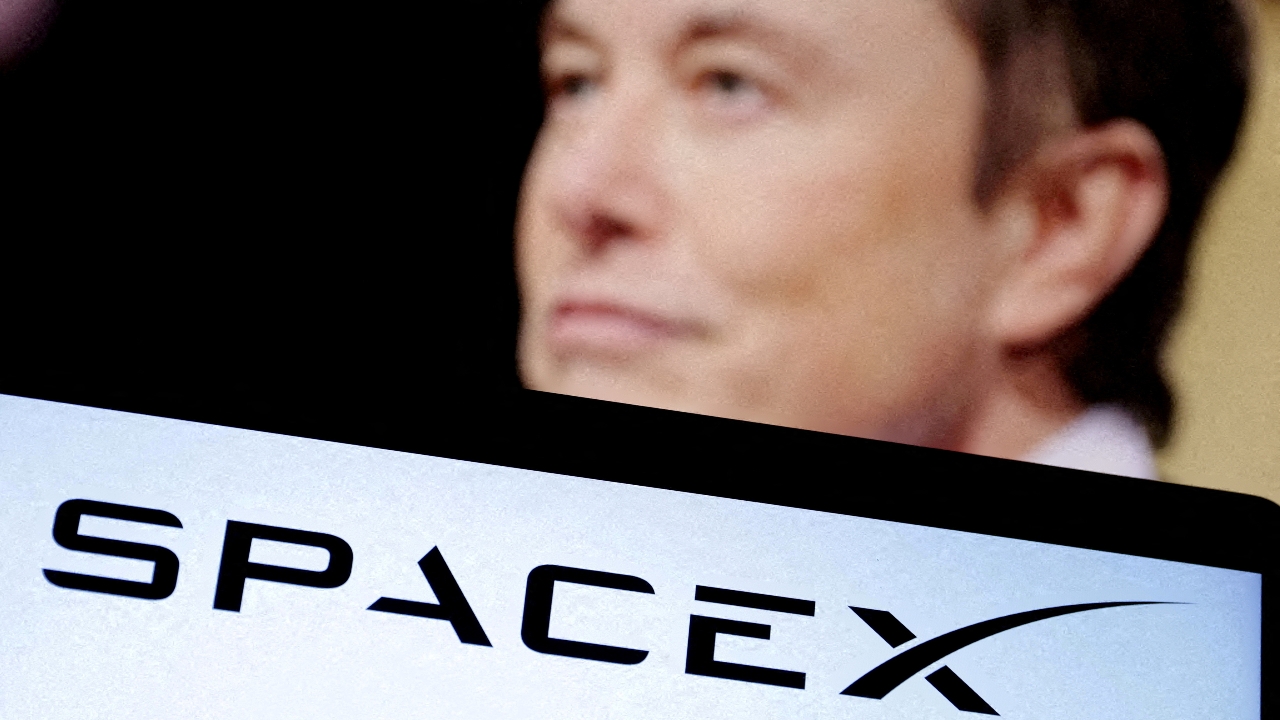
Elon Musk, CEO of SpaceX, said he is announcing a major strategic shift by prioritizing the creation of a "self-growing city" on the Moon to be completed within 10 years, targeting an unmanned spacecraft landing on the lunar surface as soon as 2027, while the Mars project is deprioritized.
Elon Musk revealed on platform X last Sunday (8 Feb) that although SpaceX remains ambitious about building a city on Mars within the next 5-7 years, "the most important mission above all is to secure the future of human civilization, which the Moon can achieve faster."
This move aligns with a Wall Street Journal report stating that SpaceX informed investors about reprioritizing to land an unmanned probe on the Moon by March 2027 instead of the original plan to send an unmanned mission to Mars by the end of 2026.
This change occurs amid intense competition between the U.S. and China to return humans to the Moon within this decade, a feat not accomplished since the Apollo 17 mission in 1972.
Additionally, SpaceX recently acquired xAI, Musk's artificial intelligence company, boosting SpaceX’s valuation to $1 trillion, with plans to enhance capabilities by creating a "space data center" which Musk believes is more energy efficient than Earth-based data centers amid rising energy demands for processing.
To realize this grand plan, SpaceX is preparing for an initial public offering (IPO) this year, expecting to raise up to $50 billion, potentially the largest IPO in history.
Meanwhile, Musk is also redirecting Tesla’s strategy, planning to invest $20 billion this year to transition from solely an electric vehicle manufacturer to a fully autonomous driving and robotics company, including halting production of two car models at its California plant to free up space for humanoid robot production, notably the "Optimus" robot.
/sourceReuters