

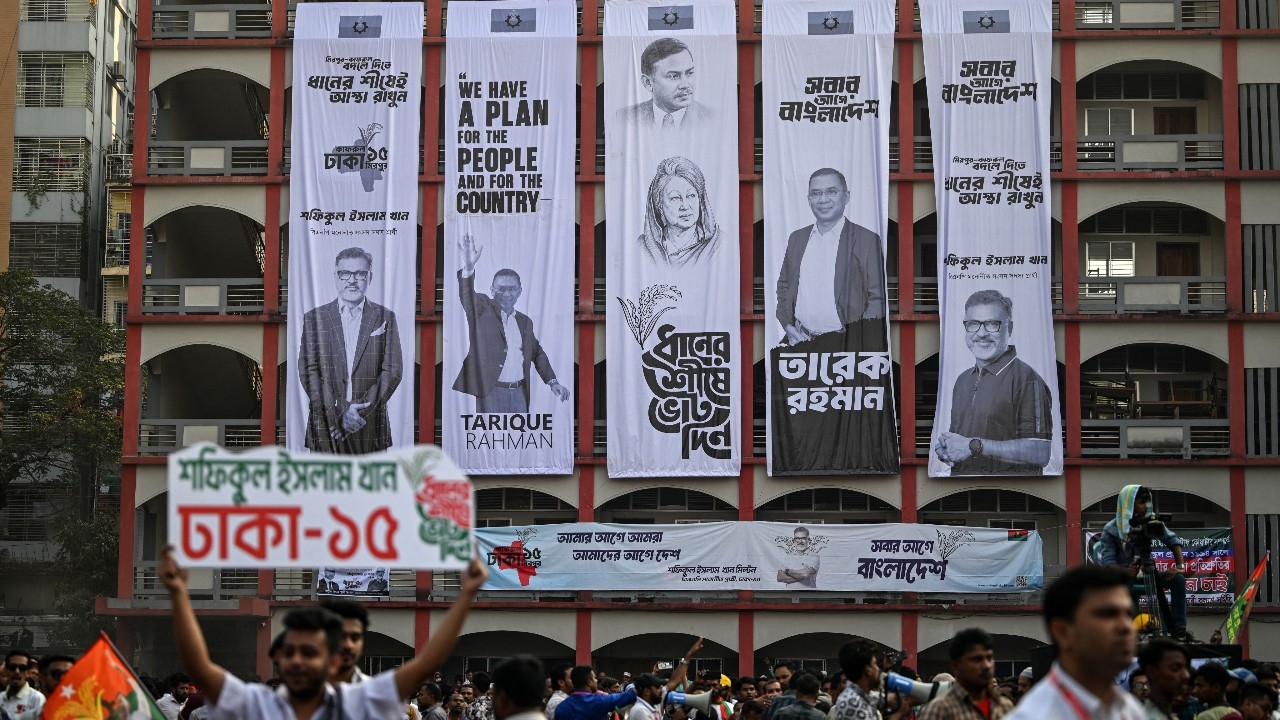
Bangladesh is preparing for a general election on Thursday, 12 February, regarded as the world’s first "Gen Z-driven election." It is the most open contest in 15 years following the ousting of former Prime Minister Sheikh Hasina. Polls show the BNP leading, but Islamist groups and younger candidates threaten to challenge for leadership seats.
Bangladesh is set to hold a general election this Thursday (12 Feb), seen as the world's first election influenced by Generation Z voters. This follows the 2024 public uprising that toppled former Prime Minister Sheikh Hasina, ending her 15-year rule since 2009.
In recent years, opposition parties had little role in elections due to boycotts and arrests of political leaders. However, this election is the first in over 15 years viewed as genuinely open and competitive.
Hasina's Awami League has been politically banned, while young people who played a key role in the 2024 protests say this election marks a crucial turning point for the country.
The Bangladesh Nationalist Party (BNP) is expected to win, fielding candidates in 292 of 300 constituencies. Meanwhile, an alliance led by the Islamist Jamaat-e-Islami party has emerged as a significant competitor.
At the same time, a new party driven by Gen Z activists under 30 has allied with Jamaat after failing to convert street protest energy into political support. Tariq Rahman, BNP leader, said the party is confident it will secure enough votes to form a government.
Analysts say the 12 February election result must be decisive, avoiding fragmentation, to restore stability to a nation of over 175 million people that has faced ongoing unrest and impacts on key industries, especially textiles, for which Bangladesh is the world’s second-largest exporter.
The election outcome will also shape relations with regional powers China and India. Polls indicate BNP still holds an advantage, but many voters remain undecided.
Parvez Karim Abbasi, director of the Governance Studies Center in Dhaka, said Gen Z voters, who make up about a quarter of the electorate, will be the decisive group in this election.
Campaigning nationwide is filled with posters and symbols of BNP and Jamaat, contrasting with the past dominance of the Awami League. Polls predict Jamaat will perform best since its political ban.
On foreign policy, analysts note China’s influence in Bangladesh has increased while India’s role has declined after Hasina fled to New Delhi. If the Jamaat alliance gains power, it may move closer to Pakistan. Economically, Bangladesh faces high inflation, dwindling reserves, and slowed investment, relying on IMF and World Bank loans since 2022.
A survey of over 128 million voters highlights corruption as the top concern, followed by living costs and the economy. Jamaat’s image of transparency is seen as a key strength.
However, Tariq Rahman, son of former Prime Minister Khaleda Zia, remains the favorite to lead the new government. If the Jamaat alliance wins, party leader Shafiqur Rahman could become prime minister.
Mohammad Rakib, 21, a first-time voter, said he hopes the new government will allow citizens to freely express opinions and exercise their rights. He noted that in the past, people could not truly vote or have a voice in politics and hopes new leaders will guarantee freedom of expression and democracy going forward.
.sourceReuters