

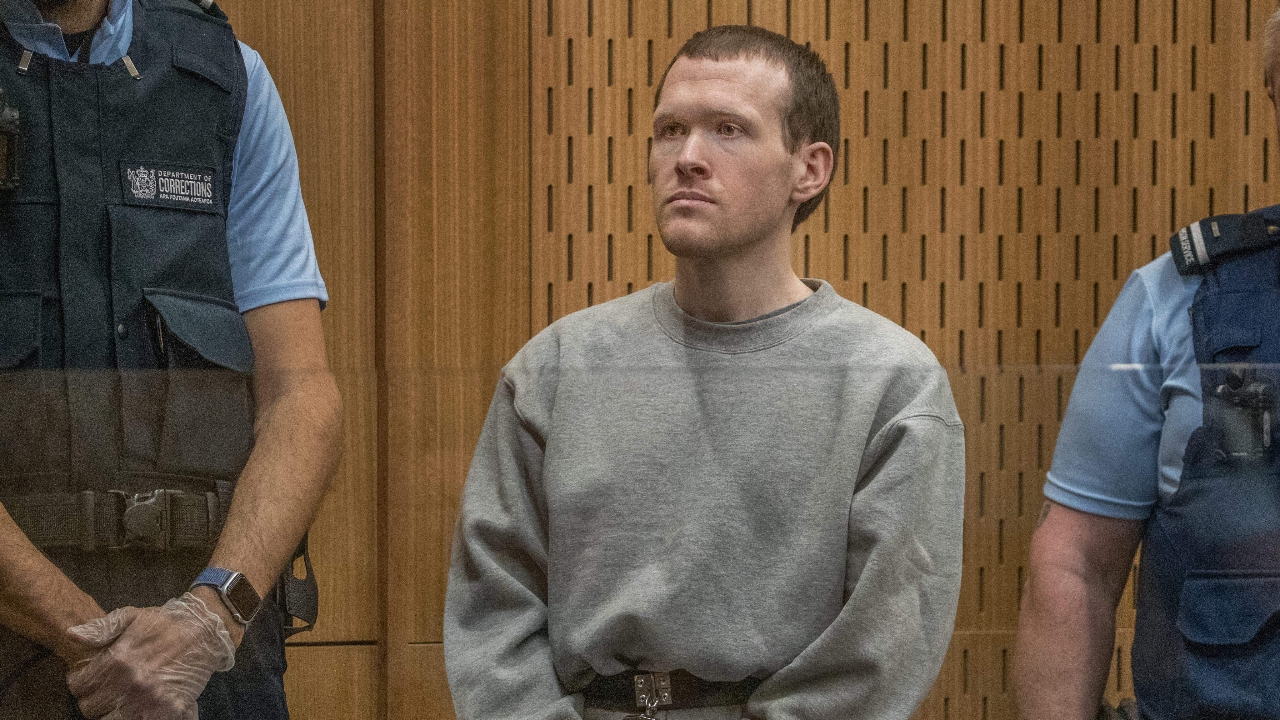
Brenton Tarrant, the Australian white supremacist who carried out the mass shooting that killed 51 people at mosques in Christchurch, New Zealand, in March 2019, appeared before the appeals court to seek withdrawal of his guilty plea. He claimed he was treated unfairly in prison, which impaired his judgment when he pleaded guilty. Victims' families say this is an attempt to seek attention and reopen psychological wounds.
Brenton Tarrant, 35, who is serving a life sentence without parole, has filed an appeal in the Wellington court seeking to withdraw his guilty plea on charges of 51 counts of murder, 40 counts of attempted murder, and one terrorism charge related to the shootings at Al Noor Mosque and Linwood Islamic Centre in Christchurch in March 2019.
Although he initially pleaded not guilty, he changed to a guilty plea the following year. However, Tarrant now claims he was unable to make a rational decision at that time due to the conditions in prison, which he described as "cruel and inhumane." He has also appealed for a reduction of his life sentence.
The week-long hearing has once again caused distress for the victims' families. Aya Al-Umari, who lost her brother Hussein Al-Umari in the attack, said she thought the painful chapter had closed after the initial sentencing, but this appeal reopens the wound. "I suspect his main motivation is to hurt us again and seek attention, but I will not let him succeed," Aya said, adding that her brother, who was awarded a bravery medal for trying to stop the shooter, deserves life over the legal arguments the shooter is making.
If the three appeals judges allow the withdrawal of the guilty plea, the case would have to go through a full new trial. If not, the court will schedule a hearing later this year to consider Tarrant's request for a sentence reduction.
Tarrant was born in New South Wales, Australia, and moved to New Zealand in 2017, which prosecutors say is when he began planning the attack on the Muslim community.
The mass shooting, which was livestreamed online and preceded by a 74-page manifesto published by the shooter, became a turning point for New Zealand under then-Prime Minister Jacinda Ardern. The government enacted the country’s strictest gun laws, banning military-style semi-automatic weapons and launching a nationwide gun buyback program within a month after the attack.
,BBC