

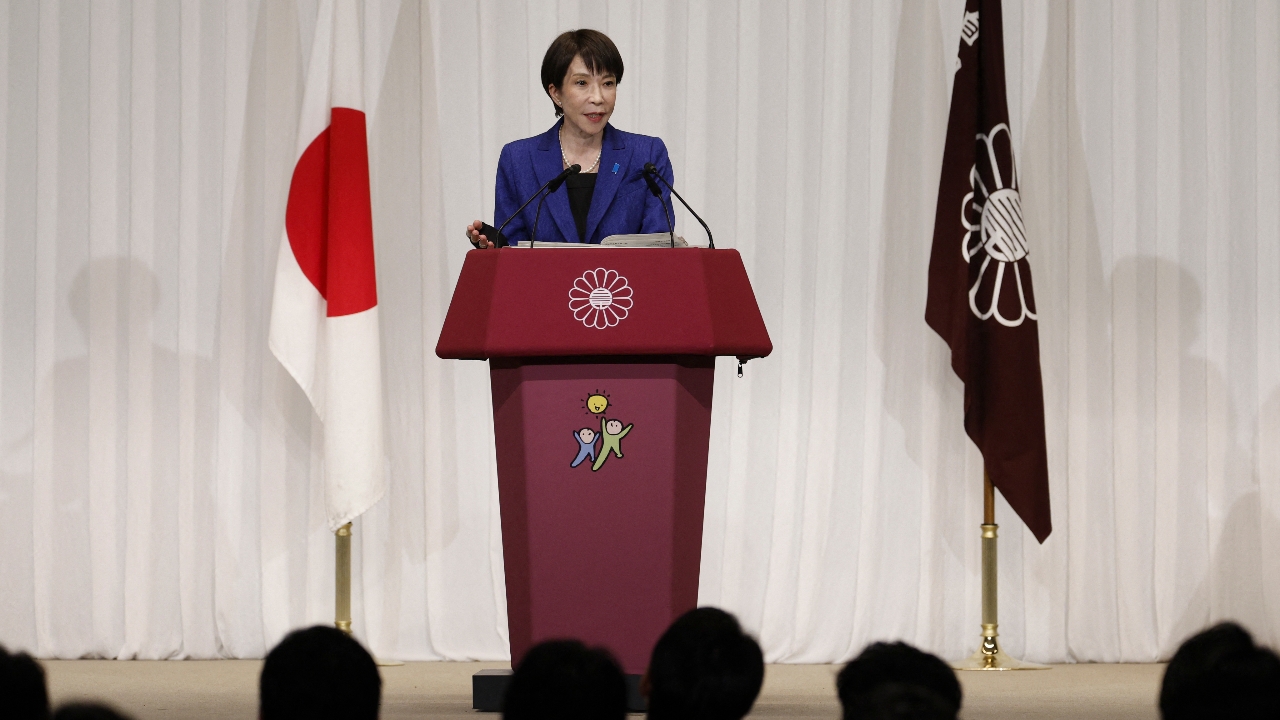
Japan's election results show the proportion of female members in the House of Representatives has dropped to only 15%, contrasting sharply with the overwhelming victory of Sanae Takaichi, the first female prime minister wielding full power. However, she has been criticized for ignoring gender equality policies and clinging to extreme conservative values.
The general election results announced last Tuesday revealed a troubling issue regarding gender equality, as the number of female parliamentarians in the House of Representatives fell to just 68 seats out of 465, or 15%, down from 73 seats in the 2024 election.
Although Sanae Takaichi has consolidated power strongly after serving as Japan's first female prime minister for only four months, leading the Liberal Democratic Party (LDP) to a historic victory, she has clearly indicated she does not want to use gender issues as a political platform. When forming her cabinet last October, she still appointed mostly male ministers despite previously pledging to support women's roles.
In this election, the proportion of female candidates reached a historic 24%, but the number elected actually decreased. LDP candidate Hikaru Fujita drew attention by campaigning while pregnant and defeated a veteran politician in Nagano Prefecture. She received personal support from Prime Minister Takaichi and announced policies supporting young people and women.
Among the 68 female parliamentarians elected, 39 belong to the LDP, but they make up only 12% of the party's total 315 members.
Experts point out that Takaichi's rise has not spurred significant moves to increase women's representation within the LDP. Professor Yuu Uchiyama of the University of Tokyo noted that Takaichi holds a "far-right conservative" stance, such as opposing amendments to an old law requiring spouses to share the same surname, making it unlikely she will devote effort to diversity and equality policies.
Currently, Japan ranks 118th out of 148 countries in the 2025 Global Gender Gap Report by the World Economic Forum, reflecting the significant obstacles that remain on the path to gender equality in Japan's male-dominated political sphere.
. . .AFP