

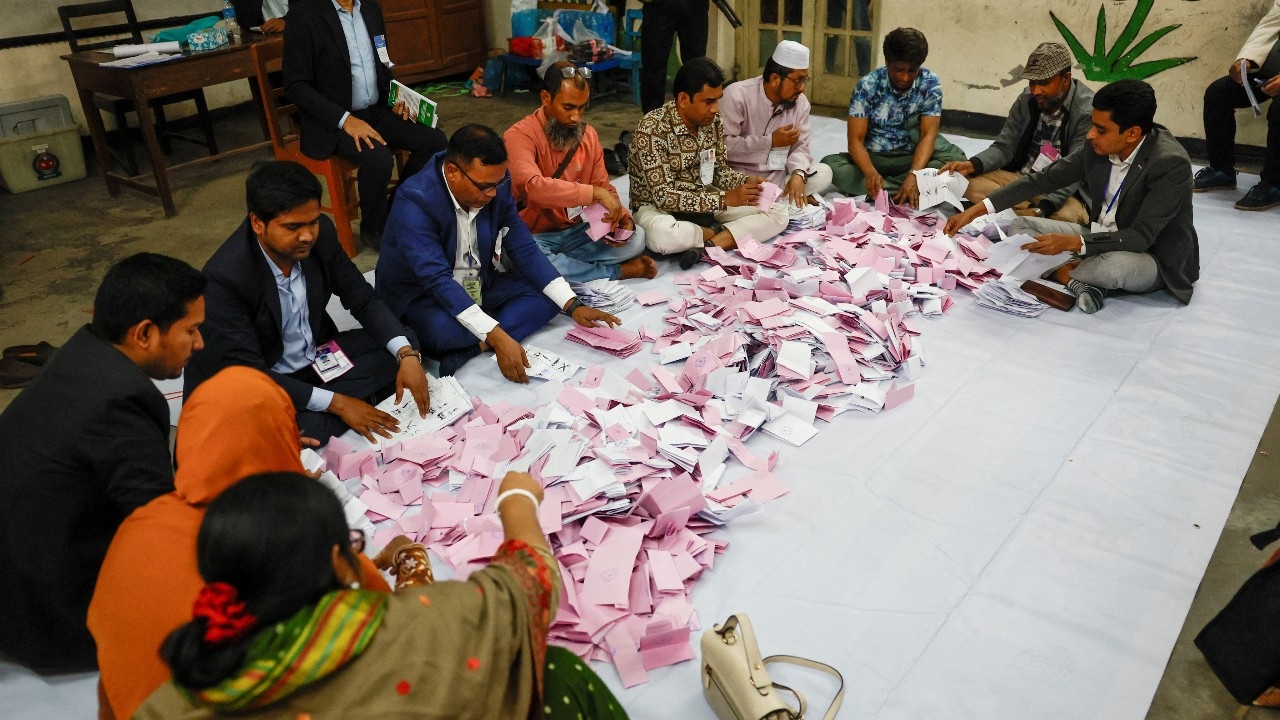
The Bangladesh Nationalist Party (BNP) secured a landslide victory in the general election, winning more than two-thirds of the parliamentary seats after Bangladeshi media reported the latest vote count showing BNP and its allies have won at least 212 out of 299 seats.
The Bangladesh Nationalist Party (BNP) achieved a major success in the general election held last Thursday (12 Feb), with the latest results indicating the party has secured a two-thirds majority in parliament, marking a crucial turning point expected to restore stability to the country after political unrest driven by Gen Z protests led to the ousting of former Prime Minister Sheikh Hasina last year.
Preliminary vote counts show the BNP and its allies have won at least 212 of the 299 seats, while the Jamaat-e-Islami party and its allies secured 70 seats, resulting in the BNP returning to government for the first time in 20 years.
Following the election results, the BNP issued a statement thanking the public and ordered a suspension of all victory celebrations or parades, instead requesting citizens nationwide to join in prayers for the nation's well-being.
It is expected that Tariq Rahman, BNP leader and son of former President and party founder Ziaur Rahman, will be sworn in as the new prime minister. Tariq recently returned from abroad in December after an 18-year exile.
Previously, Bangladesh was under a caretaker government led by Muhammad Yunus, the 85-year-old Nobel Peace Prize laureate, following Sheikh Hasina's exile to India in August 2024.
Shafiqur Rahman, head of Jamaat-e-Islami and a key rival, conceded defeat and affirmed that his party will not simply serve as opposition to obstruct but will focus on "positive politics" for the nation's benefit.
Meanwhile, the National Citizens Party (NCP), led by youth activists instrumental in overthrowing the previous government, won only 5 seats out of the 30 contested.
Voter turnout exceeded 60%, higher than the 42% turnout in the 2024 election, with a constitutional amendment referendum held simultaneously addressing key issues such as limiting the prime minister’s tenure to two terms, strengthening judicial independence, increasing female parliamentary representation, establishing a second chamber in addition to the existing 300-seat house, and mandating a neutral caretaker government during elections.
This victory is seen as a hopeful sign for economic recovery, particularly in the textile industry, where Bangladesh is the world’s second-largest exporter, which had been severely affected by months of political unrest.