

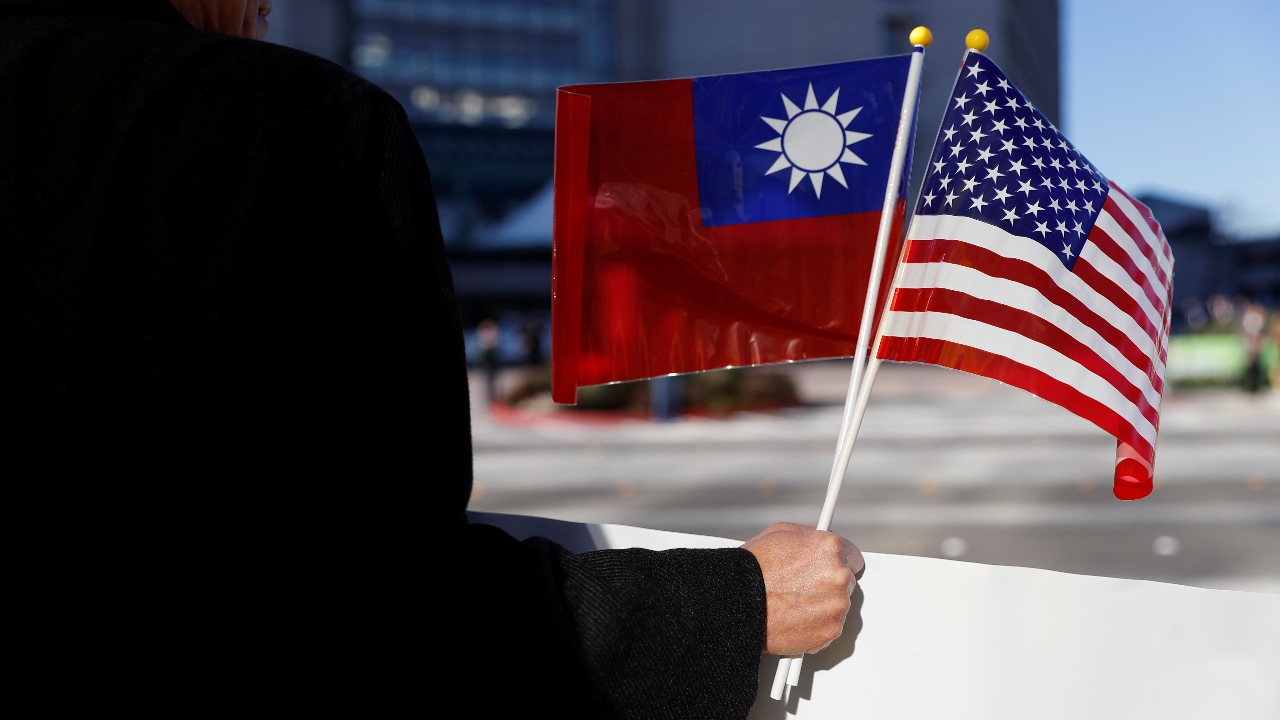
US officials under President Donald Trump's administration have signed a comprehensive bilateral trade agreement with Taiwan, confirming a 15% import tariff on Taiwanese goods entering the US. Meanwhile, Taiwan pledged plans to eliminate or reduce import tariffs on nearly all US products, agreeing to purchase over 2.6 trillion baht worth of US energy and aircraft.
Documents from the US Trade Representative (USTR) office on Thursday stated that Taiwan agreed to significantly increase purchases of US goods between 2025 and 2029, including liquefied natural gas (LNG) and crude oil valued at $44.4 billion (about 1.38 trillion baht), civil aircraft and engines worth $15.2 billion (around 473 billion baht), as well as electric grid equipment, generators, shipping equipment, and steel-making machinery totaling $25.2 billion (approximately 784 billion baht).
This agreement expands on the technical details from the cooperation framework established in January, which reduced Taiwan's tariffs on goods, including semiconductors, from 20% to 15%, as previously announced by Trump. This adjustment enhances Taiwan's competitiveness to the level of key rivals like South Korea and Japan.
Taiwanese President Lai Ching-te said on Facebook, "This is a pivotal moment for Taiwan's economy and industry to face the winds of change and aim for major reform." He believes the agreement will help build a reliable supply chain and establish a strong high-tech strategic partnership between Taiwan and the US.
Taiwan also received tariff exemptions for over 2,000 US export items, which Lai said reduced the average tariff rate on American exports to 12.33%. However, the agreement still requires approval from Taiwan's legislature, where the opposition holds the majority.
The deal includes a commitment of $250 billion in investments from Taiwanese companies to expand semiconductor, energy, and AI production bases in the US, including $100 billion previously announced by TSMC. The Taiwanese government will act as a guarantor for additional investments in advanced technology sectors.
The agreement immediately eliminates import tariffs on US agricultural products that had reached up to 26%, such as beef, dairy products, and corn. However, tariffs on some items, like pork belly (reduced from 40%) and ham (from 32%), will only drop to 10%. Additionally, Taiwan will accept US standards for vehicle safety, medical devices, and pharmaceuticals to remove non-tariff trade barriers.
US Trade Representative Jamison Greer said the agreement will greatly increase export opportunities for American farmers, fishermen, and manufacturers.
Data from the US Census Bureau shows that in the first 11 months of 2025, the US trade deficit with Taiwan soared to $126.9 billion (up from $73.7 billion in 2024), mainly due to rapidly increasing imports of advanced AI chips from Taiwan. This agreement is seen as a key tool to rebalance trade between the two sides.
. Reuters