

Attention is focused on high-level talks between the U.S. and Iran in Geneva today, following President Donald Trump's signal that he will join "indirectly." He believes Iran is deterred by last year's bombing operations and has agreed to return to negotiations amid escalating tensions in the Middle East, where the U.S. has deployed a second aircraft carrier to prepare for possible war if diplomacy fails.
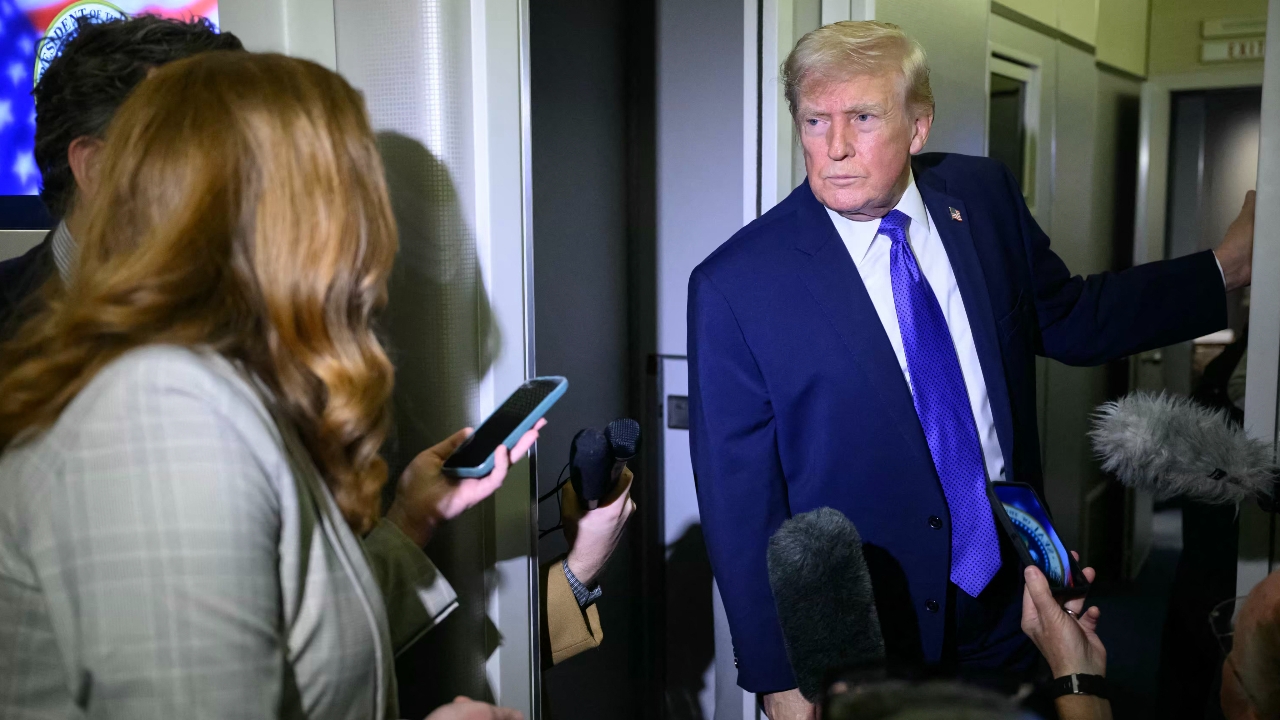
U.S. President Donald Trump revealed he will participate "indirectly" in the important U.S.-Iran talks on Iran's nuclear program, scheduled today (17 Feb) in Geneva, Switzerland. He expressed confidence that Iran desires to reach an agreement. Trump told reporters aboard Air Force One, "I will be involved in those talks indirectly, and it will be a very important discussion."
The atmosphere before the talks has become highly tense, with the U.S. sending a second aircraft carrier to the Middle East. U.S. officials disclosed that the military is preparing for the possibility of continuous military operations if the negotiations fail.
When asked about the chances of reaching an agreement, Trump noted that Iran has historically taken a tough stance in negotiations but learned a costly lesson last summer when the U.S. decided to bomb several Iranian nuclear facilities. "I don't think they want to face the consequences if they don't agree this time," he said.
The sticking point in past talks has been the U.S. demand for Iran to "completely stop uranium enrichment" on its soil, as the U.S. views this as a pathway to nuclear weapons. Trump referenced last June's operation, saying, "We probably would have had an agreement instead of having to send B-2 bombers to destroy their nuclear capabilities, but we really had to send the B-2s. I hope this time they will be more reasonable."
Meanwhile, Iranian Foreign Minister Abbas Araghchi, who met with the International Atomic Energy Agency (IAEA) Director on Monday, posted on X that he came to Geneva to "achieve a fair and equitable agreement," emphasizing that "what is not on the table is surrendering to threats."
A key issue the IAEA is monitoring is the fate of 440 kilograms of highly enriched uranium that went missing after a joint Israeli-U.S. attack, as well as requests to inspect three main sites bombed last June: Natanz, Fordow, and Isfahan.
At the same time, Iran conducted military drills in the Strait of Hormuz on Monday to reiterate its threat to close the world's most important oil shipping route if attacked. Such a closure would affect one-fifth of global crude oil supply and cause a sharp spike in oil prices.
U.S. Secretary of State Marco Rubio, visiting Hungary, said the chances of reaching an agreement are difficult. "There is a possibility of a diplomatic agreement, but I don't want to overestimate it because we are negotiating with a group of Shia religious leaders who make decisions based on theology, not geopolitics," he said.