

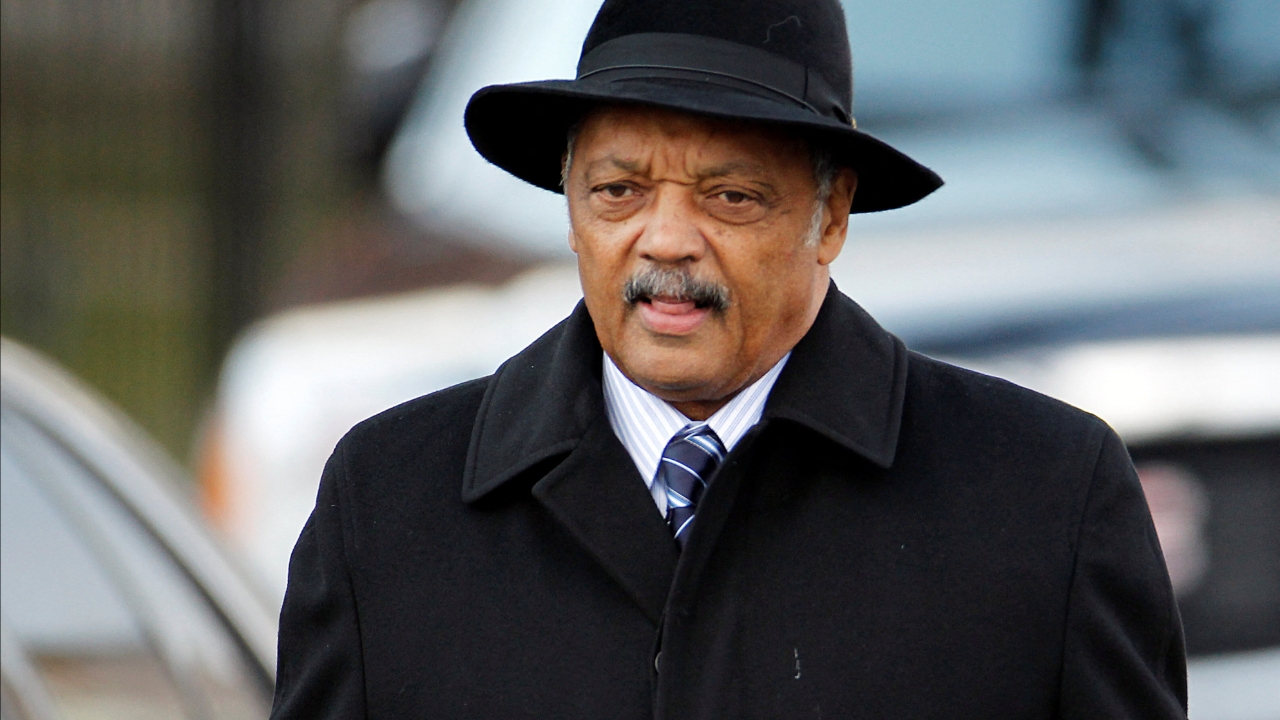
Reverend Jesse Jackson, a great leader in the U.S. civil rights struggle whose moral vision helped reshape the Democratic Party and move America toward more progressive ideals, has died at the age of 84.
Foreign news agencies report that Reverend Jesse Louis Jackson, a prominent U.S. civil rights leader and one of the most influential voices for Black Americans, passed away peacefully on the morning of Tuesday, 17 Feb 2026, at age 84.
Jackson, a Baptist minister, led civil rights efforts since the 1960s. He marched alongside Martin Luther King Jr. and helped raise funds to support the movement's ideals.
"Our father was a leader who served others—not only our family but also the oppressed, the voiceless, and the overlooked worldwide," Jackson's family said in a statement announcing his death.
"His steadfast belief in justice, equality, and love uplifted millions. We ask you to remember him by continuing the fight for the values he lived by," the statement added.
Jackson's family did not disclose the cause of death, but in 2017 he revealed he was diagnosed with Parkinson's disease, a neurodegenerative disorder.
Reports indicate he was hospitalized for observation of progressive supranuclear palsy, a rare neurodegenerative condition, in November last year.
Reverend Jackson was an eloquent speaker and successful mediator of many international conflicts. He also expanded opportunities for African Americans on the national stage for over six decades.
Jackson was the most prominent Black candidate to run for U.S. president before Barack Obama, though he did not win the Democratic nomination in his two bids, until Obama became the first Black U.S. president in 2009.
He fought long and hard for racial justice in the U.S. and witnessed key moments, including the assassination of Martin Luther King Jr. in Memphis in 1968.
Reverend Jackson was born on 8 Oct 1941 in Greenville, South Carolina. Originally named Jesse Louis Burns, he was the son of a teenage mother and an unmarried former professional boxer. He later took the surname of his stepfather, Charles Jackson.
Jackson excelled in the segregated high school he attended and earned a football scholarship to the University of Illinois before transferring to North Carolina Agricultural and Technical State College, a predominantly Black institution, where he earned a sociology degree.
In 1960, Jackson participated in his first sit-in protest in Greenville and later joined the Selma to Montgomery civil rights march in 1965, an event that brought him to the attention of civil rights leader Dr. Martin Luther King Jr.
Jackson later became a frontline mediator and ambassador in major international events, supporting the end of apartheid in South Africa, and served as a special envoy to Africa under President Bill Clinton in the 1990s.
He also traveled to Syria, Iraq, and Serbia on missions to secure the release of American prisoners.
In 1996, Jackson founded the Rainbow PUSH Coalition, uniting Black, White, Latino, Asian American, Native American, and LGBTQ communities to promote social justice and political activism.
"Our flag is red, white, and blue, but our nation is a rainbow—red, yellow, brown, black, and white—and we are all precious in the eyes of God," Jackson once said.
One of Jackson's signature phrases was "Keep hope alive." He repeated it so often that some mocked it, but to him, its meaning never diminished. He was a driving force for social justice through three eras: Jim Crow segregation, the civil rights era, and post-civil rights, culminating in Obama's election and the Black Lives Matter movement.
Jackson's vision helped push the Democratic Party toward more progressive ideas. He was the first presidential candidate to prioritize LGBTQ voices in his campaign and challenged the party’s previous focus on white, centrist, and middle-class voters.
Follow international news:https://www.thairath.co.th/news/foreign