

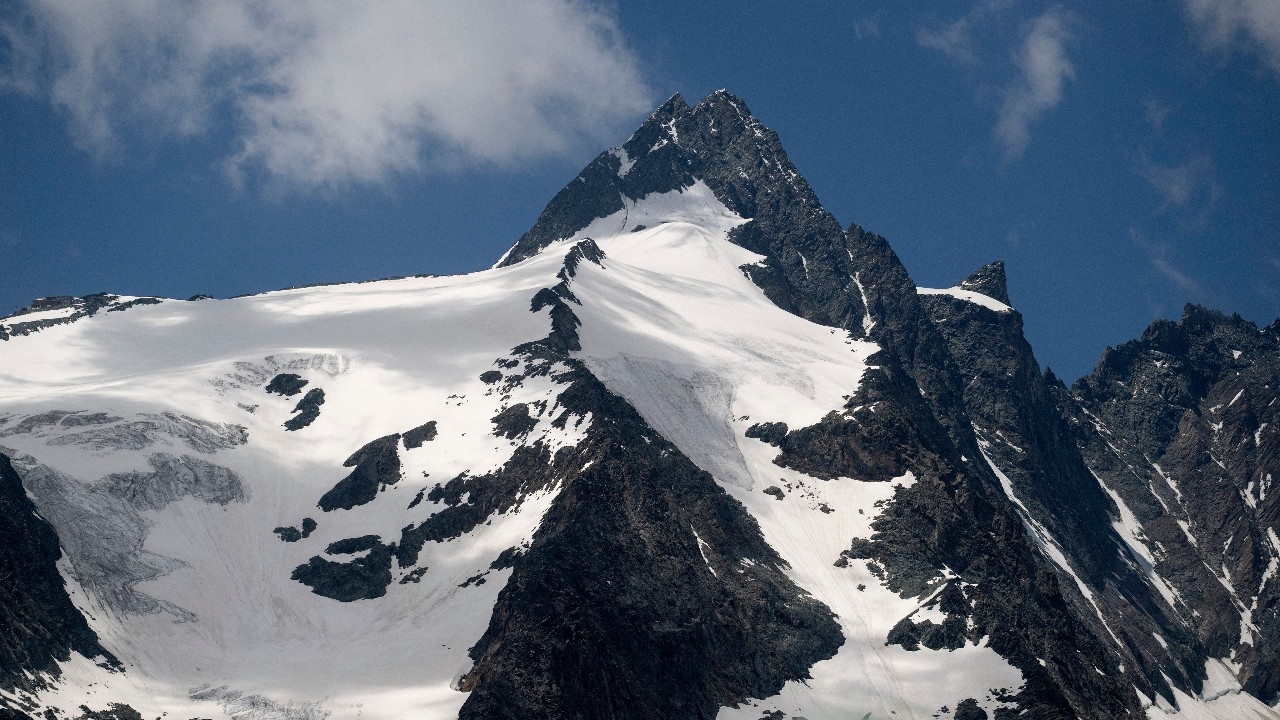
A mountaineer has been brought to court after leaving his girlfriend to die from hypothermia during a climb to Austria's highest peak at 3,798 meters, becoming a landmark case that has shaken the European climbing community.
The tragedy amid a snowstorm on Austria's tallest mountain is becoming a high-profile case across Europe, as a man in his 30s faces charges of "gross negligence causing death" after his 33-year-old girlfriend, Kierstin G., died from hypothermia in subzero temperatures and strong winds during the early hours of 19 January 2025 on a climb of Grossglockner, which stands at 3,798 meters.
Prosecutors in Innsbruck stated that Thomas P., her boyfriend with extensive mountaineering experience, was considered the trip leader responsible for their safety but repeatedly made poor decisions.
The prosecution noted he began the trip two hours late despite severe winter weather conditions, including winds up to 74 km/h, temperatures at minus 8 degrees Celsius, and wind chill making it feel like minus 20 degrees.
Moreover, the prosecution alleges he failed to prepare adequate overnight emergency equipment and allowed his girlfriend to wear soft snowboard boots unsuitable for the mixed snow and rocky alpine terrain, and questioned why they did not turn back while still able.
Defense lawyer Karl Jelinek said the couple planned the climb together, believing they had sufficient experience and preparation to proceed.
According to the defense testimony, they reached a point called Frühstücksplatz at 13:30 on 18 January, a location beyond which retreat would be difficult, and at that time they were not overly fatigued.
However, the prosecution states that at about 20:50 both became trapped on the mountain, but the defendant did not call the police nor send a distress signal, despite a police helicopter flying overhead around 22:50.
Later, at 00:35 on 19 January, he contacted mountain rescue, but is accused of silencing his phone thereafter and not responding to further calls. Webcam footage captured their headlamps ascending to the summit and recorded a shadow of a man descending.
The defense claims they reached a point about 40 meters below the summit cross, where the woman became too weak to move, so the man decided to leave her to climb over the summit and descend the other side to seek help.
The prosecution states he abandoned her around 2 a.m. without emergency aluminum blankets to protect against the cold and delayed notifying authorities, preventing a rescue helicopter from operating that night due to strong winds. Ultimately, Kierstin G. died alone on the icy mountain slope.
If Thomas P. is found guilty, he could face up to three years in prison. The verdict may mark a turning point for mountain sports in Europe by redefining the boundary between personal risk-taking and criminal responsibility.
,BBC
Click to read more aboutMountaineers