

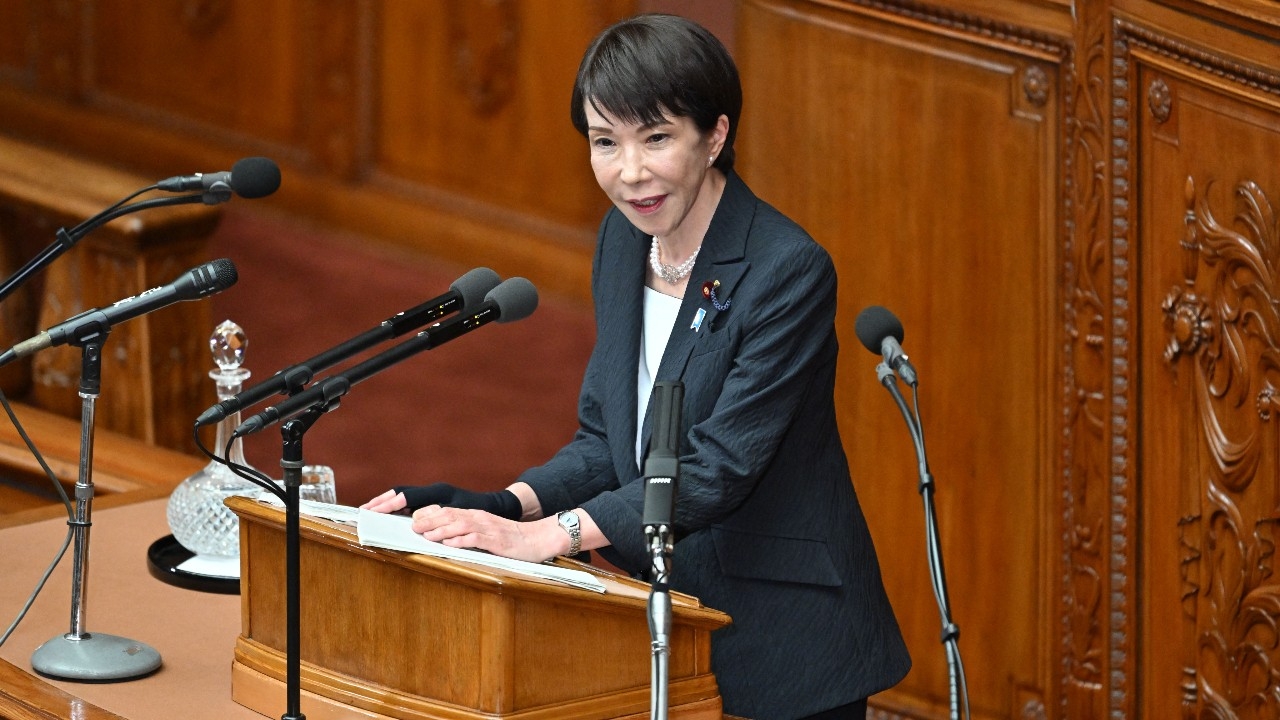
Japanese Prime Minister Sanae Takaiichi delivered her first policy statement to parliament after her party's landslide victory on 8 Feb, declaring her intent to build a "strong and prosperous" Japan. She reaffirmed her security stance, warning of threats from China, Russia, and North Korea, while pledging to reduce citizens' living costs and promote sustained GDP growth.
Takaiichi openly criticized China, stating that it is attempting to alter the status quo in the East China Sea and South China Sea through coercion and intimidation, as well as expanding military activities around Japan. She emphasized that Japan currently faces "the most severe and complex security environment since World War II," which includes threats from Russia and North Korea.
On key security issues, Prime Minister Takaiichiplans to review Japan's three main defense policies within this year to address modern warfare forms and prepare for prolonged conflicts, includingaccelerating discussions to ease restrictions on exporting advanced weapons to strengthen allies' capabilities and boost Japan's own defense industry.
Previously, Takaiichi caused displeasure in China by signaling that Japan might consider military intervention if China uses force to seize Taiwan, which China regards as part of its territory and has not ruled out annexation by force. Recently, Chinese Foreign Minister Wang Yi stated at the Munich Security Conference that some groups in Japan are attempting to revive "militarism."
On the economic front, Takaiichi affirmed she would avoid reckless fiscal policies that undermine market confidence, despite pledging aggressive economic stimulus. Her administration’s economic focus will target semiconductor industries, artificial intelligence, shipbuilding, and cybersecurity.
She also reiterated her campaign promise to consider suspending consumption tax on food items for two years to help citizens cope with inflation. However, this idea has heightened market concerns over Japan's massive public debt, with long-term government bond yields reaching record highs last month.
Earlier government data released the same day showed Japan's inflation slowed in January, with the core consumer price index (excluding fresh food) rising 2.0% year-on-year, down from 2.4% in December and marking the lowest increase in two years, matching market expectations.
Takaiichi also announced the formation of a "National Council" comprising representatives from multiple parties to discuss tax reform and secure funding for social welfare expenditures amid Japan's aging society.
Source: AFP