

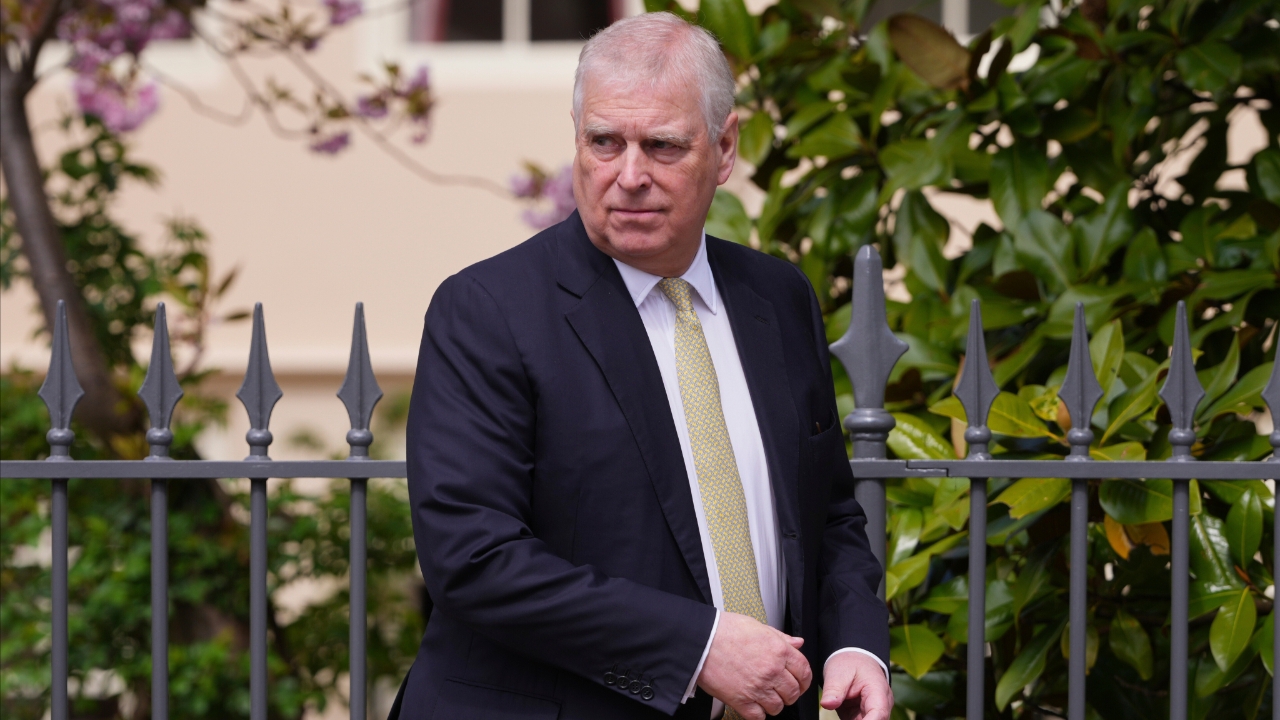
A UK minister confirmed that the government is considering removing former Prince Andrew from the line of succession after he was arrested and investigated for official misconduct.
Foreign news agencies reported on 21 Feb 2026 that the UK government is considering proposing legislation to remove Andrew Mountbatten-Windsor from the line of succession following a sexual scandal and his recent arrest on charges of misconduct in public office related to Jeffrey Epstein, the late financier.
Luke Pollard, the UK's Secretary of State for Defence, told BBC News that the government is working with Buckingham Palace on this plan to prevent the former prince from being in a position to ascend the throne immediately.
Pollard also said, “I hope this will have cross-party support, but it is appropriate that this process takes place only after the police investigation is complete.”
James Murray, the Treasury Secretary, told BBC that “any questions in this area are quite complex,” adding that the ongoing police investigation should “be allowed to proceed to its conclusion first.”
Currently, Andrew, the king’s brother, remains eighth in the line of succession despite having been stripped of various titles, including the prefix "Prince" last October, amid pressure over his ties to Jeffrey Epstein, the financier convicted of sexual offenses against minors.
On Thursday (19 Feb), Andrew was arrested on suspicion of misconduct in public office and was released later that evening after being held for 11 hours. Details were not disclosed, but the former prince has consistently denied any wrongdoing.
On Saturday (21 Feb), several unmarked police vehicles were seen entering Royal Lodge, a 30-bedroom residence in Windsor where Andrew has lived for many years. On Friday, over 20 vehicles were parked at the property, though it remains unclear if this was related to searches or the investigation.
Removing a royal from the line of succession requires an Act of Parliament, which must be approved by both the House of Commons and the House of Lords, and only takes effect once the monarch gives royal assent.
Additionally, approval is required from 14 Commonwealth realms where King Charles III is head of state, including Canada, Australia, Jamaica, and New Zealand.
The most recent change to the line of succession by law was in 2013, when the Succession to the Crown Act 2013 restored rights to royals previously excluded due to marrying Catholics.
That law also ended the system of male-preference primogeniture, which allowed younger sons to displace elder daughters in the succession. The new law applies to those born after 28 October 2011.
The last time someone was removed from the line of succession by Act of Parliament was in 1936, when former King Edward VIII and his descendants were excluded following his abdication.
/Follow international news:/https://www.thairath.co.th/news/foreign
/Source:/bbc