

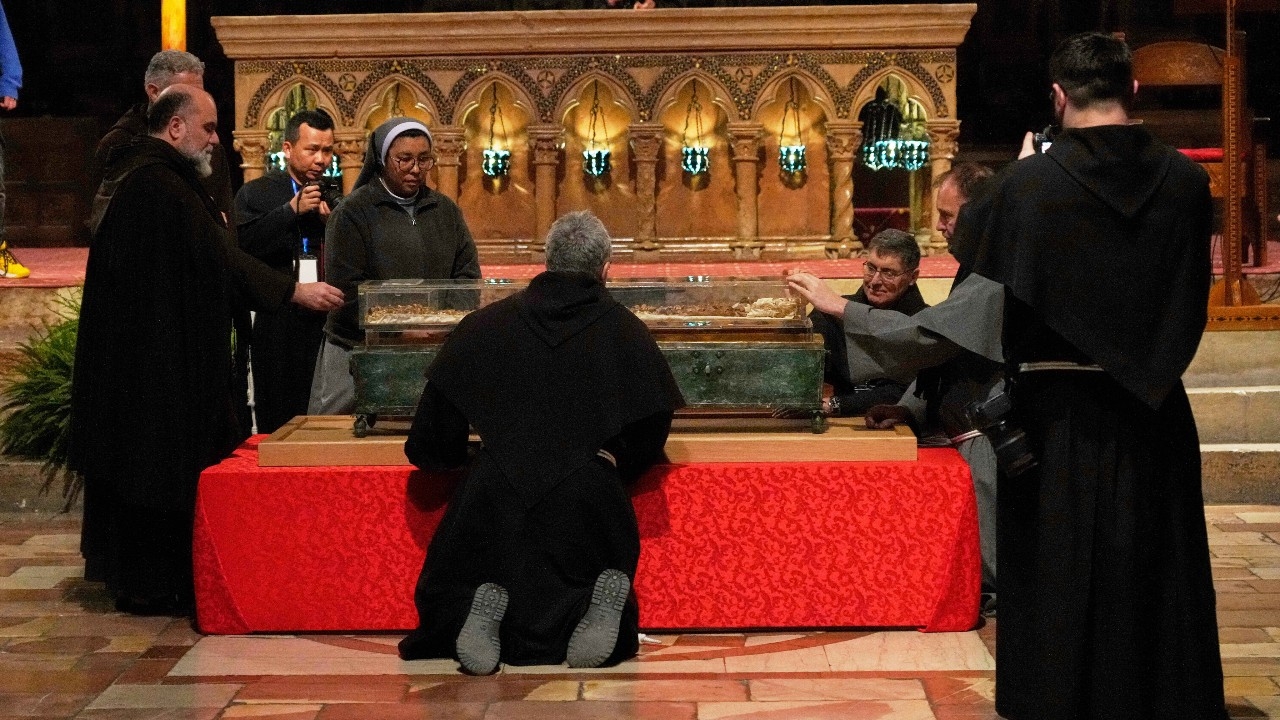
The Italian city of Assisi is preparing to open the bones of Saint Francis of Assisi to public viewing for the first time, commemorating the 800th anniversary of his death. The event is expected to draw over 500,000 devotees in one month amid concerns about infrastructure and effects on the local community.
The bones of Saint Francis of Assisi, the medieval poor priest who inspired Pope Francis and Christians worldwide, will be exhibited publicly for the first time in Assisi, Umbria, Italy, to celebrate the 800th anniversary of his passing this year.
The exhibition will last a full month, with the bone fragments housed in a bulletproof glass case inside the Basilica of Saint Francis before being returned to the underground tomb on 22 March.
Walter Stoppini, mayor of Assisi, said this event is a blessing with both advantages and disadvantages, noting that nearly 400,000 people have already registered to visit, with numbers expected to reach 500,000 before the event concludes.
Authorities have mobilized over 400 volunteers to manage crowds along the narrow cobblestone streets, arranged temporary parking outside the old town, and provided shuttle services. The mayor acknowledged that while the city usually handles large crowds only for short festivals lasting one to three days, this month-long event will place immense pressure on infrastructure and residents.
Although some locals worry about parking and congestion, souvenir shop operators have welcomed the event enthusiastically, stating that religious tourism is the city's lifeblood.
Assisi, located on a hill in Umbria, is known for its pink limestone buildings glowing at sunset and is a major Christian pilgrimage site annually. Millions visit the saint’s tomb and admire Giotto di Bondone’s frescoes inside the basilica.
Saint Francis was born into a wealthy family in 1182 but chose to renounce all his wealth to live simply and aid the poor. He is known as the saint of peace and a lover of all creation and nature, whose teachings form the foundation inspiring the current Pope Francis’s papal name.
Officials said displaying the skeleton for Christian veneration reinforces the living message of faith and offers devotees a rare opportunity to pray in close proximity to the saint.
. AP