

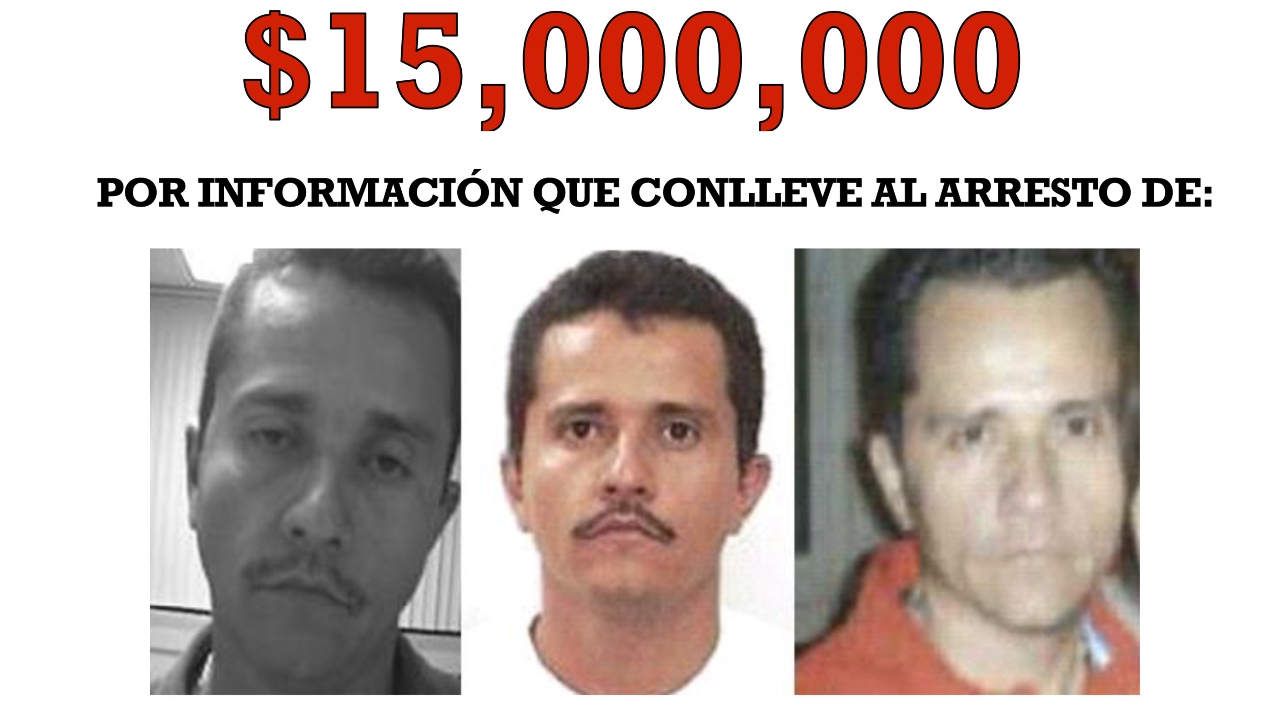
The operation to eliminate Nemesio Rubén Oseguera Cervantes, known as "El Mencho," the leader of the "New Generation Jalisco Cartel" (CJNG), Mexico's most powerful drug cartel, has become a major victory for the governments of Mexico and the United States. However, while the world celebrates, his armed forces are exacting revenge, turning streets in multiple states into battlegrounds amid pressing questions about who will succeed him in this multibillion-dollar drug empire.
In Mexico's organized crime history, few names have had such a lasting impact as Nemesio Rubén Oseguera Cervantes, known globally as "El Mencho." From a poor rural boy in Michoacán state, he rose to lead the CJNG, one of the most feared and dangerous criminal groups of the modern era.
His rise was not due to luck but driven by ruthless violence, boundless ambition, and brutality that even rival groups feared. His death was declared a historic victory for both Mexico and the U.S., with reports indicating significant involvement from U.S. intelligence agencies in directing the operation, demonstrating cross-border cooperation that boosted the image of both governments.

When El Mencho's followers declared war.
But this victory came at a price of chaos. Immediately after news of their leader's death spread, CJNG forces responded with escalating violence across eight states—from Guerrero on the Pacific coast to Tamaulipas in the northeast. Even Mexico City, the capital, was not spared.
The worst situation unfolded in Jalisco state, CJNG's main stronghold, especially in Guadalajara, one of this year's FIFA World Cup host cities. Masked armed men attacked and burned shops and set up roadblocks. In the popular resort city of Puerto Vallarta, tourists and residents had to take shelter inside buildings for safety.
Images of burned vehicles and blocked roads are not only displays of loyalty to their slain leader but also expressions of anger against state authorities. It remains to be seen whether the situation will calm in the coming days or escalate into a small-scale civil war.
From farm boy to global drug lord.
El Mencho grew up in a rural family in Michoacán, in western Mexico. His beginnings involved marijuana cultivation before gradually moving into large-scale drug trafficking networks.
His rise to power was propelled not by chance but by ambition, decisiveness, and using violence as a primary tool to control territory.
Looking back at El Mencho's life journey, he began as an undocumented laborer in the United States during the 1980s. After involvement in marijuana farming back home, he was arrested multiple times in California on drug charges and was eventually deported to Mexico at age 30.
Upon returning to Mexico, he joined the Milenio Cartel and gained a reputation for cunning and brutality. When that group collapsed, he seized the opportunity to gather remnants and establish the CJNG.
Using boundless ambition and cruelty, he expanded influence by seizing territory and adapting to new highly profitable illegal businesses, making CJNG the most powerful criminal organization in Mexico today.
Under his leadership, CJNG rapidly expanded territory and adapted to new lucrative illegal enterprises. Part of CJNG's rise came from the collapse of major rival cartel Sinaloa following the extradition of leader "El Chapo" Guzmán to the U.S., which led to internal divisions and infighting.
Furthermore, the downfall of El Chapo's sons, especially when Joaquín Guzmán López surrendered and took down key rival Ismael "El Mayo" Zambada, created a significant power vacuum. El Mencho capitalized on this to seize control of fentanyl trafficking routes, a source of immense revenue.
Franchise strategy and rapid expansion.
What sets CJNG apart from old-school cartels is its franchise business model. Instead of deploying their own men everywhere, CJNG forms alliances with smaller local drug gangs, allowing them to use CJNG's weapons and name to control territory in exchange for tribute and a share of the drugs. They also control strategic points, including major ports on the Pacific and Gulf coasts, to manage precursor chemical imports from Asia for synthetic drug production. Within less than a decade, CJNG's influence expanded to over 27 of Mexico's 32 states and developed drug export networks to more than 40 countries worldwide.
Capabilities.
CJNG is known as the most heavily armed drug cartel, possessing heavy machine guns, self-made armored vehicles, and notably "bomb-equipped drone units" used to attack enemies from the air. They maintain rigorous military-style training camps, have their own special forces ready to confront the Mexican army without fear, and often use brutal symbolic acts, including leaving threatening messages and public executions to instill fear among civilians and authorities.
Political significance and Mexico's future.
The killing of El Mencho is a major achievement for the government led by President Claudia Sheinbaum, showing the U.S. government that Mexico is serious about cracking down on fentanyl trafficking—an issue of top priority for former U.S. President Donald Trump.
This cooperation with U.S. intelligence also helped ease pressure from U.S. Republicans who had previously proposed sending the military or using drones to attack drug cartels inside Mexico, which would have violated Mexican sovereignty.
Who is next?
Although El Mencho is gone, the cycle of drug trafficking continues. History shows that when a powerful cartel leader disappears, usually three or four "generals" or right-hand men are ready to step up and fill the vacant position immediately.
While the government celebrates, the terrifying reality for Mexicans now is watching flames rage in the streets and wondering whether the next leader will be even more ruthless than El Mencho.
SourceBBC