

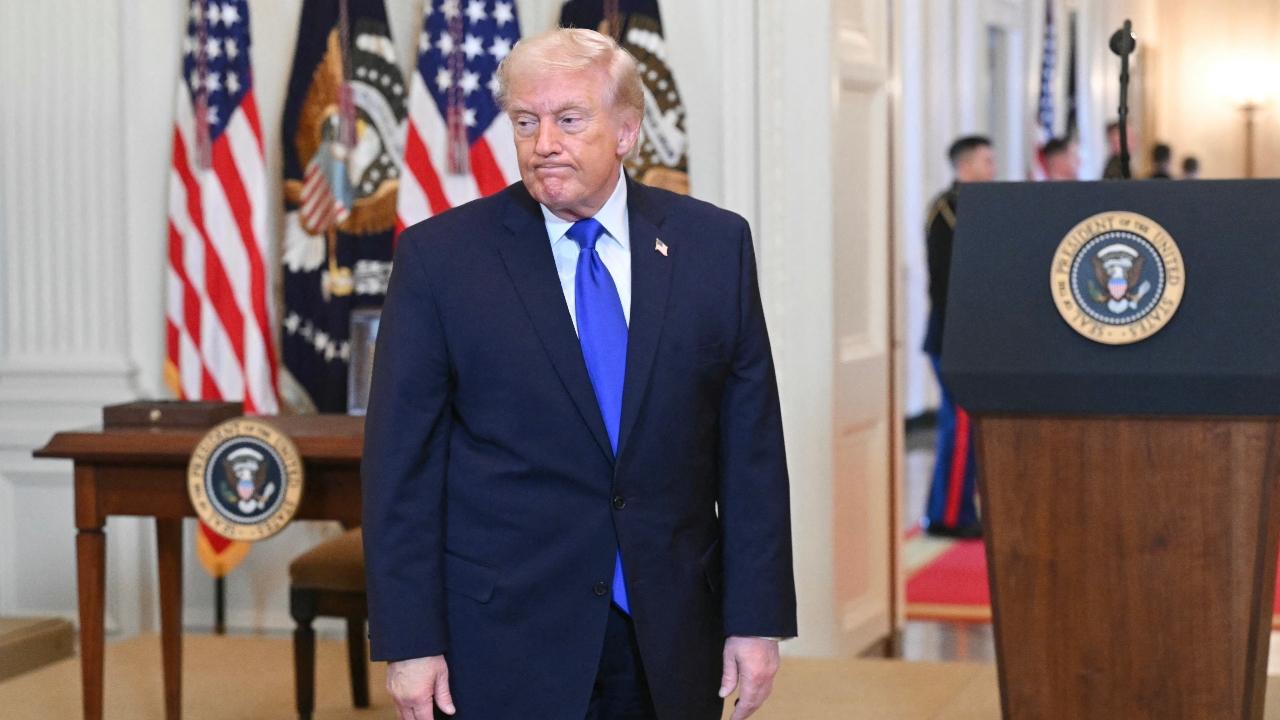
President Donald Trump's new global import tariff at a 10% rate has come into effect following a U.S. Supreme Court ruling last Friday that sought to block his previously announced major tariff increase. Internationally, countries are preparing retaliatory measures in response.
Just hours after the ruling, President Donald Trump signed an executive order enforcing a 10% global customs duty effective 24 Feb 2024 GMT+7 to address the trade deficit, following the Supreme Court's recent injunction against his broad emergency tariff powers.
The Trump administration shifted to using Section 122 of the Trade Act of 1974, which grants the president authority to impose tariffs for 150 days without congressional approval. The executive order cited this temporary measure as aimed at "correcting fundamental international payment imbalances and rebalancing trade relations to benefit American workers, farmers, and manufacturers."
However, although Trump has threatened to raise the tariff rate to 15% later, no official order to increase the rate has been issued yet.
The U.S. Supreme Court ruled 6-3 that the president exceeded his authority last year when imposing global tariffs under the International Emergency Economic Powers Act (IEEPA) of 1977. Trump harshly criticized the decision as "nonsense, poorly written, and a profoundly anti-American act."
While Trump claimed tariffs are a necessary tool to reduce the trade deficit, recent data from last week showed the U.S. trade deficit reached a record high, expanding 2.1% compared to 2024 to around 1.2 trillion U.S. dollars (approximately 37.3 trillion baht). Meanwhile, the government has already collected at least 130 billion dollars in revenue under the previous IEEPA tariffs.
This latest tariff announcement has led many countries worldwide to reassess their trade stances and agreements. The United Kingdom stated that "no retaliatory measures are off the table" if the U.S. fails to honor trade agreements, adding that "no one wants a trade war." The European Union announced it would suspend ratification of recently concluded summer trade agreements, while India postponed negotiations to finalize the latest agreement.
Trump also ended with a warning that tariffs would increase further for countries that "play tricks" with the newly established trade agreements.
/sourceBBC