

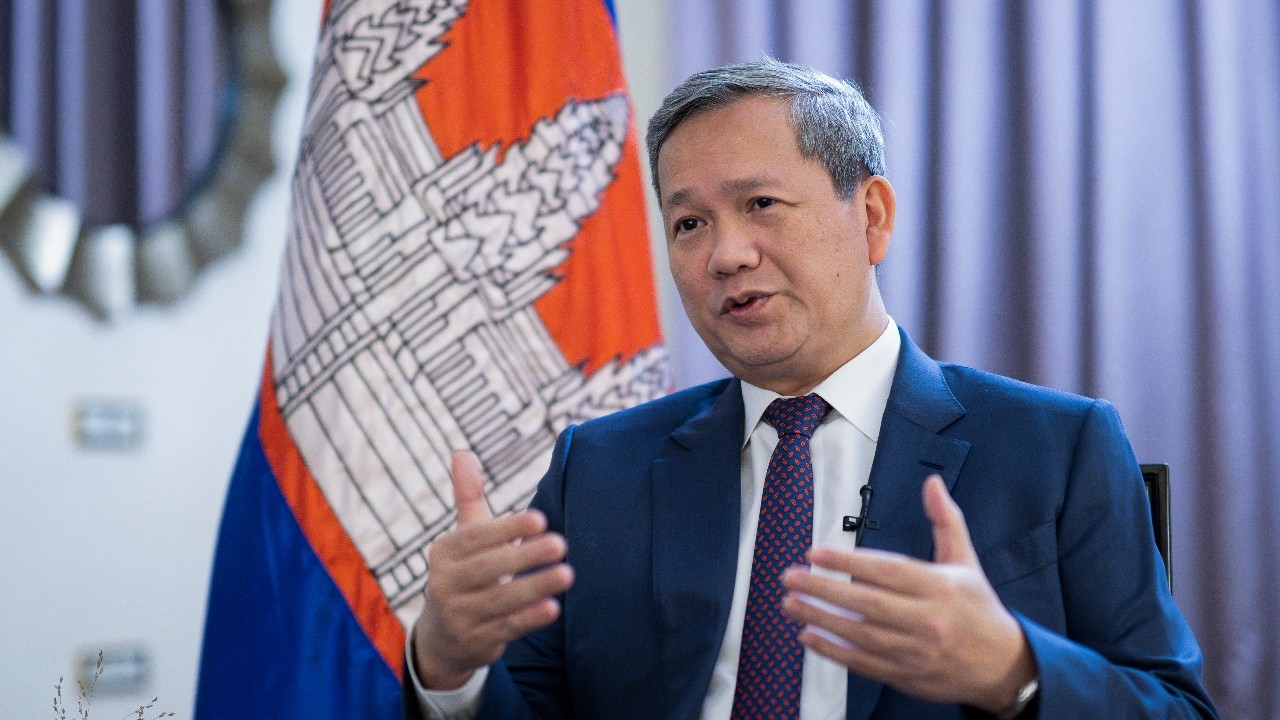
Cambodian Prime Minister Hun Manet gave a special interview to AFP, admitting that online scam networks, or the "black economy," are the main culprits damaging the country's image, severely affecting tourism and investment. He affirmed ongoing efforts to eradicate these networks, including extraditing the "kingpin of the cyber empire," a former close adviser, to Chinese authorities for prosecution. He denied accusations that Cambodia's GDP depends on illicit money.
In an interview with AFP last Wednesday, Cambodian Prime Minister Hun Manet stated that scammer gangs are causing severe damage to the national economy and tarnishing Cambodia's international reputation. He also rejected allegations that the government is complicit in or benefits from these illegal businesses.
“The scam networks, which we call the black economy, are destroying our legitimate economy and creating a bad reputation for Cambodia,” Hun Manet said in the special interview. He emphasized this as the main reason the government must “sweep away” these operations, as they directly harm confidence in tourism and investment.
Although experts estimate about 100,000 people, mostly human trafficking victims, are forced to work in these centers, and a 2024 U.S. Institute of Peace (USIP) report indicates that cybercrime revenue in Cambodia could reach $12.5 billion annually (about 388.5 billion baht), or roughly half the country's GDP, Prime Minister Hun Manet insisted that Cambodia does not rely on these funds.
The Cambodian leader said, “Many say Cambodia’s GDP depends on scams, but that is not true. We rely on a basic economy such as tourism, manufacturing, and other industries.” He acknowledged that while such illicit businesses may indirectly stimulate real estate and employment, most of their income does not flow into government coffers.
The most closely watched issue is the arrest and extradition of Chen Zhu, a Chinese-Cambodian billionaire businessman who owns the Prince Group empire and was a former adviser to both Hun Manet and former Prime Minister Hun Sen. He was handed over to Chinese authorities in January after U.S. authorities charged him as the mastermind behind a cybercrime network disguised as legitimate real estate and other businesses.
Hun Manet revealed that at that time, the government “had no idea he was the mastermind” because background checks showed no irregularities, and his company operated in several countries, including the United Kingdom.
“Before the allegations emerged, in Phnom Penh he was just a businessman helping drive the economy. We had no knowledge of other (illegal) activities,” Hun Manet added, saying the government acted immediately upon learning of the wrongdoing.
Regarding the decision to extradite Chen Zhu to China rather than the U.S., Prime Minister Hun Manet explained that it was discovered he used forged documents to obtain Cambodian citizenship, which was subsequently revoked. As he only retained Chinese nationality, Cambodian authorities were legally required to send him back to his home country.
The scam networks in Southeast Asia have expanded from targeting Chinese-speaking victims to deceiving people worldwide through romance scams and fake cryptocurrency investments. They employ enslaved labor subjected to abuse. Hun Manet affirmed that Cambodia will continue cooperating internationally to dismantle these networks.
. . .AFP