

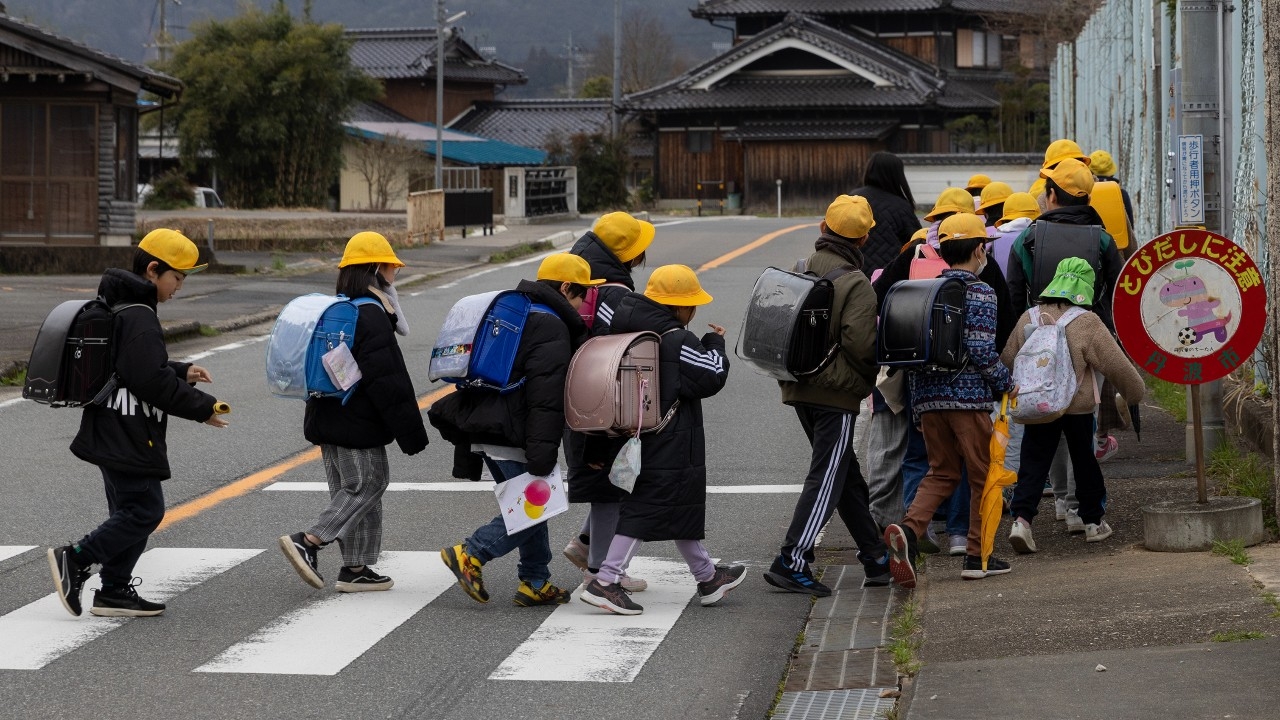
Japan's Ministry of Health revealed that the number of newborns in 2025 dropped to just over 700,000, marking the 10th consecutive year of decline. Meanwhile, Japan's total population decreased to 122.86 million, down by more than 580,000 people within one year. This reflects a major challenge for the government led by Sanae Takaichi, Japan's first female prime minister, amid an aging society and a nationwide surge in vacant homes.
Preliminary data from Japan's Ministry of Health, Labor, and Welfare show that newborns in 2025 fell to 705,809, a 2.1% decrease compared to 2024, marking a tenth straight year of decline. This statistic includes children born to Japanese nationals in Japan, foreign residents, and Japanese living abroad.
Meanwhile, marriage registrations in 2025 slightly increased by 1.1% to 505,656 couples, while divorces dropped by 3.7% to 182,969 cases. The number of deaths in 2025 was 1,605,654, down 13,030 or 0.8% from the previous year.
Japan's Ministry of Internal Affairs and Communications estimated that as of February 2026, the total population stood at 122.86 million, a decrease of over 580,000 people or 0.47% compared to the previous year. Japan, the world's fourth-largest economy, faces the world's lowest birthrate alongside one of the most aged societies.
This crisis causes a chain reaction, including labor shortages, rising social welfare costs, and fewer taxpayers, which directly increases Japan's already highest public debt ratio among major economies.
Last year's data showed nearly 100,000 Japanese aged over 100, with 90% being women. Recent studies also indicate that over 40% of municipalities nationwide are at risk of disappearing due to population decline, which has caused vacant homes to surge to about 4 million across the country.
Sanae Takaichi, Japan's first female prime minister who led the Liberal Democratic Party to victory in the February 8 election, told parliament, "The newborn decline crisis is a national emergency quietly eroding the country's vitality."
Despite efforts in Tokyo to address the problem, including developing a matchmaking app requiring documents to verify single status and intent to marry, past leaders' efforts have achieved only limited success.
Deputy Cabinet Secretary Masanao Osaki acknowledged to reporters that although some efforts have shown results, the government has not reversed the population decline trend. He emphasized that the key lies in building a strong economy to reduce child-rearing costs for working families.
However, while increasing immigration could help address labor shortages, under pressure from the right-wing "Sanseito" party advocating a "Japan First" policy, Prime Minister Takaichi remains committed to stricter controls on foreign immigration.
/source/summary section, no translation needed/ (left blank) AFP