

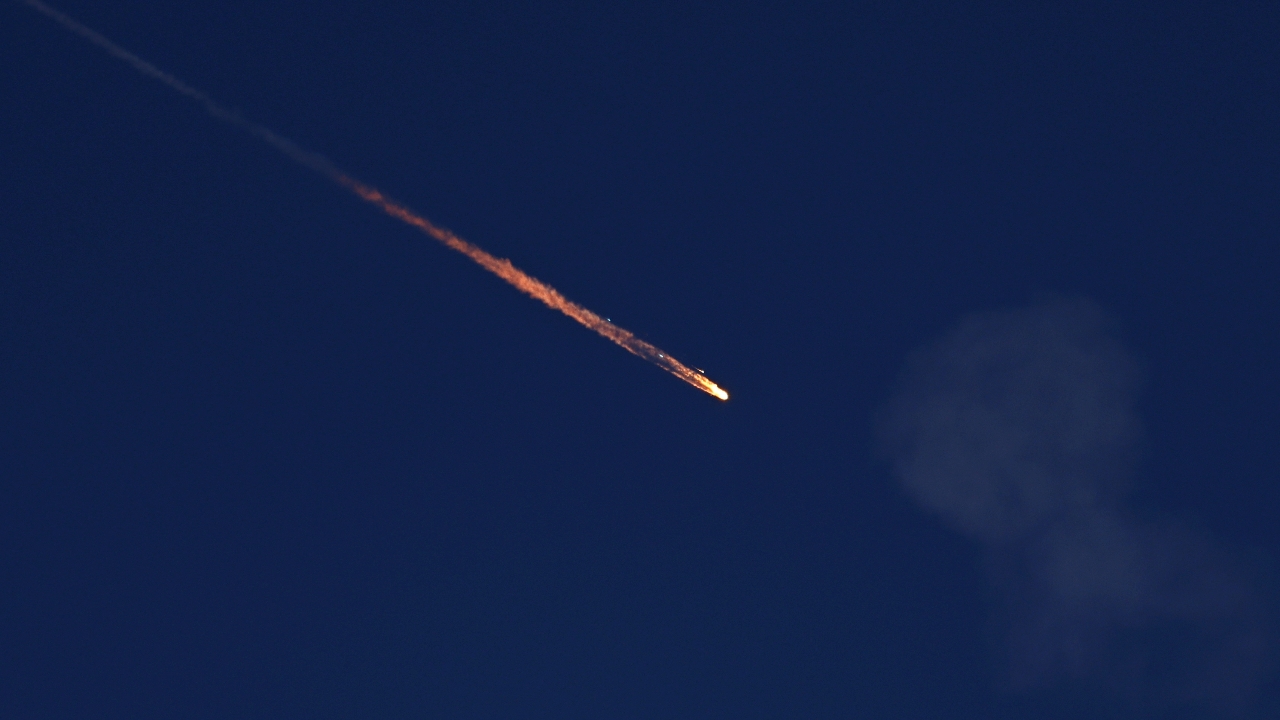
The ongoing exchanges between Iran and the U.S.-Israel alliance have attracted worldwide attention, as all three nations possess formidable military forces, with Iran notably using missiles to demonstrate overwhelming retaliatory power.
U.S. intelligence reports indicate that Iran has the largest long-range missile arsenal in the Middle East, with missiles capable of reaching up to 2,000 kilometers (about 1,240 miles), placing Israel within direct strike range.
These long-range missiles follow a trajectory that includes an initial boost phase followed by a curved path to the target. They can carry various warheads, including conventional explosives, and theoretically could be equipped with nuclear material, which is why Western nations view them as a regional stability threat. However, Iran has consistently denied any plans to develop nuclear weapons.
Key long-range missiles in Iran’s arsenal include:
Sejil
Emad
Ghadr
Shahab-3
Khorramshahr
Hoveyzeh
These missiles have ranges from approximately 1,300 to 2,500 kilometers, covering most of the Middle East region.
Iran’s strategic sites are located in and around Tehran, including multiple underground missile launch bases across the country, enhancing the survivability of its weapons systems in case of preemptive strikes.
In past conflicts, Iran has deployed actual missiles, including during the 12-day war with Israel in June 2025, which reportedly caused damage and injuries. Meanwhile, Israel claimed to have destroyed many of Iran’s missile launchers during that period.
Iran’s primary strategy is to use missiles as a deterrent against attacks from the U.S. and Israel, continuously advancing technology and building underground storage and launch facilities for security.
One recent development is Iran’s indigenous hypersonic missile program, featuring high speed and complex flight paths, making interception more difficult.
Reports indicate that Iran’s missile projects have been technologically influenced by countries such as North Korea, Russia, and China.
In addition to ballistic missiles, Iran also possesses cruise missiles with ranges up to about 3,000 kilometers, increasing its offensive versatility and posing significant challenges to adversaries’ air defense systems.
Source:moderndiplomacy
Click to read more aboutIran