

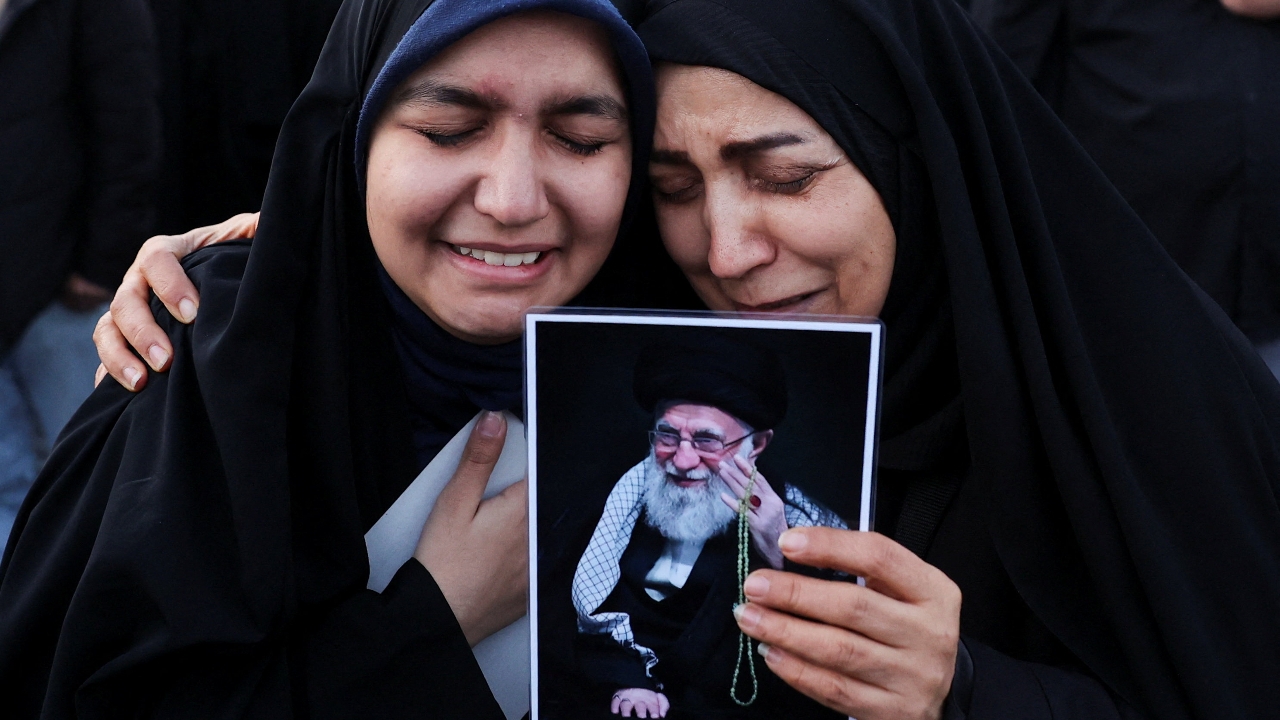
The death of Iran's Supreme Leader Ayatollah Ali Khamenei is not merely a significant loss but is being seen as an attempt to erase the 47-year era of the Islamic Republic of Iran.
Several analysts assess that the true objective behind assassinating Ayatollah Ali Khamenei may not be just eliminating an individual but dismantling the entire power structure.
Trita Parsi from the Quincy Institute in Washington notes that Israel places great importance on killing Khamenei, viewing it as a chance to end the Islamic Republic's 47-year era.
Although the Supreme Leader may not have directed every military tactic recently, the assassination carries profound psychological and political symbolism.
Parsi believes the hope of the U.S. and Israel is that this shock will cause Iran's regime to collapse internally, whether through military pressure or public uprising.
Previously, U.S. President Donald Trump posted that Khamenei's death is the greatest opportunity for Iranians to reclaim their country.
Parsi observes that the U.S. might be aiming for two outcomes: one, the people rise up to overthrow the theocratic regime; or two, a new leader from within the system emerges, adopting a more conciliatory stance toward Washington.
However, analysts see the second scenario as unlikely because, despite Iran offering a nuclear deal seen as more favorable to Trump than Obama’s era, the U.S. ultimately chose confrontation, suggesting the true goal is not just an agreement but regime surrender and change.
Eyal Myrz, a scholar from the University of Sydney, questions the possibility of regime change through airstrikes without ground troops and argues Iran’s fate depends on internal power groups, particularly the Islamic Revolutionary Guard Corps.
Risks of Regional Escalation
Khamenei was not only a state leader but also a Shia religious leader influential in countries such as Lebanon, Iraq, Bahrain, Saudi Arabia, the United Arab Emirates, and Pakistan.
His death could spark retaliatory responses in these countries, especially in areas with armed groups linked to Iran, such as Hezbollah.
Within 24 hours of the event, reports indicated Iran fired back at U.S. bases in several Gulf countries—a red line previously unbreached—leading analysts to predict a short-term escalation of violence.
Who Will Succeed?
Earlier, the U.S. Central Intelligence Agency assessed that the successor might come from hardliners within the Islamic Revolutionary Guard Corps.
However, publicly known names may not be genuine candidates, as the succession process is highly secretive and could involve either a single appointee or a leadership council per Iran’s constitution.
Notably, this event occurs amid ongoing nuclear negotiations, with reports that Iran has offered some concessions, but analysts warn the new leader might adopt a tougher stance rather than yield to the U.S.
The key question is whether Khamenei’s assassination will cause the collapse of Iran’s regime or instead strengthen its centralized and hardline security structure.
If the Islamic Revolutionary Guard Corps gains full control, Iran may enter an era of increased military security, further distancing relations with the West.
What is clear is that this event is not just the killing of a leader but a shake-up of power balances in the Middle East that could shape the region’s geopolitical direction for decades.
Source:BBC
Click to readInternational News